



'/%3E%3C/svg%3E)
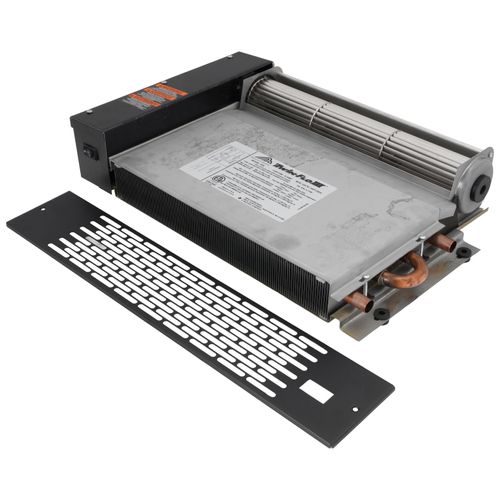
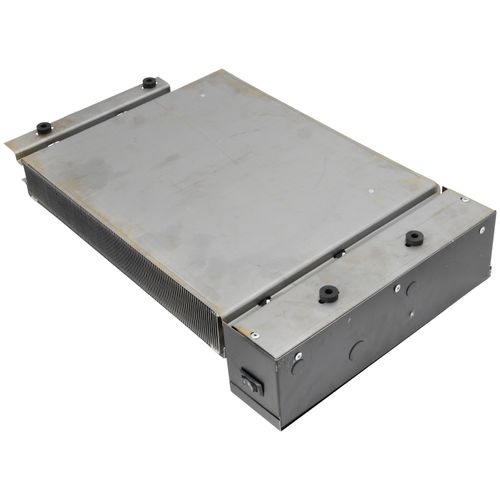
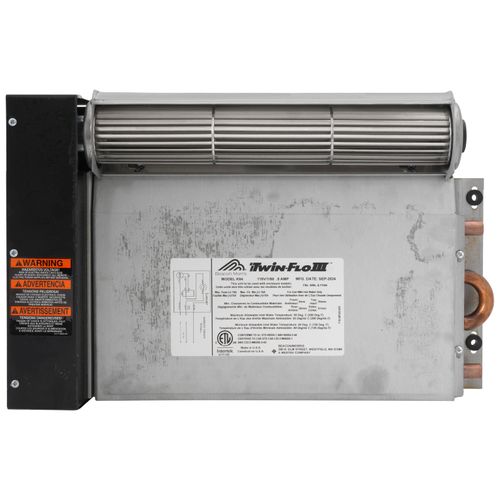
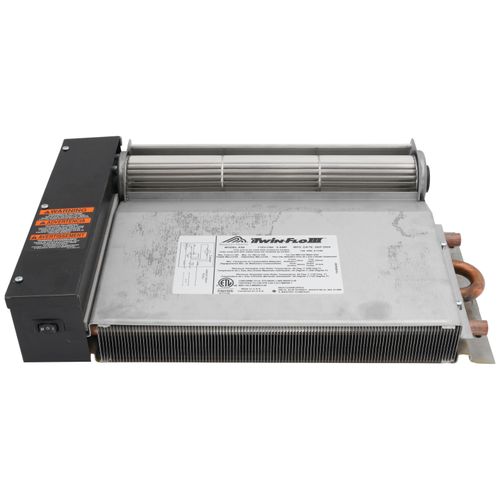
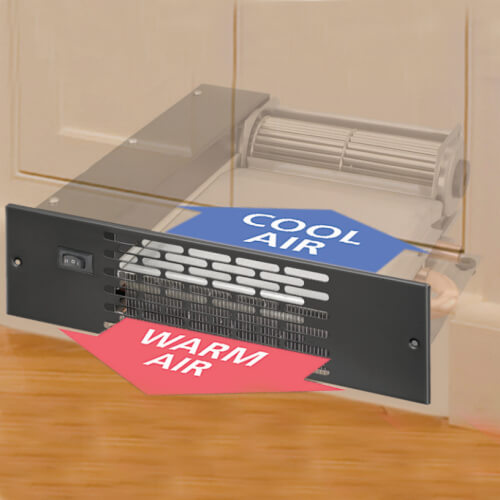
K84 Twin-Flo III Kick Space Heater
 --%3E %3Csvg version='1.1' id='Fill' xmlns='http://www.w3.org/2000/svg' xmlns:xlink='http://www.w3.org/1999/xlink' x='0px' y='0px' viewBox='0 0 100 100' enable-background='new 0 0 100 100' xml:space='preserve'%3E %3Cpath fill='%23F15C02' d='M79.44,0.95H20.56C9.78,0.95,0.95,9.78,0.95,20.56v58.87c0,10.79,8.82,19.61,19.61,19.61h58.87 c10.79,0,19.61-8.83,19.61-19.61V20.56C99.05,9.78,90.22,0.95,79.44,0.95z M65.38,58.24l9.38,29.58L49.69,69.78L24.5,87.82 l9.34-29.6L8.8,39.6l30.73-0.17c0,0,6.98-19.61,10-28.93c0.54,1.36,9.88,29.1,9.88,29.1H91.2L65.38,58.24z'/%3E %3C/svg%3E)
 --%3E %3Csvg version='1.1' id='Half' xmlns='http://www.w3.org/2000/svg' xmlns:xlink='http://www.w3.org/1999/xlink' x='0px' y='0px' viewBox='0 0 100 100' enable-background='new 0 0 100 100' xml:space='preserve'%3E %3Cg%3E %3Cpath fill='%23F15C02' d='M30.05,70.23l3.79-12.01L8.8,39.6l30.73-0.17c0,0,6.98-19.61,10-28.93c0.54,1.36,9.88,29.1,9.88,29.1h1.58 L93.71,7.18c-3.58-3.82-8.66-6.23-14.28-6.23H20.56C9.78,0.95,0.95,9.78,0.95,20.56v58.87c0,5.41,2.22,10.32,5.79,13.88 L30.05,70.23z'/%3E %3C/g%3E %3Cpath fill='%23FBC8B4' d='M93.71,7.18L60.98,39.6H91.2L65.38,58.24l9.38,29.58L49.69,69.78L24.5,87.82l5.55-17.59L6.75,93.32 c3.55,3.54,8.44,5.73,13.82,5.73h58.87c10.79,0,19.61-8.83,19.61-19.61V20.56C99.05,15.4,97.01,10.69,93.71,7.18z'/%3E %3C/svg%3E)


MANUALS (3)
'/%3E%3C/svg%3E)
Product Highlights


Description
Hot water from the home's boiler is circulated through the kickspace unit and the fan gently blows heated air into the room. The homeowner simply selects the fan speed, then the unit turns on and off automatically according to heating demand.
Twin-Flo III + kickspace heaters are your ideal solution wherever space is limited:
- Under Cabinets
- In Kitchens, Baths, and Foyers
- Under Stair Risers and Windows
Specs
| Color: | Black |
|---|---|
| Type: | Hydronic Kickspace Heaters |
| Length (Inches): | 19-1/4" |
| Application: | Hydronic Heating |
| BTU Output: | 10360 |
| Product Type: | Kickspace Heater |
| Height (Inches): | 3-7/8" |
| BTU (Min): | 3370 |
| BTU (Max): | 10360 |
| BTU: | 3370-10360 |
| Width (Inches): | 19-1/4" |
| Height: | 3-7/8" |
| Flow Rate: | 1-3GPM |
| Model: | K84 |
| Depth (Inches): | 12-3/4" |
| Water Connection: | 1/2" |
| Thread Size: | 1/2"IDFitting |

Questions?
You May Also Need
6 Replacement Parts

Need help finding a replacement part?
Product Reviews
Most Liked Positive Review
EXCELLENT PRODUCT
Most Liked Negative Review
 --%3E %3Csvg version='1.1' id='With-RB' xmlns='http://www.w3.org/2000/svg' xmlns:xlink='http://www.w3.org/1999/xlink' x='0px' y='0px' viewBox='0 0 100 100' enable-background='new 0 0 100 100' xml:space='preserve'%3E %3Cpath fill='%23FBC8B4' d='M79.44,0.95H20.56C9.78,0.95,0.95,9.78,0.95,20.56v58.87c0,10.79,8.82,19.61,19.61,19.61h58.87 c10.79,0,19.61-8.83,19.61-19.61V20.56C99.05,9.78,90.22,0.95,79.44,0.95z M65.38,58.24l9.38,29.58L49.69,69.78L24.5,87.82 l9.34-29.6L8.8,39.6l30.73-0.17c0,0,6.98-19.61,10-28.93c0.54,1.36,9.88,29.1,9.88,29.1H91.2L65.38,58.24z'/%3E %3C/svg%3E)
Poor quality fans
As described!
Great product
Twinflow III K84 is a great product very comfortable in the
Just installed
I would buy this again
QUICK SERVICE AND EXACTLY WHAT ORDERED
Product works as advertised
I would suggest these in every kitchen
very quiet
excellent product
Product Q&A
22 QuestionsQ: Is the width mentioned on the K84 Specifications the size of the heating unit or the width of the toe kick grill. If it is the unit itself what is the width of the grill? Wondering if it will fit in a 23 inch cabinet.
Asked by Joe 3 years ago
Add your answer
Verified Reply- SupplyHouse StaffHi Joe. The 19-1/4" width refers to the total width of the outlet grille from end to end. For full dimensional info, please see the submittal sheet - https://s3.amazonaws.com/s3.supplyhouse.com/product_files/Beacon-Morris-K84-Submittal-Sheet.pdf
Q: Replacing model K82A would the K84 kick Space Heater work. It also is by Beacon Morris
Asked by Joan 11 years ago
Add your answer
Verified Reply- SupplyHouse StaffYes, if looking to replace the entire kickspace heater model K82A the K84 would be the closest alternative.
Yes, I have replaced my radiator heater with this newer version that has a fan built in!
Q: I assume this does not have an air bleed fitting built in. I can't find an inline fitting to allow purging of the air.
Asked by Chris 11 years ago
Add your answer
You need to get all the air out of the heater for it work properly. I put a valve in the line parallel to the heater and close when filling the heating system and starting up the hot water system. Then open and leave the valve open for normal operation. These heaters work great if you install properly.
I think I used a 3/4x1/8x3/4 baseboard copper elbow and brushed it down. Sent from my BlackBerry 10 smartphone on the Bell network.
No, the heater does not have an air bleed
Q: What type of grill comes with this? The picture, submittal sheet and brochure all have different ones shown.
Asked by DB 11 years ago
Add your answer
Just a metal grate. Looks good.
Ours is the simple metal grill like the one in the photo. 5 years old now and still works great!
The grill I received looks exactly like the one pictured in the link in this e-mail. The grill is held in place by two 2-1/2" x 4" caps that hold it to the wall on each end. The grill and the two caps are shown in this picture, but they are not assembled. So it looks like the grill shown with two black caps, one on each end.
Q: I have two of these units. They came with t-stats with blue lines that appear to require 120 F to operate. SO I replace with the lower temperature t-stats requiring 110 degrees. My geothermal system produces 115 to 120 degree water and yet I cannot get these units to turn on the fan. When I bypass the t-stat both the low and high speeds on the fan work fine. What am I doing wrong?
Asked by Bobrooks 12 years ago
Add your answer
You are doing anything wrong. Make sure that the heaters are not air bond, you may need to put a valve in the pipe parallel with heater to close in order to ride the heater of all air. I had to do this because I could not remove all the air with the bleed valve. Make the parallel valve is open after removing of air from the heater. The range of the thermostat is to close to the water temperature. If you are handy you can try changing the thermostat to a disc thermostat with a lower temperature range and closes on rise. Newark has a White Robers #3f11-100 disc thermostat 93 to 107 degree for $8.65 plus shipping.
One place to start would be to measure the actual temp at the unit. Is it possible that the 115 to 120 water is cooling down by the time it reaches the unit? Unless the lines are insulated and are pretty close to the unit, it could be that the water is cooling too much to allow the t-stat to operate properly. That probably isn't the case, just a place to start. Is there any way that you can test the t-stat by warming it somehow to ensure it is working properly with the unit without bypassing the t-stat? Hope this helps.
It is likely that the water temperature at the units is a little bit less than 110 F. Even with the setting for the geo at 120, as the water is pumped to the fan units, it is going to lose heat along the way. Also, these t-stats are not very precise, so the water might need to be a bit above 110 before they'll switch on. The temptation is to turn the setpoint on the geo up to compensate. That might work but it is not advised. Geo systems will run more efficiently if you can keep the setpoint lower. Typically at 115 F they are starting to drop out of their preferred operating range and as the setpoint goes higher, they have to work harder making them less efficient. Three things you can do to improve your conditions; first add some thermal heat-transfer grease to the mounting of the t'stat between it and the copper tube, taking care that you have good contact; second, carefully insulate the t'stat contact point so it is measuring the tube temperature and not the air temperature next to it; third make certain that the t'stat bimetal disc isn't being jammed or pressured too much. The disc can deform if too much force is holding it in place (for example, if a hose clamp were placed around it and tightened too much or if the spring clip were forced onto a larger tube). If none of that works, you can try an adjustable t'stat like this one, set to a lower temperature. At the lowest setting you might feel a draft rather than warm air, but it might allow it to operate. http://www.supplyhouse.com/White-Rodgers-3F05-1-3-4-Snap-Disc-Fan-Control-Temperature-Range-90-to-130-Degrees-F-Includes-Tab-to-Screw-Terminals-14699000-p I hope this is helpful. Good luck!
Bobrooks I can't think of anything your "doing wrong". The only thing I can think of would be a little more testing of the 110 degree thermostat(s). Submerse the thermostats into a cup of tap water at 110 degrees, then use an ohm meter to measure the resistance across the leads of the thermostat. You should be able to open (infinite resistance) and close (zero resistance) the thermostat's contacts by adjusting the temperature the water from the tap.
Q: Will this unit work with an old gravity gas fired boiler/radiator system? If not, can it be adapted?
Asked by Bob 12 years ago
Add your answer
Verified Reply- SupplyHouse StaffFor gravity fed hot water systems, it is recommended that a separate circulator pump be installed for the kick space heater to achieve full performance.
It will work if you have a hot water system with a circulator. Hot water needs to flow thru the heater to work. This works on a 3/4" pipe system. If you have no circulator, it will not work.
I'm not a plumber, just a handy homeowner, but I would say no. Your system doesn't have a circulator. I would not rely on gravity to push the water thru the coils. Also it might change the balance of your system since the system has larger size piping. Hope this helps. Sent from my iPad
Bob, You asked "Will this unit work with an old gravity gas fired boiler/radiator system? If not, can it be adapted?". humm... With a fair amount of creativity plumbing, maybe so. These units are very restrictive (1/2" tubing) and are intended to use with a "mono-tee". The mono-tee would siphon off part of the flow (to the kick space heater) and reduce the restriction within the system. However in a gravity feed system, the flow rate would be so slow that a mono-tee would not work properly, and to place the device in series with other radiators would shut down the over all flow. Is there another way? Not easy. The only thing I can think of would be to add a heating loop for the kick space heater with a return pump (although, it is doubtful that the kick space heater would remove enough heat to prolong the life of the return pump). Or you could upgrade your boiler :) Not knowing where your thinking of using this device, makes offering alternative options difficult._IF_ you have access to the area from below, you might think about installing finned copper pipe under the floor of the area and using convection to heat the floor. Larry
In order for a unit like this to work with a gravity system, you typically would need to add a pump. The passages in the unit are far too small for you to get sufficient circulation without one. For these style heaters to work at capacity, they need two things, hot enough water (typically 160 F-190 F, although they will work at a reduced capacity down to 130 F) and a minimum of 1 gallon per minute flow. Most older gravity systems are operate at 140 F or hotter, so temperature shouldn't be a problem, but gravity flow typically won't push but a trickle through those little heaters. Adding a pump to the circuit can be tricky too as whenever you change the flow in one place in the circuit, it affects the flow every where else. If you do it right, it should work great. If you do it wrong, it not only may not work right, it may mess up the parts that do. If you add a central pump that changes your system from a gravity system to a pumped one, then you likely could tie in the new heater just like the existing radiators and boost the output of the entire system to boot (assuming the boiler isn't already at full output). But adding a central pump to a gravity system can require some serious pipe fitting since the pipes are all over-sized to start with. If you aren't used to working with them, you also likely won't have the right tools (big) or knowledge/techniques for altering that pipe. If you do, then count the cost before trying yourself. If you have an existing unit that is readily disconnected (and accurately represents the location where you want to use the heater), you could connect up some 1/2 copper tubing, say a 10' coil, and see whether you get any usable heat off of it when the system operates. Bear in mind, it'll get hot for sure, but if you set a fan next to it and have it blow room air across it, does it stay hot or cool down to the point of being slightly above room temperature. If it stays really hot, then ignore all the advice above and hook up your heater. If it cools down, then you'll see the problem. I hope this has been helpful. Good luck!
Q: Does the k84 come with 3/4" water outlets
Asked by Kirk 12 years ago
Add your answer
Verified Reply- PexSupply StaffIt comes with 1/2" sweat piping connections.
No. The copper tubing is 1/2".
No both input and output are 1/2" copper pipe
No, they are 1/2" copper pipe size, which measures 5/8" OD. Good luck!
K84 heater connects to a 3/4" heating system. You must use special scoop tee. Not all of the hot water goes thru the heater. Google the instructions and you will see how the system is connected. I also put a valve in parrallel with the heater in the 3/4" line, closed the valve when filling heating system and when first starting circulator. This gets all of the air out of heater. Then open valve and leave open after first running system. Heater works great, puts out lots of heat. Good for warming my wifes feet. Hope you like the heater.
No. 1/2 inch. I used the red tubing for the shark bite. You can always use a reducer. I love the unit. From my Android phone on T-Mobile. The first nationwide 4G network.
No. The K84 comes with 1/2" copper inlet and outlet. You can solder on any kind of fitting you want, so I suppose you could adapt it up to 3/4" if you want to. I suppose you could use "shark bites" if you want to also.
Q: I want to install two K84 units (in floor kits) in a 3/4" series loop baseboard system. With only 1/2" piping in the units will they be too restrictive for series use?
Asked by South Shore 13 years ago
Add your answer
My question is why would you series these units? In this configuration they will act like heat the heat exchangers they are, with the first cooling the water so that the second won't be as efficient, meaning it will only put out some percentage of heat the first unit does. But to answer they question, yes it will obviously restrict, but what it too much? By running in series you are reducing the efficiency of the second unit so any restriction won't make that much difference. The only thing you might see is a slight increase in pressure at the pump but it shouldn't be a concern. It might even help given the longer retention time in the second unit, albeit most likely too small to measure. You would be better off putting two 1/2" tee's in the 3/4 supply line to the inlet of each unit, with two 1/2" tee's in the return line from the outlet of each unit and running them parallel. With an area of about .44", the 3/4" line will easily carry enough for two 1/2" units at about .20" area each.
You need to check how the heater is connected into your heating system, it will help you understand what you are asking. Try searching the internet for instructions. The heaters are not connected in series of the heating loop. They connect across a section of pipe. There is non restriction to the water flow if connected following the directions. The heaters work great and put out lots of heat, there is a switch on the unit to turn them off/low/high. That way you can set the fans for how warm the area needs to be. I also placed a valve in the section of pipe in parallel with the heater. I closed the valve after putting water in the system and started the circulating pump, this removes all the air from the heater Than open and leave open the valve for operation of your heating system. This is the only way I could remove all air from the heater, the bleed valve on the unit did not remove all the air and was air bound. Hope this helps.
In a series I'm assuming one heater will be feeding the other which will probably have the downstream heater not running as hot as the first. As for a restriction I would guess that would have to do w/ the volume and pressure of your pump. I'm not a HVAC technician but I actually Tee'd off my K84 unit with a standard baseboard heater and used 1/4 turn shut off valves on each line to regulate which heater will get more flow. My system was a standard 3/4" series loop and it works great.
I have one of these units in my bathroom under the vanity. I believe the plumber used a venturi tee off the 3/4 loop. This puts the 1/2 feed and return of the unit in parallel with the 3/4 loop. 3/4 X 1/2 X 3/4 Venturi tee. Hopes this helps........Drew
It shouldn't be an issue. I installed two of these a couple years ago and just two more this year into my single loop system. You'll need to get a couple of 3/4" to 1/2" "through T's" (pictures and descriptions are in the instructions that come with the unit). These are nonstandard plumbing pieces. I went to a plumbing specialty shop for them to order them for me. They are about $3-$5 each.
No will restrict some but if thats all thats on the loop should not be anything significant.
nope
I don't know if this helps, but my one unit is located at the end of a 30' run of cast iron baseboard and it works fine.
I installed 4 of these in series in a 3/4 inch loop for a zone in 2 rooms. There were instructions on using split reducing tees (with a diverter built in) to keep the flow up to the heater with some flow through. I tried it but was not happy with the results. I redid the zone using 3/4 in gate valves just past where each 1/2 line reenters the zone. Worked perfectly and gives great control of the flow in the zone. I get great output from all 4 units
If these are the only two devices on the zone, then simply run the 3/4 feeder pipe between the two units used a 3/4 tee to split the flow into the two units and then combine the outputs back into 3/4 as the return to the boiler. if you have a radiator or other devices in the zone, then you'll need to use 3/4-3/4-1/2 monoflow diverter tee's, on the _output side_ of the kick-space heaters. what these will do for you is to draw heated water through the kick-space heater without obstructing the water flow.
Q: Is it ok to install it below the kitchen sink cabinet or will it be too hot when someone is at the sink doing dishes? Also, this will be connected to an existing hot water system with mono flo tees located in the basement. Does the air bleed valve have to be installed right next to the unit or can it be installed in the basement?
Asked by ivo 13 years ago
Add your answer
Hi Well you can install a speed control switch in the kitchen if you find it too hot on the feet. And the air vent should also be installed at the highest point whick would be next to the heater. My opinions only, im no expert. George
My wife likes to stand in front of the heater to warm her feet. For me it would be to hot to stand in front of for a long time. There is a switch on the front of the unit low/off/high, so you can shut the heater off when standing in front of it. The heater works great and will warm the room quickly. Bleed will work best next to unit but will work in basement. What had to do was put a valve in pipe that is in parallel with heater, I closed valve when starting system the first time to get rid of all on the air in the heater. Than opened valve after s short time and than leave valve open all the time. I could not remove air in the heater any other way.
this unit is perfect for under the sink or kitchen counters no heat is dissipated thru the housing so u don't have to worry about heating up the woodwork of the cabinet
I think that it would be too warm immediately in front of the sink. I can't speak to the air bleeder valve location, but higher is always better, I think. My unit works great, by the way.
It is not too hot if you were standing in front of it doing dishes. However, you will feel it. Maybe that's good if you have cold feet. The air bleed does not have to be right next to it. I also installed mine in an existing hot water system. I just flushed the system and let it run until all the air was out, maybe 3-4 minutes. I have no air in the system. This heater is not completely silent, but it comfortably heats a 12 x 20 room and the low hush of air is not annoying. It's about the same noise level as the refrigerator, maybe a bit less. I'm pretty pleased with it.
I have this heater. It is located right as you say: under the kitchen sink cabinet. It is very effective, relatively quiet (no one sleeps in the kitchen anyway). Feet feel nice warm air when I do dishes. Not hot. Well, I couldn't use it as an excuse not to do it when my wife asks me to. Sorry, I do not know what "mono flow" is, but I do not have any extra air eliminator a except one on the boiler. Sent from my iPhone
Most of these I've installed or have seen installed have been under a kitchen (or bathroom) sink cabinet. As far as being too hot, if you mean for the equipment, no, it's what they are made for. If you mean for the person standing there doing dishes, maybe, depends on the person and the conditions. If you have cold feet, you'd probably like it. If you are the other way, you probably won't. The fan can be turned off from the front by using the selector switch "HI-OFF-LO", so if it were uncomfortable for a particular person or circumstance, it could be turned off. Or it could be installed off to one side if the cabinetry allows for that. The air temperature coming out can not be hotter than the water temperature of your system, so if it is set to 180F, that is the hottest air you could get out. In reality, it will be cooler than that by a fair amount. One potential issue using mono-flo tees, the blower on these heaters turn on and off by detecting the hot water running through the coil. If the flow is insufficient for the sensor to detect the heat, the blower won't come on even though the coil feels hot. If that is a problem, there are a couple of options. The first one (and good to check regardless) is to make certain the sensor is getting good contact on the coil, preferably on the copper pipe part. Putting a bit of insulation around the sensor and the pipe so the air around it doesn't cool it also helps. If that doesn't work, there are sensors available that will turn the blower on at a lower temperature. The sensor can take a few minutes to detect the heat in any case, so give it bit before deciding it isn't working, sometimes they're just slow. Regarding the air vent, it depends on what kind of vent. What I have found most successful and easiest to work with is to install a water purge valve on the return leg prior to the main line with an isolation valve between the heater and the main line. These are perfect for it. http://www.pexsupply.com/Webstone-54612W-1-2-Sweat-x-IPS-Pro-Pal-Ball-Valve-w-Hose-Drain-Lead-Free Make sure you get the version and size appropriate for your type of pipe and put the purge port on the heater side of the line. With the isolation valve closed, open the purge valve (making sure you are adding water to the system, otherwise you'll just drop the pressure) and let it run until all the air is out, with a hose to a drain or a bucket, then open the isolation valve and close the purge after the last bit of air is out. This has the advantage of being easy to confidently and quickly remove the air and it also can be installed anywhere in the circuit without compromising its effectiveness. If you are trying to use an actual air vent, it won't work very well if it is below the unit, you just can't get enough velocity through it to remove the air. I hope this has been helpful. Good luck!
what I did instead of mono flo tee I put in ball valve can shut completely to push air out of kick heater and then open it enough to work like mono flo don't need bleeder
Q: My garbage disposal let go and leaked onto the fan and the unit stopped working completely, can I just replace the fan motor or is there someway to test the unit to see if it needs a complete replacement? I realize it will need to be removed either way.
Asked by Fred 14 years ago
Add your answer
Verified Reply- PexSupply StaffThe replacement motor for this unit is part BMKR02020-002.
I would say the parts can be replaced. If it was me I would buy new unit.
Do yourself a favor and replace the entire unit. Once water gets into the electrical connections they begin to corrode. It’s also a good safety precaution. Remember, this thing is powered with 110vac. The last thing you want is arching.
Did you check the circuit breaker in the motor? If so, was it popped and did you reset it? If it was reset and still not running, then it's toast. It's cheaper, easier and faster to replace the entire unit, than to have the motor repaired.
The fan motor is the only 'real' electrical component inside beside the thermostat control.I would try to replace the motor first and make sure all other electrical components are dried off completely before turning it on.That may just do the trick (you can usually find those type of motors cheap at electronic stores)
Please ignore my previous reply, I failed to down load the picture. Had I done so I would have realized that that you were asking a question about kick-space heater and not a disposal. Sorry about that. I took the cover off of one of mine, the motor looks replaceable and I doubt the water would have damaged anything else, but they can all be tested. This type of induction motor is bullet proof, if fact I think could run underwater. Does the blower turn by hand? If it doesn't then I would guess that the bearings have rusted up. But, we should test the easy stuff first. The thermo switch is normally open, easy to by-pass, in fact you_must___do this to test the motor if you do not have 140 degree water running through the unit. The fan speed switch, again easy to test with an ohm meter. Depending upon the length of time "things were wet", you also may want to check the fan switch connections of corrosion. If your this far into the steps above and the problem is not solved... It's time to pull the motor. It appears that you can remove the motor/blower assembly by unscrewing the wing nuts located below and in front blower. Once you have the motor removed, separate the blower center shaft from the motor then find out which item isn't turning. Replacement parts are available for this but you may have to go to a complete motor/blower assembly. Good Luck.
Check thermostat first on unit ,than check power should be ok
First thing I would do is check the electrical circuit the motor is wired to and make sure it did not trip the circuit breaker or blow the fuse. If this checks good then I would turn off power to motor and clean it with electric motor cleaner and check to see if the fan will turn freely. After the motor cleaner dries turn the power to the the motor and see if it runs. If not,you could take the motor to a motor repair shop and have them check it and if it is bad see if they can get you a replacement. Good Luck