




Filters
SORT
Product Availability –
Used With –
Review Score –
 --%3E %3Csvg version='1.1' id='Fill' xmlns='http://www.w3.org/2000/svg' xmlns:xlink='http://www.w3.org/1999/xlink' x='0px' y='0px' viewBox='0 0 100 100' enable-background='new 0 0 100 100' xml:space='preserve'%3E %3Cpath fill='%23F15C02' d='M79.44,0.95H20.56C9.78,0.95,0.95,9.78,0.95,20.56v58.87c0,10.79,8.82,19.61,19.61,19.61h58.87 c10.79,0,19.61-8.83,19.61-19.61V20.56C99.05,9.78,90.22,0.95,79.44,0.95z M65.38,58.24l9.38,29.58L49.69,69.78L24.5,87.82 l9.34-29.6L8.8,39.6l30.73-0.17c0,0,6.98-19.61,10-28.93c0.54,1.36,9.88,29.1,9.88,29.1H91.2L65.38,58.24z'/%3E %3C/svg%3E)
 --%3E %3Csvg version='1.1' id='With-RB' xmlns='http://www.w3.org/2000/svg' xmlns:xlink='http://www.w3.org/1999/xlink' x='0px' y='0px' viewBox='0 0 100 100' enable-background='new 0 0 100 100' xml:space='preserve'%3E %3Cpath fill='%23FBC8B4' d='M79.44,0.95H20.56C9.78,0.95,0.95,9.78,0.95,20.56v58.87c0,10.79,8.82,19.61,19.61,19.61h58.87 c10.79,0,19.61-8.83,19.61-19.61V20.56C99.05,9.78,90.22,0.95,79.44,0.95z M65.38,58.24l9.38,29.58L49.69,69.78L24.5,87.82 l9.34-29.6L8.8,39.6l30.73-0.17c0,0,6.98-19.61,10-28.93c0.54,1.36,9.88,29.1,9.88,29.1H91.2L65.38,58.24z'/%3E %3C/svg%3E)
Price Range –
Bell & Gossett Bearing Assemblies


 --%3E %3Csvg version='1.1' id='Half' xmlns='http://www.w3.org/2000/svg' xmlns:xlink='http://www.w3.org/1999/xlink' x='0px' y='0px' viewBox='0 0 100 100' enable-background='new 0 0 100 100' xml:space='preserve'%3E %3Cg%3E %3Cpath fill='%23F15C02' d='M30.05,70.23l3.79-12.01L8.8,39.6l30.73-0.17c0,0,6.98-19.61,10-28.93c0.54,1.36,9.88,29.1,9.88,29.1h1.58 L93.71,7.18c-3.58-3.82-8.66-6.23-14.28-6.23H20.56C9.78,0.95,0.95,9.78,0.95,20.56v58.87c0,5.41,2.22,10.32,5.79,13.88 L30.05,70.23z'/%3E %3C/g%3E %3Cpath fill='%23FBC8B4' d='M93.71,7.18L60.98,39.6H91.2L65.38,58.24l9.38,29.58L49.69,69.78L24.5,87.82l5.55-17.59L6.75,93.32 c3.55,3.54,8.44,5.73,13.82,5.73h58.87c10.79,0,19.61-8.83,19.61-19.61V20.56C99.05,15.4,97.01,10.69,93.71,7.18z'/%3E %3C/svg%3E)



 --%3E %3Csvg version='1.1' id='No-RB' xmlns='http://www.w3.org/2000/svg' xmlns:xlink='http://www.w3.org/1999/xlink' x='0px' y='0px' viewBox='0 0 100 100' enable-background='new 0 0 100 100' xml:space='preserve'%3E %3Cpath fill='%23CECECE' d='M79.44,0.95H20.56C9.78,0.95,0.95,9.78,0.95,20.56v58.87c0,10.79,8.82,19.61,19.61,19.61h58.87 c10.79,0,19.61-8.83,19.61-19.61V20.56C99.05,9.78,90.22,0.95,79.44,0.95z M65.38,58.24l9.38,29.58L49.69,69.78L24.5,87.82 l9.34-29.6L8.8,39.6l30.73-0.17c0,0,6.98-19.61,10-28.93c0.54,1.36,9.88,29.1,9.88,29.1H91.2L65.38,58.24z'/%3E %3C/svg%3E)


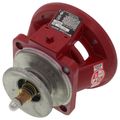




Bell & Gossett bearing assemblies are replacement components that support the rotating shaft inside Bell & Gossett circulator pumps used in hydronic heating and cooling systems. Bell & Gossett has manufactured pumps and related hydronic equipment for more than 100 years, and its circulator line remains one of the most widely installed in commercial and residential hydronic systems across North America. Bearings inside a circulator wear over time from continuous rotation and exposure to system water, and a worn bearing assembly typically shows up first as noise, vibration, or a rotor that binds rather than spins freely. Replacing the bearing assembly on schedule is usually less disruptive and less costly than waiting for a full pump failure, since the bearings support both the pump's coupling and its rotor. Matching the assembly to the exact pump model keeps shaft alignment and impeller clearance within the tolerances the pump was designed around.
Subcategories
- Series 100 Bearing Assemblies: Series 100 bearing assemblies fit Bell & Gossett's Series 100 line of small circulator pumps, commonly used in residential hydronic heating zones. Each assembly typically includes the bearing itself along with the coupling components needed to reconnect the motor shaft to the pump shaft. Technicians usually replace the full assembly rather than the bearing alone, since the components wear as a set.
- Series 60 Bearing Assemblies: Series 60 bearing assemblies fit Bell & Gossett's larger base-mounted and close-coupled circulators, which see higher flow rates than residential zone pumps. Build quality on these assemblies accounts for the added load of larger impellers and higher-volume system water. Technicians match the assembly to the specific pump model and horsepower rather than assuming compatibility across the Series 60 line.
- Bearing Assembly Kits with Seals: Some bearing assembly kits bundle the bearing components together with a new mechanical seal, since both parts wear from the same continuous operation and commonly get replaced at the same time. Replacing the seal alongside the bearing assembly during the same service visit avoids a second teardown of the pump later. Pumps in continuous service for several years typically call for this combined kit approach as standard maintenance practice.
Buying Guide
Selecting the right Bell & Gossett bearing assembly starts with identifying the exact pump model and series from the nameplate on the pump housing, since bearing assemblies aren't interchangeable across different Bell & Gossett pump lines even when the physical pump size looks similar. Series 100 assemblies fit the smaller residential circulator line, while Series 60 assemblies serve larger base-mounted pumps handling higher flow rates, and using the wrong series can leave shaft alignment or impeller clearance outside the pump's designed tolerances. Technicians servicing an older pump with a worn or illegible nameplate typically cross-reference the pump's physical dimensions and any visible casting numbers with Bell & Gossett's documentation rather than guessing from the bearing's outward size alone. The bearing and the mechanical seal both wear from the same continuous rotation and water exposure, so many technicians replace Bell & Gossett Bearing Assemblies and the seal together during the same service call instead of returning for a second teardown once the seal fails separately. Unusual noise, vibration, or a rotor that no longer spins freely by hand all signal that a bearing assembly needs replacement, and catching these signs early typically means a simpler bearing replacement rather than a full pump replacement after a bearing failure damages the shaft or housing.
Frequently Asked Questions
How can a technician tell if a bearing assembly needs replacement?
Common signs include unusual noise or vibration from the circulator during operation, along with a rotor that doesn't spin freely by hand when the pump is off. The symptoms usually build gradually as the bearing wears from continuous rotation and water exposure. Catching them early typically allows for a straightforward bearing replacement instead of a full pump replacement later.
Are bearing assemblies interchangeable across different Bell & Gossett pump series?
No, bearing assemblies match to a specific pump series and model, since pump size, shaft dimensions, and load requirements differ between lines like Series 100 and Series 60. An assembly from the wrong series can leave shaft alignment or impeller clearance outside the pump's designed tolerances. The pump's nameplate is the most reliable way to confirm the correct series before ordering.
Should the mechanical seal be replaced at the same time as the bearing assembly?
Many technicians replace both together during the same service visit, since the bearing and seal wear from the same continuous operation and are likely to need attention around the same time. Doing both at once also avoids a second pump teardown if the seal fails shortly after a bearing-only replacement. Kits that bundle the bearing assembly with a new seal exist for this reason.
What if the pump's nameplate is worn or missing?
When the nameplate can't be read, technicians typically cross-reference the pump's physical dimensions and any visible casting numbers instead of guessing based on the bearing's outward size. Bell & Gossett's own documentation can help confirm the model when field markings are unclear. Ordering the wrong assembly based on a guess risks a mismatch in shaft alignment or impeller clearance.
Does replacing the bearing assembly extend the life of an older circulator?
Replacing a worn bearing assembly on schedule generally extends the service life of the pump, since it prevents the kind of shaft or housing damage that can occur if a bearing fails completely. Doing so is usually less disruptive and less costly than dealing with a full pump failure. Regular bearing assembly replacement stands as standard practice for pumps that have been in continuous service for years.
