






'/%3E%3C/svg%3E)
 --%3E %3Csvg version='1.1' id='Fill' xmlns='http://www.w3.org/2000/svg' xmlns:xlink='http://www.w3.org/1999/xlink' x='0px' y='0px' viewBox='0 0 100 100' enable-background='new 0 0 100 100' xml:space='preserve'%3E %3Cpath fill='%23F15C02' d='M79.44,0.95H20.56C9.78,0.95,0.95,9.78,0.95,20.56v58.87c0,10.79,8.82,19.61,19.61,19.61h58.87 c10.79,0,19.61-8.83,19.61-19.61V20.56C99.05,9.78,90.22,0.95,79.44,0.95z M65.38,58.24l9.38,29.58L49.69,69.78L24.5,87.82 l9.34-29.6L8.8,39.6l30.73-0.17c0,0,6.98-19.61,10-28.93c0.54,1.36,9.88,29.1,9.88,29.1H91.2L65.38,58.24z'/%3E %3C/svg%3E)
' fill='%23F15C02' d='M49 0C21.938 0 0 21.938 0 49s21.938 49 49 49 49-21.938 49-49S76.062 0 49 0m0 82.709a7.54 7.54 0 1 1 0-15.08 7.54 7.54 0 0 1 0 15.08m7.54-28.412a7.541 7.541 0 0 1-15.08 0V22.831a7.54 7.54 0 0 1 15.08 0v31.466z'/%3E%3C/svg%3E)
MANUALS (4)


Product Highlights


Description
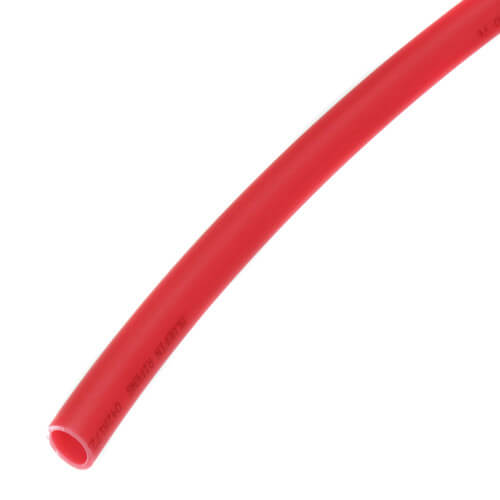
Bluefin PEX-b pipe is produced with crosslinked polyethylene. Crosslinking is obtained through a chemical process that increases the bonds between macromolecules to form a more complex structure than the normal polyethylene. Due to the crosslinking, the polyethylene's performance is greatly enhanced and maintains the excellent properties of thermoplastics. Offering excellent corrosion resistance, incredible flexibility and unusual toughness, Bluefin PEX-b pipe allows for fast and easy installation.
Specs
| Length (Feet): | 100' |
|---|---|
| Size: | 3/4" |
| Material: | PEX |
| Fitting System Compatibility: | Push Fit Clamp Crimp PEX Compression PEX Press |
| Grade: | PEX-b |
| Color: | Red |
| Application: | Plumbing |
| Tubing Type: | Non-Oxygen Barrier |
| Shape: | Coil |
| Inside Diameter: | 0.671" |
| Warranty: | 25 Year |
| Outside Diameter: | 0.875" |


Questions?
Compare Similar Products
Clamp
Crimp
PEX Compression
PEX Press
You May Also Need
Product Reviews
Most Liked Positive Review
 --%3E %3Csvg version='1.1' id='With-RB' xmlns='http://www.w3.org/2000/svg' xmlns:xlink='http://www.w3.org/1999/xlink' x='0px' y='0px' viewBox='0 0 100 100' enable-background='new 0 0 100 100' xml:space='preserve'%3E %3Cpath fill='%23FBC8B4' d='M79.44,0.95H20.56C9.78,0.95,0.95,9.78,0.95,20.56v58.87c0,10.79,8.82,19.61,19.61,19.61h58.87 c10.79,0,19.61-8.83,19.61-19.61V20.56C99.05,9.78,90.22,0.95,79.44,0.95z M65.38,58.24l9.38,29.58L49.69,69.78L24.5,87.82 l9.34-29.6L8.8,39.6l30.73-0.17c0,0,6.98-19.61,10-28.93c0.54,1.36,9.88,29.1,9.88,29.1H91.2L65.38,58.24z'/%3E %3C/svg%3E)
Good Product and Easy to work with.
Most Liked Negative Review
No
i would purchase again

Quality pex roll
I would buy it again!
I would buy this again
Works Like It Should
Pex good quality
Great Product
Great Product
This size is a terrible, terrible product
I would buy this again
Product Q&A
152 QuestionsQ: Can I use 3/4 PEX underground for the main water supply line connected to the street?
Asked by Ressler 12 years ago
Add your answer
Yes, absolutely.
The PEX would be my preferred choice. Unless local codes prohibit it's use, PEX is your best solution. Paul Boaz
Q: How well does Pex conduct heat? Used for under floor heating I would guess Pex conducts the heat from the hot water pretty good. If ran around inside a room along the wall base boards will Pex tubing provide decent convection heating itself? If buried in a hot thermal mass such as dirt or clay will Pex conduct heat well to heat the water inside it from the heat in the mass? What about putting a coil of pex into a large tank of hot water, will Pex conduct heat well enough to heat the water inside it? I am building a self designed system for heat and trying to avoid any copper tubing and aluminum or steel, other than some recycled auto radiators I will also be using.
Asked by Home built system 12 years ago
Add your answer
Pex is not a good conductor of heat. It could actually be considered an insulator or dielectric material. Copper and Aluminum are conductors which is why all modern radiators are constructed of copper piping with aluminum heating fins. The reason Pex is used in under floor heating systems is due to its competitive pricing, flexibility and corrosion resistance. Regards Wilmer Gingerich
See comments in italics below > > Question:> "How well does Pex conduct heat? Used for under floor heating I would guess Pex conducts the heat from the hot water pretty good. Yes if in contact with the thermal mass.> If ran around inside a room along the wall base boards will Pex tubing provide decent convection heating itself? Probably not---even hydronic baseboard radiators have fins to dissipate the heat into the room. The radiators will work with fans if you want to move that much air and the fan noise. Bare Pex run along the baseboard would provide little heat. You might experiment with the aluminum diffusers that clip onto the Pex where you use it for underfloor heating. Again you may not have enough surface area unless you make several loops up the wall. You want a fair amount of mass and water 20 or so degrees hotter than the desired room temp-and once the mass is warm it will transfer heat to the room.> If buried in a hot thermal mass such as dirt or clay will Pex conduct heat well to heat the water inside it from the heat in the mass? Probably, but how hot is the thermal mass? The geothermal heating systems work on small delta T using a heat pump.What about putting a coil of pex into a large tank of hot water, will Pex conduct heat well enough to heat the water inside it? Yes---we used a loop in a Koi pond to keep the fish and water from freezing But again how hot do you want the water? We used a water T stat to turn in on at 45 degrees and off at 50 deg.You can use pex in a driveway for snow removal if you have a hot water source in the winter and reverse it in the summer to heat a pool for example. But to be effective, loop the Pex on 12 inch centers.> I am building a self designed system for heat and trying to avoid any copper tubing and aluminum or steel, other than some recycled auto radiators I will also be using." We experimented with auto radiators in an attic to cool the attic and transfer the heat to a swimming pool. Not certain I would use them if they are soldered (lead) and I suggest boiling and rodding them to make certain they are clean.> Can you answer Home built system's question about this product? > Simply Reply to this email.> 1/2" Red PEX Tubing (300 ft Coil) > Thank you in advance if you are able to answer the question. Your email address will not be shared with this customer or other shoppers. We may post your answer to our site to benefit other shoppers. By replying to this email you agree to the privacy policy (NEW!)). We truly appreciate your business. > Update your preferences. > To unsubscribe from answering questions about all products, click here.
Deleted No! There is not enough area to transfer enough heat to realy heat anything. Car radiators maybe.
Q: can this be used in an outside in ground application?
Asked by Cinder 12 years ago
Add your answer
I put mine inside of green sewer PVC and it has been no problem for 3 years now going to my outdoor wood boiler (cold water supply). visit www.eternaltest
Absolutely. It is code in many places. If you are concerned, just call your inspector or local code enforcement.
I have used it above ground for a sprinkler system for the garden. No issues so far. If it is not the main supply line to the house I would use it. If it is for supply with city water i would use copper. If for a well, go for it.
Q: Can I use this type of pex to transport the water from my oil boiler to the radiators?
Asked by DAVID 12 years ago
Add your answer
Verified Reply- SupplyHouse StaffWe would not recommend it. Oxygen barrier PEX is normally needed with radiators in order to prevent corrosion of ferrous metal components in closed systems.
I assume your heating system is closed and would be damaged by oxygen in the water. This PEX does not have an oxygen barrier, so no, don't use it. If your system is open and rated for potable water, then you should be fine (depending on the pressure and temp of the water).
Check temperature rating of water from boiler and if it exceeds 180 degrees do not use PEX. Wilmer Gingerich
Yes you can. It will work fine, but I'd recommend using the red and blue so you have the lines color coded.
Team wrote: As I recall, PEX is PEX, regardless of color, so the material should be rated for common hot water temperatures. I believe that higher temperatures stress PEX by lowering its burst pressure, and perhaps accelerating aging, e.g., cooking the plastic to a point of failure for brittleness. I was concerned about melting. I think the melt point is such that, e.g., if the boiler ran amuck and made steam, the line would burst from pressure before melting. That might be a distinction without a useful difference. If codes are an issue, they might require red coloring for hot water lines, or other colors depending on the purpose of the line. Codes or not, ensure that you have ample pressure relief safety systems. At least, there should be one or more pressure relief valves on the boiler's hot water outlet piping. Steam explosions can be nasty. PEX should be safer in that regard, assuming it burst before copper or steel. But I'd rather suffer a pressure release at a relief valve than have to replace a burst line, e.g., in some inconvenient place.
Q: Are your PEX tubings lead free?
Asked by Richard 12 years ago
Add your answer
Verified Reply- SupplyHouse StaffPEX tubing contains no lead. Most PEX fittings are now also lead-free.
I am nearly certain there is no lead in any PEX tubing.
Actually Supply House should answer this----they should have the specs on the tubing. The real question should be are the connectors lead free? I think the sharkbite fittings have to be but I would question any others---especially if made in china. B---7/3/2014
Q: I have a out door water line for my hose. can I use this tubing to hook up my water line.will it freeze in winter.
Asked by jim 12 years ago
Add your answer
Verified Reply- SupplyHouse StaffPEX has better freeze resistance than rigid pipe (copper, galvanized, etc.), but it can still burst if water freezes inside of it. As a result, we would always recommend burying PEX below the frost line if at all possible. Also keep in mind that PEX is not UV-resistant and prolonged exposure to sunlight can cause PEX to become brittle and develop holes. Rifeng PEX only rated for three to four weeks of UV exposure.
They say 1/2 inch pex can freeze an expand 10 times I've never tried it. I would use it but blow it out or use anti freeze.
Should work OK but since it is a plastic, I suggest painting it to keep the UV rays off of it just as you paint the exposed PVC piping. Re freezing---yes if it gets cold enough---your question should be will it fail if frozen (split) and I think it probably will. Get a couple of feet and two sharkbite end caps and fill it completely with water and freeze it in your freezer as a test. Or turn it off and drain it in the winter or bury it below your frost line. A temperature controlled "dribble valve" may also keep it from freezing solid but waste water.
i had used the white color inside the house in place of red as it wa not available at that time. there is no difference in strength or flexibilty of red blue or white. i would not put it exposed to harsh winter as it will crack and freeze
Q: I am replacing the old rusting galvanized lines in my house. Because the way the house is set-up, I will be bringing the hot and cold water supply lines to the kitchen from the OUTSIDE of the house from the attic and down along the outside of the exterior wall. I have drilled holes through the brick exterior wall already and will sleeve the 1/2" PEX in 3/4# PVC pipe through the brick. Since the PEX is thinner than the PVC, my question is what caulking or sealant can I use between the two to keep bugs out? I think I read somewhere that petroleum-based sealants should not come into contact with PEX.
Asked by Paul 13 years ago
Add your answer
I read the same thing about the sealant, I pexed my hole house & tightly packed wall insulation in around the holes ,, hope this helps. Gary
A one part urethane such as Sonneborn NP1. Regards Wilmer Gingerich
Hi Fellow Pex user, I did my house under similar conditions and replaced the old copper pipes and some galvanised pipes 3 years ago. I would recommend using the silicone 100 percent caulking everywhere they are rated for non shrinkage and extreme climate and would not affect pvc or pex lines. Do not hesitate to use the manifold supplier as that was a big help and neat.
Q: can I use pex for air line in my shop, compress puts out about 160psi hi temp in this area is around 100degrees + or -, what r the pressure ratings of pex for air
Asked by bighead 13 years ago
Add your answer
Verified Reply- SupplyHouse StaffWe would not recommend it. Rifeng PEX is not rated or approved for use with compressed air.
PEX is not rated for high enough pressures to be used for air lines. Air lines should be of a metallic composition for safety. Stainless Steel or Copper is best for air lines unless you want to use a proprietary system. This allows all fittings to be brazed (copper) or Tig welded (ss) which makes for excellent system expansion for the future. The proprietary systems are also great for expansion purposes. Sent from my iPad
Q: Which pex product is best for outdoor use? Specifically, outdoor showers at a beach house? Will fittings corrode etc.? Exposure to UV?
Asked by Duke 13 years ago
Add your answer
Having owned a house on the beach it is safe to say everything will corrode However if you use Sharkbite brass fittings this problem is minimized. Re UV---another problem and I would suggest a coat of paint on the tube where exposed to the sun---good practice for any plastic exposed to the sun. Paint the fittings too for added protection and to hide the lines. I'd run pex to the shower hidden, then use copper for the exposed piping---the natural patena of copper is nice at the beach.
All PEX is UV sensitive except for the black colored. The fittings are brass which over time will corrode like any plumbing fittings. A couple of thoughts, use as few fittings as possible (ie large turns vs. 90's), put PEX into a conduit sleeve. Remember PEX can handle freezing which usually outweighs the drawbacks. Andrew
Q: How does this tubing handled below 32degrees or lower ? What is the rating ?
Asked by Mig 13 years ago
Add your answer
Verified Reply- SupplyHouse StaffInstallation of PEX is more challenging at low temperatures because it becomes less flexible to work with and make the connections, but there is no set minimum temperature for installation purposes.
I’ve installed Wirsbo PEX with the expansion tool at around 10 degrees Fahrenheit. It’s quite stiff and it’s not fun but I had no leaks. Regards Wilmer Gingerich