




Broan-NuTone EVOLVE Premium Series Exhaust Fans


 --%3E %3Csvg version='1.1' id='Fill' xmlns='http://www.w3.org/2000/svg' xmlns:xlink='http://www.w3.org/1999/xlink' x='0px' y='0px' viewBox='0 0 100 100' enable-background='new 0 0 100 100' xml:space='preserve'%3E %3Cpath fill='%23F15C02' d='M79.44,0.95H20.56C9.78,0.95,0.95,9.78,0.95,20.56v58.87c0,10.79,8.82,19.61,19.61,19.61h58.87 c10.79,0,19.61-8.83,19.61-19.61V20.56C99.05,9.78,90.22,0.95,79.44,0.95z M65.38,58.24l9.38,29.58L49.69,69.78L24.5,87.82 l9.34-29.6L8.8,39.6l30.73-0.17c0,0,6.98-19.61,10-28.93c0.54,1.36,9.88,29.1,9.88,29.1H91.2L65.38,58.24z'/%3E %3C/svg%3E)
 --%3E %3Csvg version='1.1' id='With-RB' xmlns='http://www.w3.org/2000/svg' xmlns:xlink='http://www.w3.org/1999/xlink' x='0px' y='0px' viewBox='0 0 100 100' enable-background='new 0 0 100 100' xml:space='preserve'%3E %3Cpath fill='%23FBC8B4' d='M79.44,0.95H20.56C9.78,0.95,0.95,9.78,0.95,20.56v58.87c0,10.79,8.82,19.61,19.61,19.61h58.87 c10.79,0,19.61-8.83,19.61-19.61V20.56C99.05,9.78,90.22,0.95,79.44,0.95z M65.38,58.24l9.38,29.58L49.69,69.78L24.5,87.82 l9.34-29.6L8.8,39.6l30.73-0.17c0,0,6.98-19.61,10-28.93c0.54,1.36,9.88,29.1,9.88,29.1H91.2L65.38,58.24z'/%3E %3C/svg%3E)


 --%3E %3Csvg version='1.1' id='No-RB' xmlns='http://www.w3.org/2000/svg' xmlns:xlink='http://www.w3.org/1999/xlink' x='0px' y='0px' viewBox='0 0 100 100' enable-background='new 0 0 100 100' xml:space='preserve'%3E %3Cpath fill='%23CECECE' d='M79.44,0.95H20.56C9.78,0.95,0.95,9.78,0.95,20.56v58.87c0,10.79,8.82,19.61,19.61,19.61h58.87 c10.79,0,19.61-8.83,19.61-19.61V20.56C99.05,9.78,90.22,0.95,79.44,0.95z M65.38,58.24l9.38,29.58L49.69,69.78L24.5,87.82 l9.34-29.6L8.8,39.6l30.73-0.17c0,0,6.98-19.61,10-28.93c0.54,1.36,9.88,29.1,9.88,29.1H91.2L65.38,58.24z'/%3E %3C/svg%3E)


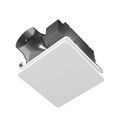
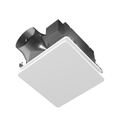

Broan-NuTone EVOLVE Premium Series Exhaust Fans are bathroom ventilation fans built around a modular housing that accepts optional humidity and motion sensing add-ons. Two CFM families cover most bathroom sizes: a 50-80-110 CFM selectable model rated from less than 0.3 sones to 0.6 sones, and a 110-130-150 CFM selectable model that ranges from 0.5 to 0.6 sones across its three speeds. TRUECFM technology holds the fan's rated airflow through 0.4 inch of static pressure, so performance doesn't drop off when duct runs get long or include extra elbows. Both families connect to 6-inch round duct and offer continuous-run operation, meeting ENERGY STAR, ASHRAE 62.2, and LEED whole-home ventilation requirements. Installation uses a snap-in housing and slide-and-lock blower attachment that cuts setup time by more than 30 percent compared to older mounting styles. For contractors doing bathroom remodels or new construction, matching CFM and sone rating to room size and noise tolerance keeps the fan both code-compliant and livable for the homeowner.
Subcategories
- 50-80-110 CFM Fans: 50-80-110 CFM fans give three selectable speeds for small to mid-size bathrooms, with sound ratings from less than 0.3 sones at the lowest speed to 0.6 sones at the highest. Installers pick this family for powder rooms and secondary bathrooms where quiet operation matters more than maximum airflow. Continuous-run mode keeps a low background speed running at all times to meet whole-home ventilation codes.
- 110-130-150 CFM Fans: 110-130-150 CFM fans deliver more airflow for larger primary bathrooms or rooms with a separate shower and tub. Sound ratings range from 0.5 to 0.6 sones across the three speeds, still quiet enough for most remodel specifications. The higher CFM range suits rooms that need more exhaust volume without moving to an inline or remote-mounted fan.
- Fan and Light Combination Units: Fan and light combination units add a full lit grille to the same continuous-run platform used across the EVOLVE Premium line. Electricians wire the light and fan as one fixture instead of running separate boxes for each function. Both CFM families are available with this light-equipped option.
- Sensor-Ready Modular Fans: Sensor-ready modular fans accept optional humidity or motion sensing modules within the same housing used for the standard units. Builders add these modules on jobs where code or the homeowner wants automatic operation instead of a manual wall switch. The modular design lets an installer add a sensor later without replacing the fan housing already in the ceiling.
Buying Guide
Room size and required air changes drive the CFM decision on most bathroom fan jobs. ASHRAE 62.2 and most local codes size continuous ventilation to the square footage of the bathroom, so calculate the room's air change requirement before choosing between the 50-80-110 CFM family and the 110-130-150 CFM family. Broan-NuTone EVOLVE Premium Series Exhaust Fans keep the same modular housing across both CFM ranges, so switching families later doesn't mean a different rough-in. Sone rating matters just as much as CFM on remodel jobs, since a homeowner who complains about a loud fan will call back regardless of whether the ventilation numbers meet code. TRUECFM technology holds rated airflow through 0.4 inch of static pressure, which matters on jobs with long duct runs or several elbows between the fan and the exterior termination. Confirm duct size before ordering, since these fans connect to 6-inch round duct rather than the smaller 4-inch duct common on older fan models. For jobs that need automatic operation, choose a sensor-ready model so a humidity or motion module can be added without swapping the housing later. Fan and light combination units simplify wiring on new construction by combining both functions into a single fixture and control run. Continuous-run capability is worth confirming with the local code official, since some jurisdictions require it for whole-home ventilation credit while others treat it as optional.
Frequently Asked Questions
How is CFM sized for a bathroom fan?
CFM is generally sized to the bathroom's square footage, following ASHRAE 62.2 or the local code's continuous ventilation requirement. Smaller bathrooms and powder rooms typically fit the 50-80-110 CFM family, while larger primary bathrooms often call for the 110-130-150 CFM family. Confirming the room's exact requirement before ordering avoids an undersized fan that fails inspection.
What does the sone rating actually measure?
Sone rating measures how loud a fan sounds during operation, with lower numbers meaning quieter performance. EVOLVE Premium fans range from less than 0.3 sones to 0.6 sones depending on the model and selected speed. A homeowner sensitive to noise typically benefits more from choosing a lower sone rating than from maximizing CFM.
What duct size do these fans need?
EVOLVE Premium Series fans connect to 6-inch round duct. Confirm the rough-in duct size matches before ordering, since older housing stock in a remodel may have been built around a smaller 4-inch duct. A duct size mismatch typically means either resizing the transition or choosing different ductwork before the fan can be installed.
Can a humidity or motion sensor be added after the fan is installed?
Sensor-ready modular models accept an optional humidity or motion sensing module within the same housing used for the standard fan. Adding the module later doesn't require replacing the housing already mounted in the ceiling. That modular design simplifies adding sensing features to a bathroom's ventilation control on both remodel and new construction jobs.
Does continuous-run mode affect energy use?
Continuous-run mode keeps a lower background speed running at all times to satisfy whole-home ventilation requirements, then ramps to full speed when triggered manually or by a sensor. ENERGY STAR certification on these models means the continuous low-speed setting is designed for efficient, all-day operation. Local code determines whether continuous-run credit is required or simply an option on a given job.
