



Filters
SORT
Product Availability –
Category –
Used With –
Review Score –
 --%3E %3Csvg version='1.1' id='Fill' xmlns='http://www.w3.org/2000/svg' xmlns:xlink='http://www.w3.org/1999/xlink' x='0px' y='0px' viewBox='0 0 100 100' enable-background='new 0 0 100 100' xml:space='preserve'%3E %3Cpath fill='%23F15C02' d='M79.44,0.95H20.56C9.78,0.95,0.95,9.78,0.95,20.56v58.87c0,10.79,8.82,19.61,19.61,19.61h58.87 c10.79,0,19.61-8.83,19.61-19.61V20.56C99.05,9.78,90.22,0.95,79.44,0.95z M65.38,58.24l9.38,29.58L49.69,69.78L24.5,87.82 l9.34-29.6L8.8,39.6l30.73-0.17c0,0,6.98-19.61,10-28.93c0.54,1.36,9.88,29.1,9.88,29.1H91.2L65.38,58.24z'/%3E %3C/svg%3E)
 --%3E %3Csvg version='1.1' id='With-RB' xmlns='http://www.w3.org/2000/svg' xmlns:xlink='http://www.w3.org/1999/xlink' x='0px' y='0px' viewBox='0 0 100 100' enable-background='new 0 0 100 100' xml:space='preserve'%3E %3Cpath fill='%23FBC8B4' d='M79.44,0.95H20.56C9.78,0.95,0.95,9.78,0.95,20.56v58.87c0,10.79,8.82,19.61,19.61,19.61h58.87 c10.79,0,19.61-8.83,19.61-19.61V20.56C99.05,9.78,90.22,0.95,79.44,0.95z M65.38,58.24l9.38,29.58L49.69,69.78L24.5,87.82 l9.34-29.6L8.8,39.6l30.73-0.17c0,0,6.98-19.61,10-28.93c0.54,1.36,9.88,29.1,9.88,29.1H91.2L65.38,58.24z'/%3E %3C/svg%3E)
Price Range –
Burnham Boiler Parts

 --%3E %3Csvg version='1.1' id='Half' xmlns='http://www.w3.org/2000/svg' xmlns:xlink='http://www.w3.org/1999/xlink' x='0px' y='0px' viewBox='0 0 100 100' enable-background='new 0 0 100 100' xml:space='preserve'%3E %3Cg%3E %3Cpath fill='%23F15C02' d='M30.05,70.23l3.79-12.01L8.8,39.6l30.73-0.17c0,0,6.98-19.61,10-28.93c0.54,1.36,9.88,29.1,9.88,29.1h1.58 L93.71,7.18c-3.58-3.82-8.66-6.23-14.28-6.23H20.56C9.78,0.95,0.95,9.78,0.95,20.56v58.87c0,5.41,2.22,10.32,5.79,13.88 L30.05,70.23z'/%3E %3C/g%3E %3Cpath fill='%23FBC8B4' d='M93.71,7.18L60.98,39.6H91.2L65.38,58.24l9.38,29.58L49.69,69.78L24.5,87.82l5.55-17.59L6.75,93.32 c3.55,3.54,8.44,5.73,13.82,5.73h58.87c10.79,0,19.61-8.83,19.61-19.61V20.56C99.05,15.4,97.01,10.69,93.71,7.18z'/%3E %3C/svg%3E)

 --%3E %3Csvg version='1.1' id='No-RB' xmlns='http://www.w3.org/2000/svg' xmlns:xlink='http://www.w3.org/1999/xlink' x='0px' y='0px' viewBox='0 0 100 100' enable-background='new 0 0 100 100' xml:space='preserve'%3E %3Cpath fill='%23CECECE' d='M79.44,0.95H20.56C9.78,0.95,0.95,9.78,0.95,20.56v58.87c0,10.79,8.82,19.61,19.61,19.61h58.87 c10.79,0,19.61-8.83,19.61-19.61V20.56C99.05,9.78,90.22,0.95,79.44,0.95z M65.38,58.24l9.38,29.58L49.69,69.78L24.5,87.82 l9.34-29.6L8.8,39.6l30.73-0.17c0,0,6.98-19.61,10-28.93c0.54,1.36,9.88,29.1,9.88,29.1H91.2L65.38,58.24z'/%3E %3C/svg%3E)
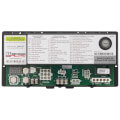

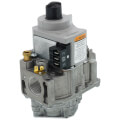
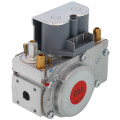
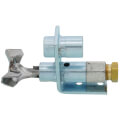


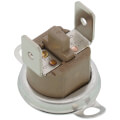

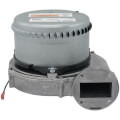

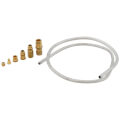
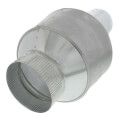
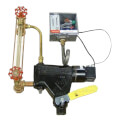


Burnham Boiler Parts are replacement components for the residential and commercial hydronic boilers built by U.S. Boiler Company, which manufactures its Burnham-branded lineup at a Lancaster, Pennsylvania facility with cast iron sections cast at a sister Casting Solutions plant in Zanesville, Ohio. The Burnham parts catalog spans gas and oil-fired models, so a parts search starts with confirming fuel type before narrowing down to a specific component like a burner assembly, aquastat, or cast iron section. U.S. Boiler's Burnham condensing boilers reach efficiencies over 95 percent, and the control packages on those higher-efficiency models differ meaningfully from the simpler aquastats used on older atmospheric gas boilers like the ES2 line. Confirming the specific Burnham model and fuel type from the boiler's rating plate keeps a parts order matched to the correct control and combustion components.
Subcategories
- Gas Valves and Burner Components: Gas valves and burner components regulate fuel delivery and ignition on gas-fired Burnham boilers, including atmospheric models like the ES2 line rated near 85 percent AFUE and the higher-efficiency condensing series. A combination gas valve's size and pressure regulator setting need to match the boiler's input rating and gas type, natural gas or propane, since an incorrect regulator setting can affect combustion even if the valve installs without issue. Burner assemblies on Burnham's condensing models are built for modulating operation, which differs from the fixed-rate burners used on older atmospheric models. Confirming both the boiler series and fuel type before ordering keeps a gas valve or burner replacement matched to the system's combustion design.
- Oil Burner Parts: Oil burner parts, including nozzles, electrodes, and burner pumps, keep an oil-fired Burnham boiler's three-pass combustion design running at its designed efficiency. Nozzle spray angle and flow rate are matched to the specific burner and firing rate, so a nozzle with the correct flow rate but the wrong spray angle can produce poor combustion even though it threads into place correctly. Electrodes need to be gapped correctly relative to the nozzle to establish a reliable spark for ignition. Referencing the burner's nameplate for nozzle specifications, rather than assuming based on boiler size, is the standard approach before ordering oil burner parts.
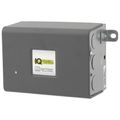
- Aquastats and Control Systems: Aquastats and control systems range from simple single-stage aquastats on older Burnham boilers to the U.S. Boiler IQ and Sage2.3 control systems used on newer condensing models. A single-stage aquastat controls the boiler based on one water temperature setpoint, while the newer control systems modulate firing rate and can manage outdoor reset and multiple heating zones. Replacing an older aquastat with a newer control system generally isn't a direct swap, since the newer systems interface with different wiring and, in some cases, different sensor types. Confirming which control generation is installed before ordering keeps a replacement compatible with the existing wiring.
- Cast Iron Sections: Cast iron sections form the core heat exchanger on many Burnham boiler models and are manufactured to match a specific series rather than a general size category. A cracked section is typically the most significant Burnham boiler repair, and because sections seal against each other to form the boiler's waterways, they are often ordered as a matched set rather than individually. Commercial Burnham boilers and residential models use sections built to different tolerances even when their heating capacities are similar. Confirming the exact series and section count from the boiler's rating plate is necessary before ordering a replacement section.
Buying Guide
Burnham Boiler Parts orders start with confirming fuel type, gas or oil, and the specific boiler series from the rating plate, since U.S. Boiler Company builds Burnham's residential and commercial lineup across atmospheric gas models, oil-fired three-pass designs, and higher-efficiency condensing boilers that reach efficiencies over 95 percent. Gas-fired models split further by combustion design: atmospheric boilers like the ES2 line use fixed-rate burners and simpler gas valves, while condensing models use modulating burners paired with electronic control systems, so a gas valve or burner assembly from one design won't transfer to the other even within the Burnham name. Oil-fired Burnham boilers depend on nozzle spray angle and flow rate matching the burner's firing rate, and getting the flow rate right while missing the spray angle can still produce poor combustion, so referencing the burner nameplate is more reliable than estimating from boiler size. Control systems present a similar split: older Burnham boilers use single-stage aquastats built around one temperature setpoint, while newer models use the U.S. Boiler IQ or Sage2.3 systems, which modulate firing rate and manage features like outdoor reset. These two control generations aren't directly interchangeable because of differences in wiring and sensor compatibility. Cast iron sections, the most significant repair on a Burnham boiler, are manufactured to match a specific series and are frequently ordered as a matched set to keep the assembly's waterways sealed after replacement.
Frequently Asked Questions
What's the first thing to confirm before ordering Burnham boiler parts?
Fuel type, gas or oil, and the specific Burnham series from the boiler's rating plate. Components like burners, gas valves, and cast iron sections are built to match a specific series rather than a general boiler size.
Can a Burnham ES2 gas valve be used on a condensing boiler model?
No. Atmospheric models like the ES2 use fixed-rate burners and simpler gas valves, while condensing models use modulating burners with different valve and control requirements.
Why would a new oil burner nozzle still produce poor combustion?
Flow rate and spray angle both need to match the burner's firing rate. A nozzle with the correct flow rate but the wrong spray angle can still produce uneven combustion.
Can a Sage2.3 control system replace an older single-stage aquastat directly?
Generally not as a direct swap. The newer control systems interface with different wiring and sensor types than a simple single-stage aquastat, so the replacement typically involves more than swapping the control itself.
Why are Burnham cast iron sections often sold as a set rather than individually?
Sections seal against each other to form the boiler's waterways, so replacing a single cracked section without matching sections can leave gaps in that seal. Ordering a matched set keeps the assembly sealing correctly.
