




Filters
SORT
Product Availability –
Brand –
Size –
Review Score –
 --%3E %3Csvg version='1.1' id='Fill' xmlns='http://www.w3.org/2000/svg' xmlns:xlink='http://www.w3.org/1999/xlink' x='0px' y='0px' viewBox='0 0 100 100' enable-background='new 0 0 100 100' xml:space='preserve'%3E %3Cpath fill='%23F15C02' d='M79.44,0.95H20.56C9.78,0.95,0.95,9.78,0.95,20.56v58.87c0,10.79,8.82,19.61,19.61,19.61h58.87 c10.79,0,19.61-8.83,19.61-19.61V20.56C99.05,9.78,90.22,0.95,79.44,0.95z M65.38,58.24l9.38,29.58L49.69,69.78L24.5,87.82 l9.34-29.6L8.8,39.6l30.73-0.17c0,0,6.98-19.61,10-28.93c0.54,1.36,9.88,29.1,9.88,29.1H91.2L65.38,58.24z'/%3E %3C/svg%3E)
C Clamps




 --%3E %3Csvg version='1.1' id='No-RB' xmlns='http://www.w3.org/2000/svg' xmlns:xlink='http://www.w3.org/1999/xlink' x='0px' y='0px' viewBox='0 0 100 100' enable-background='new 0 0 100 100' xml:space='preserve'%3E %3Cpath fill='%23CECECE' d='M79.44,0.95H20.56C9.78,0.95,0.95,9.78,0.95,20.56v58.87c0,10.79,8.82,19.61,19.61,19.61h58.87 c10.79,0,19.61-8.83,19.61-19.61V20.56C99.05,9.78,90.22,0.95,79.44,0.95z M65.38,58.24l9.38,29.58L49.69,69.78L24.5,87.82 l9.34-29.6L8.8,39.6l30.73-0.17c0,0,6.98-19.61,10-28.93c0.54,1.36,9.88,29.1,9.88,29.1H91.2L65.38,58.24z'/%3E %3C/svg%3E)


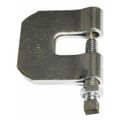
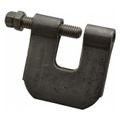
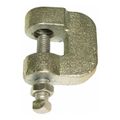
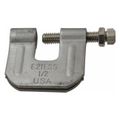
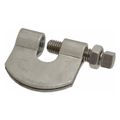
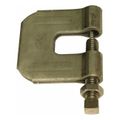


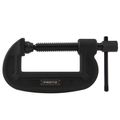
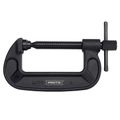
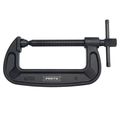
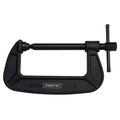


C Clamps hold two workpieces together with adjustable clamping pressure applied through a threaded spindle, making them a standard tool for welding, fabrication, woodworking, and general repair work. Wilton's 140 Series ranges from a 0 to 2-inch jaw opening with a 1-1/8-inch throat depth up to a 0 to 6-inch opening with a 3-1/4-inch throat, covering small precision work through larger fabrication tasks. Drop-forged steel construction gives these clamps the strength to hold heavy pieces under pressure without deforming the frame. Contractors and fabricators keep a range of sizes on hand because jaw opening and throat depth both need to match the specific workpiece and clamping location, not just one or the other. Picking the right size upfront avoids struggling with a clamp that's either too small to reach the work or too large to apply even pressure.
Subcategories
- Light-Duty C-Clamps: Light-duty C-clamps handle smaller clamping tasks in woodworking, light fabrication, and general repair. Wilton's 140 Series starts at a 0 to 2-inch jaw opening with a 1-1/8-inch throat depth for this range. Technicians use these smaller clamps for holding small parts steady during drilling, gluing, or light assembly work. Their compact size makes them easy to store and position in tight spaces.
- Heavy-Duty Drop-Forged C-Clamps: Heavy-duty drop-forged C-clamps handle higher clamping loads in metalworking and fabrication settings. Wilton's 400 Series reaches up to a 0 to 4-1/4-inch jaw opening with a 3-1/4-inch throat depth. Fabricators use this range for holding steel components during welding or drilling where the light-duty series wouldn't provide enough clamping force. Drop-forged construction resists deformation under sustained heavy loads better than cast alternatives.
- Deep-Throat C-Clamps: Deep-throat C-clamps extend the reach from the clamp's frame to the workpiece, allowing clamping further from an edge than a standard-throat model permits. Wilton's 140 Series 0 to 6-inch model pairs a 3-1/4-inch throat depth with its larger jaw opening. Fabricators and installers use deep-throat clamps when the clamping point sits well inside the edge of a workpiece. Wider panels, larger assemblies, and pipe hanging applications commonly call for this deep-throat style.
- Spark-Duty C-Clamps: Spark-duty C-clamps are built for welding and high-heat fabrication environments where standard clamps could be damaged by heat or spatter. Wilton's spark-duty drop-forged model offers a 2 to 10-1/8-inch jaw opening with a 5-7/8-inch throat depth for large-scale welding fixtures. Welders and metal fabricators use this size range for holding large steel assemblies in place during extended welding passes. The oversized jaw opening accommodates thick stock and large assemblies that smaller clamps can't reach around.
Buying Guide
Start with the jaw opening needed for the thickest material or assembly being clamped, since a clamp's maximum jaw opening sets a hard limit on what it can hold. Measuring the workpiece at its widest clamping point before selecting a size prevents buying a clamp that won't open far enough to fit around the material.
Next, check the throat depth against how far from the edge the clamping point sits. A shallow-throat clamp works fine for edge clamping, but a clamping point set back from the edge of a panel or assembly needs a deep-throat model to reach it. Wilton's 140 Series covers both shallow and deep-throat needs depending on the specific model chosen.
C Clamps also vary in build quality and intended load. Drop-forged steel construction holds up to repeated heavy use in metalworking and fabrication settings better than lighter cast designs, which suit occasional light-duty tasks like woodworking clamps or general repairs. Matching the clamp's build to the frequency and intensity of use extends its service life.
Finally, consider the work environment. Welding and high-heat fabrication call for a spark-duty rated clamp that can withstand heat and spatter exposure without damage, while general shop or job site use doesn't require that rating. Choosing a clamp rated for the actual working conditions avoids premature wear or failure on the job.
Frequently Asked Questions
How is C-clamp size measured?
C-clamp size refers to the maximum jaw opening, which is the largest gap the clamp can span with the spindle fully backed out. Wilton's lineup ranges from a 2-inch jaw opening on light-duty models up to over 10 inches on spark-duty models. Matching jaw opening to the thickest point of the workpiece is the first step in choosing a clamp.
What's throat depth on a C-clamp and why does it matter?
Throat depth is the distance from the center of the spindle to the inside edge of the clamp's frame, which determines how far from an edge the clamp can reach. A clamping point set well back from the edge of a panel needs a deeper throat than a standard clamp provides. Wilton's deep-throat models pair a larger throat depth with a wide jaw opening for this purpose.
What's the difference between a standard C-clamp and a spark-duty C-clamp?
A spark-duty C-clamp is built to withstand heat and weld spatter exposure that would damage a standard clamp over time, and it typically offers a larger jaw opening for bigger fabrication work. Wilton's spark-duty drop-forged model reaches a 2 to 10-1/8-inch jaw opening for this purpose. Standard clamps work fine for general shop and repair tasks that don't involve welding heat.
Are drop-forged C-clamps stronger than cast versions?
Drop-forged steel construction resists deformation under heavy clamping loads better than cast alternatives, making it the standard choice for metalworking and fabrication use. Wilton's 400 Series drop-forged clamps are built for this higher-load application. Lighter cast or stamped clamps still work fine for occasional light-duty tasks.
Can one C-clamp size handle most job site tasks?
A single size rarely covers every clamping task, since jaw opening and throat depth both need to match the specific workpiece and clamping location. Keeping a range of sizes, from a small 2-inch jaw opening clamp up through a larger 6-inch model, covers most general fabrication and repair needs. Specialty tasks like deep-throat or high-heat welding applications call for a clamp built for that specific purpose.
