




Filters
SORT
Product Availability –
Review Score –
 --%3E %3Csvg version='1.1' id='Fill' xmlns='http://www.w3.org/2000/svg' xmlns:xlink='http://www.w3.org/1999/xlink' x='0px' y='0px' viewBox='0 0 100 100' enable-background='new 0 0 100 100' xml:space='preserve'%3E %3Cpath fill='%23F15C02' d='M79.44,0.95H20.56C9.78,0.95,0.95,9.78,0.95,20.56v58.87c0,10.79,8.82,19.61,19.61,19.61h58.87 c10.79,0,19.61-8.83,19.61-19.61V20.56C99.05,9.78,90.22,0.95,79.44,0.95z M65.38,58.24l9.38,29.58L49.69,69.78L24.5,87.82 l9.34-29.6L8.8,39.6l30.73-0.17c0,0,6.98-19.61,10-28.93c0.54,1.36,9.88,29.1,9.88,29.1H91.2L65.38,58.24z'/%3E %3C/svg%3E)
 --%3E %3Csvg version='1.1' id='With-RB' xmlns='http://www.w3.org/2000/svg' xmlns:xlink='http://www.w3.org/1999/xlink' x='0px' y='0px' viewBox='0 0 100 100' enable-background='new 0 0 100 100' xml:space='preserve'%3E %3Cpath fill='%23FBC8B4' d='M79.44,0.95H20.56C9.78,0.95,0.95,9.78,0.95,20.56v58.87c0,10.79,8.82,19.61,19.61,19.61h58.87 c10.79,0,19.61-8.83,19.61-19.61V20.56C99.05,9.78,90.22,0.95,79.44,0.95z M65.38,58.24l9.38,29.58L49.69,69.78L24.5,87.82 l9.34-29.6L8.8,39.6l30.73-0.17c0,0,6.98-19.61,10-28.93c0.54,1.36,9.88,29.1,9.88,29.1H91.2L65.38,58.24z'/%3E %3C/svg%3E)
Price Range –
Carrier Gas Valves





 --%3E %3Csvg version='1.1' id='No-RB' xmlns='http://www.w3.org/2000/svg' xmlns:xlink='http://www.w3.org/1999/xlink' x='0px' y='0px' viewBox='0 0 100 100' enable-background='new 0 0 100 100' xml:space='preserve'%3E %3Cpath fill='%23CECECE' d='M79.44,0.95H20.56C9.78,0.95,0.95,9.78,0.95,20.56v58.87c0,10.79,8.82,19.61,19.61,19.61h58.87 c10.79,0,19.61-8.83,19.61-19.61V20.56C99.05,9.78,90.22,0.95,79.44,0.95z M65.38,58.24l9.38,29.58L49.69,69.78L24.5,87.82 l9.34-29.6L8.8,39.6l30.73-0.17c0,0,6.98-19.61,10-28.93c0.54,1.36,9.88,29.1,9.88,29.1H91.2L65.38,58.24z'/%3E %3C/svg%3E)





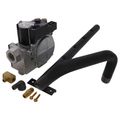


Carrier Gas Valves regulate the flow of natural gas or propane to the burner in Carrier furnaces and other gas-fired heating equipment, opening on a call for heat and shutting off when the cycle ends or a safety condition is detected. The valve works together with the ignition control to sequence gas flow safely with the pilot or igniter.
A malfunctioning gas valve can cause a furnace to fail to light, produce weak or uneven flame, or fail to shut off gas properly, so matching the replacement valve to the specific Carrier furnace model and its ignition system is what determines whether the unit operates safely and correctly afterward.
Subcategories
- Single-Stage Gas Valves: Single-stage gas valves deliver gas at one fixed rate whenever the burner calls for heat, matching the simpler control sequence used on single-stage Carrier furnaces.
- Two-Stage and Modulating Gas Valves: Two-stage and modulating gas valves adjust gas flow across multiple rates, working with Carrier furnace models designed to run at reduced or full capacity depending on heating demand.
- Combination Gas Valves: Combination gas valves combine the safety shutoff, pressure regulation, and main gas control functions into a single valve body, which is the configuration used on many Carrier furnace models.
Buying Guide
Identify the exact Carrier furnace model and whether it uses single-stage, two-stage, or modulating gas delivery, since the gas valve has to match that staging configuration to control the burner correctly.
Confirm the gas type the valve is configured for, natural gas or propane, before ordering, since a valve set up for the wrong gas type will not regulate pressure correctly even if it otherwise fits.
Check the valve's inlet and outlet pressure ratings against the furnace's manifold pressure specification, since improper gas pressure at the burner affects both performance and safe operation.
Verify the electrical connector and control wiring configuration on the replacement matches the original valve, as Carrier Gas Valves vary in how they interface with the furnace's ignition control board.
Have a qualified technician handle installation and post-repair testing of gas valve replacements, since gas pressure and safety shutoff verification require proper testing equipment.
Frequently Asked Questions
What does a gas valve do in a Carrier furnace?
It regulates the flow of gas to the burner, opening on a call for heat and shutting off at the end of the cycle or when a safety condition is detected.
What's the difference between single-stage and two-stage gas valves?
A single-stage valve delivers gas at one fixed rate, while a two-stage or modulating valve can adjust gas flow across multiple rates to match varying heating demand.
Can a gas valve cause a furnace not to light?
Yes, a malfunctioning gas valve can prevent gas from reaching the burner properly, which can result in a no-light condition or weak, uneven flame.
Do I need to match the gas valve to natural gas or propane specifically?
Yes, gas valves are configured for a specific gas type, and using one configured for the wrong gas type won't regulate pressure correctly.
Should I replace a Carrier gas valve myself?
Gas valve replacement and the pressure and safety testing that follows are best handled by a qualified technician with the proper testing equipment.
