




Class K Fuses


 --%3E %3Csvg version='1.1' id='No-RB' xmlns='http://www.w3.org/2000/svg' xmlns:xlink='http://www.w3.org/1999/xlink' x='0px' y='0px' viewBox='0 0 100 100' enable-background='new 0 0 100 100' xml:space='preserve'%3E %3Cpath fill='%23CECECE' d='M79.44,0.95H20.56C9.78,0.95,0.95,9.78,0.95,20.56v58.87c0,10.79,8.82,19.61,19.61,19.61h58.87 c10.79,0,19.61-8.83,19.61-19.61V20.56C99.05,9.78,90.22,0.95,79.44,0.95z M65.38,58.24l9.38,29.58L49.69,69.78L24.5,87.82 l9.34-29.6L8.8,39.6l30.73-0.17c0,0,6.98-19.61,10-28.93c0.54,1.36,9.88,29.1,9.88,29.1H91.2L65.38,58.24z'/%3E %3C/svg%3E)

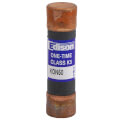
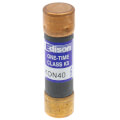
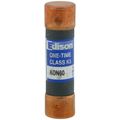

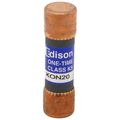


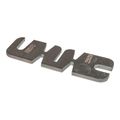


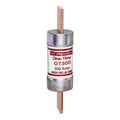
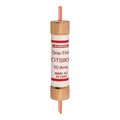

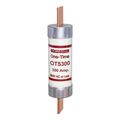

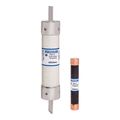


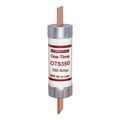
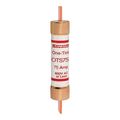
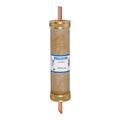


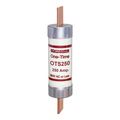

Class K Fuses are UL-classified branch circuit fuses used to protect motors, control circuits, and other electrical loads in HVAC and industrial equipment from short circuits and overloads. Eaton's Bussmann series offers this class in both 250VAC and 600VAC ratings, covering amperages from 1/8A up to 600A in a single fuse family. Construction on Class K Fuses is general purpose and one-time, so a blown fuse gets replaced rather than reset, keeping the protection scheme simple on equipment that doesn't need a resettable breaker. Physical dimensions on Class K fuses match Class H fuse holders, so equipment built around older Class H fuse blocks can accept a Class K fuse without a holder change. Electricians and HVAC technicians stock these fuses for control panel repairs and equipment replacement, since a blown fuse is a common failure point on packaged rooftop units, compressors, and other motor-driven equipment.
Subcategories
- 250-Volt Class K Fuses: 250-Volt Class K Fuses cover amperages up to 600A within Eaton's Bussmann NON series line, sized for control circuits and equipment running on standard 240V or lower systems. Panel builders and service technicians pull these when working on equipment rated below 250V, since a 600V-rated fuse isn't required in that application. General purpose, one-time construction keeps the fuse simple to stock and replace. HVAC control panels and light industrial equipment commonly spec this voltage class.
- 600-Volt Class K Fuses: 600-Volt Class K Fuses, part of the Bussmann NOS series, also cover amperages up to 600A but carry the higher voltage rating needed on 480V and similar three-phase systems. Commercial and industrial equipment running higher supply voltage specs this class instead of the 250-volt version. Physical fuse dimensions stay consistent with the lower voltage class in the same amperage range. Electricians confirm system voltage before ordering, since a 250-volt fuse isn't rated for a 480V circuit.
- Class H-Interchangeable Class K Fuses: Class H-Interchangeable Class K Fuses share the same physical dimensions as older Class H fuse holders, letting equipment built around Class H fuse blocks accept a Class K fuse without a holder change. Older HVAC equipment and legacy control panels commonly still use Class H-style holders. Upgrading from a Class H fuse to a Class K fuse in the same holder typically improves interrupting rating without a wiring change. Facility technicians check equipment nameplate data before making this substitution to confirm holder compatibility.
Buying Guide
Confirm system voltage first, since that single number decides whether a job needs the 250-volt or 600-volt version. Equipment running on 240V or lower systems takes the 250-volt fuse, while 480V and similar three-phase equipment needs the 600-volt rated version instead. Amperage comes next, and Class K Fuses cover a wide range, from small control circuit protection up to 600A on larger equipment, so match the fuse rating to the equipment's nameplate current rather than rounding up out of caution. Oversizing a fuse defeats the protection it's meant to provide, since a fuse sized too large won't open before downstream wiring or components take damage during a fault. Holder compatibility matters on older equipment. A panel built around Class H fuse blocks accepts a Class K fuse in the same physical space, which makes upgrading protection on older gear straightforward without rewiring the panel. General purpose, one-time construction means these fuses aren't resettable, so keeping spares on the truck or in the panel cabinet saves a return trip when one blows during a service call. Time-delay characteristics vary across manufacturers within this class, so check the specific fuse's data sheet rather than assuming standard behavior across every brand carrying a Class K label. Confirm interrupting rating against the equipment's available fault current as well, particularly on larger commercial services where fault current can exceed what a lower-rated fuse can safely clear.
Frequently Asked Questions
What's the amperage range for Class K Fuses?
Eaton's Bussmann series covers Class K Fuses from 1/8A up to 600A across both the 250-volt and 600-volt lines. Matching fuse amperage to the equipment's nameplate current, rather than rounding up, keeps the protection scheme effective. Oversizing the fuse can let a fault damage downstream wiring or components before the fuse opens.
Can a Class K fuse replace a Class H fuse?
Class K fuses share the same physical dimensions as Class H fuse holders, so a panel built around Class H blocks can accept a Class K fuse without changing the holder. Upgrading in this way typically improves interrupting rating without requiring any rewiring. Checking the equipment's nameplate data before substituting confirms holder compatibility.
What's the difference between 250-volt and 600-volt Class K fuses?
The 250-volt version, part of the Bussmann NON series, suits equipment running on 240V or lower systems. The 600-volt version, part of the NOS series, covers 480V and similar three-phase equipment instead. Both lines cover the same amperage range up to 600A, so voltage rating is the main factor separating them.
Are Class K Fuses resettable?
No, Class K Fuses use general purpose, one-time construction, so a blown fuse gets replaced rather than reset. Keeping spares on hand avoids a return trip mid-repair when a fuse blows during a service call. One-time construction like this keeps the protection scheme straightforward compared to a resettable breaker.
Do Class K Fuses include time-delay versions?
Time-delay characteristics vary by manufacturer within the Class K family, so checking the specific fuse's data sheet is the reliable way to confirm delay behavior. Fast-acting and time-delay options can both carry a Class K label depending on the manufacturer's design. Matching the delay characteristic to the load, such as a motor with inrush current, prevents nuisance trips.
