




Edison


 --%3E %3Csvg version='1.1' id='Fill' xmlns='http://www.w3.org/2000/svg' xmlns:xlink='http://www.w3.org/1999/xlink' x='0px' y='0px' viewBox='0 0 100 100' enable-background='new 0 0 100 100' xml:space='preserve'%3E %3Cpath fill='%23F15C02' d='M79.44,0.95H20.56C9.78,0.95,0.95,9.78,0.95,20.56v58.87c0,10.79,8.82,19.61,19.61,19.61h58.87 c10.79,0,19.61-8.83,19.61-19.61V20.56C99.05,9.78,90.22,0.95,79.44,0.95z M65.38,58.24l9.38,29.58L49.69,69.78L24.5,87.82 l9.34-29.6L8.8,39.6l30.73-0.17c0,0,6.98-19.61,10-28.93c0.54,1.36,9.88,29.1,9.88,29.1H91.2L65.38,58.24z'/%3E %3C/svg%3E)




 --%3E %3Csvg version='1.1' id='No-RB' xmlns='http://www.w3.org/2000/svg' xmlns:xlink='http://www.w3.org/1999/xlink' x='0px' y='0px' viewBox='0 0 100 100' enable-background='new 0 0 100 100' xml:space='preserve'%3E %3Cpath fill='%23CECECE' d='M79.44,0.95H20.56C9.78,0.95,0.95,9.78,0.95,20.56v58.87c0,10.79,8.82,19.61,19.61,19.61h58.87 c10.79,0,19.61-8.83,19.61-19.61V20.56C99.05,9.78,90.22,0.95,79.44,0.95z M65.38,58.24l9.38,29.58L49.69,69.78L24.5,87.82 l9.34-29.6L8.8,39.6l30.73-0.17c0,0,6.98-19.61,10-28.93c0.54,1.36,9.88,29.1,9.88,29.1H91.2L65.38,58.24z'/%3E %3C/svg%3E)
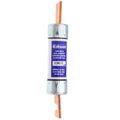
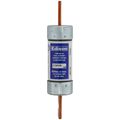
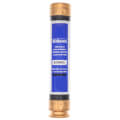
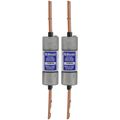
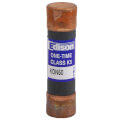
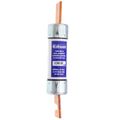
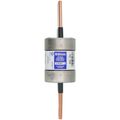
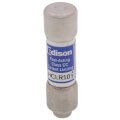


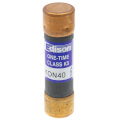
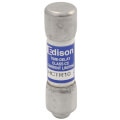
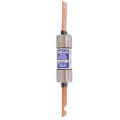
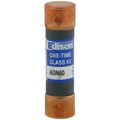
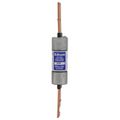

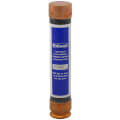
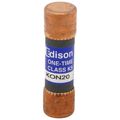
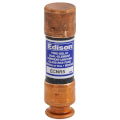


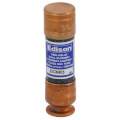
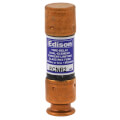
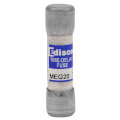
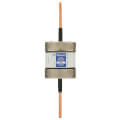
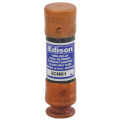

The Edison fuse line traces back to Cooper Industries' 1993 acquisition of Brush Fuses, which formed the Edison Fuse Products line as part of Cooper's circuit protection business. Edison products are now manufactured and marketed under Eaton's Bussmann series, following Eaton's later acquisition of Cooper Industries, and continue to serve electrical, electronic, and automotive circuit protection markets worldwide.
Product Lines
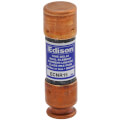
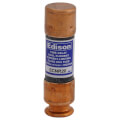
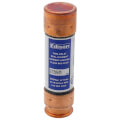
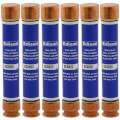
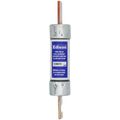
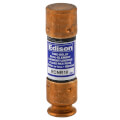
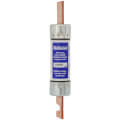
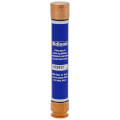
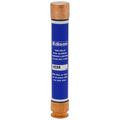
The Edison lineup carried by SupplyHouse includes dual element, time delay Class RK5 fuses such as the ECNR series rated for 250 volts and the ECSR series rated for 600 volts, both intended for AC power distribution mains, feeders, and branch circuits. The line also includes non-rejection time delay midget class fuses, very fast acting Class T fuses, one time Class H fuses, and copper cable limiters rated for 600 volts.
Why Contractors Specify Edison
Electricians and HVAC technicians specify Edison fuses for circuits carrying a mix of inductive loads, such as motors and transformers, and non-inductive loads like lighting and heating elements, since dual element time delay fuses are built to ride through normal motor starting current without nuisance blowing. The Class RK5 rating on Edison's ECNR and ECSR fuses means they fit standard fuse blocks and clips sized for that class, simplifying replacement in existing panels. Continued production under the Eaton Bussmann series also means long term parts availability for equipment that was originally specified with Edison branded fuses.
How to Choose Edison Products
Fuse selection starts with matching voltage rating to the circuit, choosing the 250 volt ECNR series for standard residential and light commercial branch circuits and the 600 volt ECSR series for higher voltage distribution and feeder applications. Circuits with motors, compressors, or transformers benefit from the dual element time delay design used across the ECNR and ECSR lines, since it tolerates brief inrush current during startup. Smaller control circuits and instrument panels are often better served by midget class fuses, while circuits needing very fast interruption of short circuit current, such as some electronic equipment protection, call for Class T fuses instead. Confirming amperage rating against the connected load's rated draw, rather than the fuse block's maximum capacity, avoids both nuisance blowing and under protection.
Frequently Asked Questions
What is the difference between the Edison ECNR and ECSR fuse series?
The ECNR series is rated for 250 volts while the ECSR series is rated for 600 volts, both as dual element, time delay Class RK5 fuses.
What kind of loads are Edison dual element fuses designed for?
Dual element time delay fuses are designed for circuits with inductive loads like motors and transformers as well as non-inductive loads like lighting and heating.
Who manufactures Edison fuses today?
Edison fuses are manufactured and marketed under Eaton's Bussmann series, following Eaton's acquisition of Cooper Industries, which had formed the Edison Fuse Products line in 1993.
When would a Class T fuse be used instead of a Class RK5 fuse?
Class T fuses are very fast acting and are typically chosen when a circuit needs rapid interruption of short circuit current, rather than the time delay behavior of Class RK5 fuses.
What voltage ratings are available in the Edison fuse line?
The Edison line carried by SupplyHouse includes 250 volt and 600 volt fuse ratings across its RK5, midget, Class T, and Class H product families.
