




Filters
SORT
Product Availability –
Brand –
Voltage –
Amperage –
Review Score –
 --%3E %3Csvg version='1.1' id='Fill' xmlns='http://www.w3.org/2000/svg' xmlns:xlink='http://www.w3.org/1999/xlink' x='0px' y='0px' viewBox='0 0 100 100' enable-background='new 0 0 100 100' xml:space='preserve'%3E %3Cpath fill='%23F15C02' d='M79.44,0.95H20.56C9.78,0.95,0.95,9.78,0.95,20.56v58.87c0,10.79,8.82,19.61,19.61,19.61h58.87 c10.79,0,19.61-8.83,19.61-19.61V20.56C99.05,9.78,90.22,0.95,79.44,0.95z M65.38,58.24l9.38,29.58L49.69,69.78L24.5,87.82 l9.34-29.6L8.8,39.6l30.73-0.17c0,0,6.98-19.61,10-28.93c0.54,1.36,9.88,29.1,9.88,29.1H91.2L65.38,58.24z'/%3E %3C/svg%3E)
Price Range –
DPDT Relays


 --%3E %3Csvg version='1.1' id='No-RB' xmlns='http://www.w3.org/2000/svg' xmlns:xlink='http://www.w3.org/1999/xlink' x='0px' y='0px' viewBox='0 0 100 100' enable-background='new 0 0 100 100' xml:space='preserve'%3E %3Cpath fill='%23CECECE' d='M79.44,0.95H20.56C9.78,0.95,0.95,9.78,0.95,20.56v58.87c0,10.79,8.82,19.61,19.61,19.61h58.87 c10.79,0,19.61-8.83,19.61-19.61V20.56C99.05,9.78,90.22,0.95,79.44,0.95z M65.38,58.24l9.38,29.58L49.69,69.78L24.5,87.82 l9.34-29.6L8.8,39.6l30.73-0.17c0,0,6.98-19.61,10-28.93c0.54,1.36,9.88,29.1,9.88,29.1H91.2L65.38,58.24z'/%3E %3C/svg%3E)
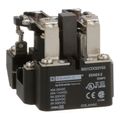
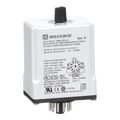
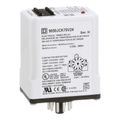

DPDT relays are electromechanical switches built around a single coil that operates two independent sets of contacts, each capable of connecting to one of two positions. Contractors use them anywhere a single control signal needs to redirect power between two separate circuits, such as switching a pump between two speeds or transferring power from a primary component to a backup. Because both poles move together, a DPDT relay can wire in redundant interlocks or reversing logic that would otherwise require two single-pole relays and extra wiring. HVAC and plumbing control panels rely on this switching action for sequencing tasks like staging equipment, controlling reversing valves, and isolating faulted circuits. Coil voltage, contact configuration, and mounting style vary across manufacturers, so matching a replacement relay to the base or socket already installed in the panel matters as much as matching the electrical rating. Selecting the right DPDT relay keeps control wiring compact and cuts down on the troubleshooting time that comes with a mismatched part.
Subcategories
- Plug-In (Ice Cube) DPDT Relays: Plug-in DPDT relays, often called ice cube relays for their compact clear housing, insert directly into a matching socket without permanent wiring to the relay body itself. Contractors favor them in control panels because a failed relay can be pulled and replaced in seconds without touching the panel's wiring terminals. The subcategory covers relays sized for common panel sockets used across HVAC and plumbing control applications. Keeping a few spare ice cube relays on the truck shortens diagnostic time on a service call.
- PCB Mount DPDT Relays: PCB mount DPDT relays solder directly onto a circuit board rather than plugging into a socket, making them the standard choice for original equipment manufacturers building control boards into HVAC and plumbing equipment. Technicians replacing a failed control board component look to this subcategory for relays that match the board's footprint and pin spacing. Coil voltage and contact rating both need to match the board's design specifications. A mismatched PCB relay can damage the board or cause erratic switching behavior.
- DPDT Relay Sockets & Bases: Relay sockets and bases hold a plug-in DPDT relay in place and provide the wiring terminals that connect it to the rest of the control circuit. Contractors install a socket once during a panel build or retrofit, then swap relays into it as needed without rewiring. The subcategory includes bases sized for standard ice cube relay footprints along with mounting hardware. Choosing a socket that matches the relay's pin configuration prevents a loose connection or intermittent switching fault.
- High Amperage DPDT Relays: High amperage DPDT relays are built with larger, more durable contacts to switch heavier electrical loads than a standard control relay can handle. Contractors specify them for applications like compressor staging or motor switching, where the load current exceeds what a general purpose relay is rated to carry. The subcategory groups relays designed for these higher current demands. Matching the relay's contact rating to the connected load's actual draw, rather than just its nameplate rating, helps prevent premature contact wear.
Buying Guide
Start by confirming the control signal's coil voltage, since a DPDT relay's coil has to match the voltage available in the panel to switch reliably. Next, check the load side: contact rating needs to cover the actual current and voltage of both circuits the relay will switch, not just one of them, since both poles carry power simultaneously. Mounting style narrows the search quickly. Plug-in relays suit panels already built around a socket and simplify future replacement, while PCB mount relays are the right choice when a board itself is being repaired or rebuilt. DPDT relays that will switch inductive loads, such as motors or compressors, benefit from a contact rating with some margin above the load's running current, since inrush current on startup can exceed steady-state draw. Contractors working on panels with multiple relay types should keep pin configuration and physical footprint in mind, since a relay that fits electrically but not physically into an existing socket is a wasted trip. For high-cycle applications, checking the manufacturer's rated mechanical and electrical life helps avoid a relay that wears out faster than the equipment it controls. Stocking a small assortment of common coil voltages and contact ratings, rather than one relay per job, keeps a service vehicle ready for the range of panels a technician is likely to encounter across HVAC and plumbing service calls.
Frequently Asked Questions
What does DPDT mean on a relay?
DPDT stands for double-pole, double-throw, meaning the relay has two independent sets of contacts that each switch between two positions when the coil energizes. Both poles move together from a single control signal.
Can a DPDT relay replace a single-pole relay?
In most cases yes, since a DPDT relay can be wired to use only one of its two poles, leaving the second pole unused. Confirm the coil voltage and physical mounting still match the original relay's specifications before making the swap.
Why would I need a DPDT relay instead of two single-pole relays?
A DPDT relay switches both poles simultaneously from one coil, which keeps wiring simpler and guarantees both circuits switch in sync. Two separate single-pole relays would need their coils tied together to achieve the same synchronized switching.
How do I know if a plug-in relay will fit my existing socket?
Match the pin count and pin layout stamped on the relay housing to the socket's terminal pattern, and confirm the relay's physical dimensions clear the panel enclosure. Manufacturers typically standardize ice cube relay footprints, but check before ordering a replacement.
What causes a DPDT relay to fail?
Repeated switching cycles wear down contact surfaces over time, and switching loads beyond the relay's rated current accelerates that wear. Coil failure from voltage spikes or age is another common cause, especially in relays exposed to frequent power fluctuations.
