




Delta Flush Valves

 --%3E %3Csvg version='1.1' id='No-RB' xmlns='http://www.w3.org/2000/svg' xmlns:xlink='http://www.w3.org/1999/xlink' x='0px' y='0px' viewBox='0 0 100 100' enable-background='new 0 0 100 100' xml:space='preserve'%3E %3Cpath fill='%23CECECE' d='M79.44,0.95H20.56C9.78,0.95,0.95,9.78,0.95,20.56v58.87c0,10.79,8.82,19.61,19.61,19.61h58.87 c10.79,0,19.61-8.83,19.61-19.61V20.56C99.05,9.78,90.22,0.95,79.44,0.95z M65.38,58.24l9.38,29.58L49.69,69.78L24.5,87.82 l9.34-29.6L8.8,39.6l30.73-0.17c0,0,6.98-19.61,10-28.93c0.54,1.36,9.88,29.1,9.88,29.1H91.2L65.38,58.24z'/%3E %3C/svg%3E)
 --%3E %3Csvg version='1.1' id='Fill' xmlns='http://www.w3.org/2000/svg' xmlns:xlink='http://www.w3.org/1999/xlink' x='0px' y='0px' viewBox='0 0 100 100' enable-background='new 0 0 100 100' xml:space='preserve'%3E %3Cpath fill='%23F15C02' d='M79.44,0.95H20.56C9.78,0.95,0.95,9.78,0.95,20.56v58.87c0,10.79,8.82,19.61,19.61,19.61h58.87 c10.79,0,19.61-8.83,19.61-19.61V20.56C99.05,9.78,90.22,0.95,79.44,0.95z M65.38,58.24l9.38,29.58L49.69,69.78L24.5,87.82 l9.34-29.6L8.8,39.6l30.73-0.17c0,0,6.98-19.61,10-28.93c0.54,1.36,9.88,29.1,9.88,29.1H91.2L65.38,58.24z'/%3E %3C/svg%3E)



Buying Guide
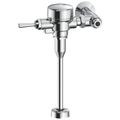
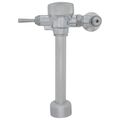
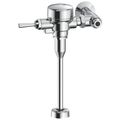
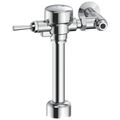
Manual versus electronic operation is the first decision on a flush valve order. Manual valves with an ADA lever handle need no power source and keep maintenance straightforward. Electronic sensor valves cut down on cross-contamination in high-traffic restrooms. The trade-off is battery replacement or a hardwired power connection down the road.
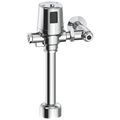
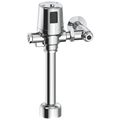
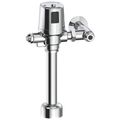
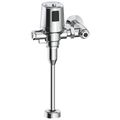
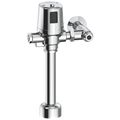
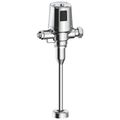
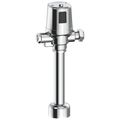
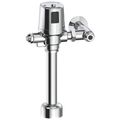
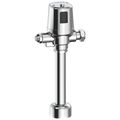
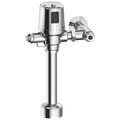
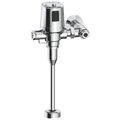
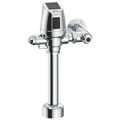
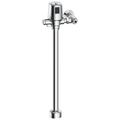
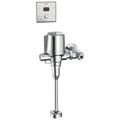
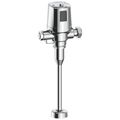
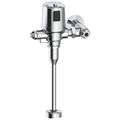
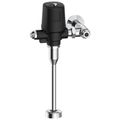
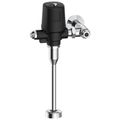
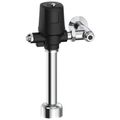
Battery and hardwire electronic valves each fit different restroom situations. A battery-operated unit like the 81T231BTA installs without running new wiring. That suits a retrofit where opening the wall for a power line is not practical. A hardwired unit like the 81T231HWA avoids battery replacement on a new build where wiring is already part of the plan.
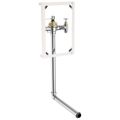
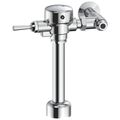
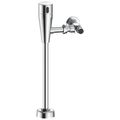
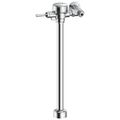
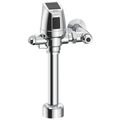
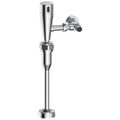
Exposed versus concealed installation depends on the wall and rough-in already in place. Exposed valves like the 81T231 and 81T201 mount on the surface of the wall with visible supply piping. Concealed valves like the 1600T6102ARI-42 hide the valve body inside the wall for a cleaner look on a wall-hung toilet installation.
Flow rate matters for both code compliance and water use. Urinal valves commonly run at 0.5 gpf, while water closet valves commonly run at 1.1 gpf. Confirm that the flow rate matches local plumbing code and the fixture's rated flush volume. A mismatch can leave the fixture underperforming or wasting water.
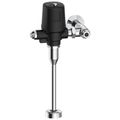
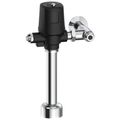
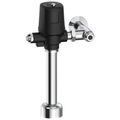
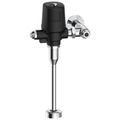
Finish and mechanical override features round out the selection. Chrome remains the standard finish for most commercial restrooms. Matte black units like the 81T201HWA-42-MMO-BL suit a design-forward space. A manual mechanical override on an electronic valve lets staff trigger a flush by hand if the sensor or power fails.
Frequently Asked Questions
What is the difference between an exposed and a concealed flush valve?
An exposed flush valve mounts on the surface of the wall with the supply piping visible. This is the more common configuration and is easier to service. A concealed flush valve hides the valve body inside the wall, leaving only a cover plate visible. That gives a cleaner look on a wall-hung toilet but takes more work to access for service.
Should a battery or hardwire electronic flush valve be chosen for a retrofit?
A battery-operated flush valve is generally the better fit for a retrofit since it installs without running new electrical wiring through an existing wall. A hardwired valve makes more sense on new construction where wiring is already part of the rough-in plan, since it removes the recurring task of battery replacement.
What does the gpf rating on a flush valve mean?
The gpf rating states how many gallons the valve releases per flush, with common commercial ratings of 0.5 gpf for urinals and 1.1 gpf for water closets. Matching the valve's gpf rating to the fixture's design flush volume keeps the fixture clearing waste properly without exceeding local water-efficiency requirements.
What is the manual mechanical override on an electronic flush valve for?
A manual mechanical override lets staff trigger a flush by hand when the sensor malfunctions or the battery or building power fails. This keeps the fixture usable without waiting for a service call. Models like the 81T201HWA-42-MMO-BL and 81T231BTA-MMO include this feature built into the valve body.
Can a urinal flush valve be used on a water closet?
No. A urinal flush valve and a water closet flush valve are built for different flow rates and fixture connections. A urinal valve running near 0.5 gpf will not deliver enough water to clear a water closet designed around a 1.1 gpf flush.
