




Ecobee

 --%3E %3Csvg version='1.1' id='Fill' xmlns='http://www.w3.org/2000/svg' xmlns:xlink='http://www.w3.org/1999/xlink' x='0px' y='0px' viewBox='0 0 100 100' enable-background='new 0 0 100 100' xml:space='preserve'%3E %3Cpath fill='%23F15C02' d='M79.44,0.95H20.56C9.78,0.95,0.95,9.78,0.95,20.56v58.87c0,10.79,8.82,19.61,19.61,19.61h58.87 c10.79,0,19.61-8.83,19.61-19.61V20.56C99.05,9.78,90.22,0.95,79.44,0.95z M65.38,58.24l9.38,29.58L49.69,69.78L24.5,87.82 l9.34-29.6L8.8,39.6l30.73-0.17c0,0,6.98-19.61,10-28.93c0.54,1.36,9.88,29.1,9.88,29.1H91.2L65.38,58.24z'/%3E %3C/svg%3E)



 --%3E %3Csvg version='1.1' id='No-RB' xmlns='http://www.w3.org/2000/svg' xmlns:xlink='http://www.w3.org/1999/xlink' x='0px' y='0px' viewBox='0 0 100 100' enable-background='new 0 0 100 100' xml:space='preserve'%3E %3Cpath fill='%23CECECE' d='M79.44,0.95H20.56C9.78,0.95,0.95,9.78,0.95,20.56v58.87c0,10.79,8.82,19.61,19.61,19.61h58.87 c10.79,0,19.61-8.83,19.61-19.61V20.56C99.05,9.78,90.22,0.95,79.44,0.95z M65.38,58.24l9.38,29.58L49.69,69.78L24.5,87.82 l9.34-29.6L8.8,39.6l30.73-0.17c0,0,6.98-19.61,10-28.93c0.54,1.36,9.88,29.1,9.88,29.1H91.2L65.38,58.24z'/%3E %3C/svg%3E)

Ecobee was founded in 2007 in Toronto by Stuart Lombard. Lombard grew frustrated with the limitations of standard programmable models and set out to build a thermostat that could reduce home energy use. The company released its first smart thermostat in 2008 and has continued to develop connected home comfort products from its Toronto headquarters.
Ecobee was acquired by Generac Holdings in 2021 and continues to operate as its own brand out of Toronto.
Product Lines
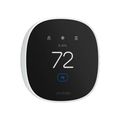
Ecobee's core lineup runs from the Smart Thermostat Premium down through Enhanced, Essential, and Lite tiers. This gives installers a range of options based on the features and budget of a given job.
SmartSensor units pair with ecobee thermostats to monitor temperature and occupancy in individual rooms. They help even out hot and cold spots in homes where a single thermostat location does not represent the whole space. The SmartCamera line adds video monitoring and motion alerts, extending the ecobee ecosystem from comfort control into home security and monitoring.
Why Contractors Specify Ecobee
HVAC contractors installing ecobee thermostats are working with a product line built around remote sensing rather than a single wall-mounted sensor. This helps address customer complaints about rooms that run hot or cold relative to the thermostat location.
Wi-Fi connectivity and compatibility with major smart home platforms make ecobee straightforward to recommend to homeowners already using connected devices elsewhere in the house. Ecobee sensors and cameras share a common app and account structure with the thermostat line. Contractors can offer a broader comfort and monitoring package built around a single install, rather than pairing devices from separate brands.
How to Choose Ecobee Products
Selecting a thermostat tier depends on which features the homeowner and the HVAC system can actually use. The Premium or Enhanced tiers are a better match for systems with multi-stage heating or cooling, or for homeowners who want built-in air quality monitoring. Single-stage systems and budget-conscious jobs are often well served by the Essential or Lite models.
Adding SmartSensor units makes the most sense in homes with rooms distant from the thermostat. Examples include finished basements, additions, or rooms on a separate level that historically run warmer or cooler than the rest of the house. Confirm compatibility with the existing HVAC system before selecting a model. This includes the number of wires available at the equipment and thermostat locations, since some ecobee features require a common wire or specific equipment wiring.
Frequently Asked Questions
What is the difference between ecobee's thermostat tiers?
The tiers, from Lite to Premium, differ mainly in features such as air quality monitoring, built-in speakers, voice control, and bundled SmartSensor units. Premium offers the fullest feature set.
Do ecobee thermostats require a common wire (C-wire)?
Some ecobee features are designed around having a common wire available. Ecobee provides accessories for systems that lack one. Check the wiring against the system before installation.
What does an ecobee SmartSensor do?
A SmartSensor monitors temperature and occupancy in a specific room and reports back to the thermostat. This helps balance comfort in homes where one room runs noticeably hotter or colder than the thermostat's location.
Can ecobee thermostats work with multi-stage HVAC systems?
Ecobee's higher-tier thermostats support multi-stage heating and cooling systems. Equipment compatibility is an important check before recommending a specific model for a given installation.
Who owns ecobee?
Ecobee was acquired by Generac Holdings in 2021 and continues to operate as a standalone brand headquartered in Toronto.
