




Electric Radiant Heat
Electric radiant heat systems warm floors and outdoor surfaces using resistance cables or mats installed beneath tile, stone, or concrete. Homeowners and contractors use these systems for comfort heating in bathrooms, kitchens, and living spaces. They also use them to melt snow and ice on driveways, walkways, and roof edges. Unlike hydronic radiant systems that circulate heated water, electric radiant heat relies on a dedicated electrical circuit and a thermostat or control panel to manage runtime.
Selecting the right electric radiant heat product depends on the installation location and the substrate being heated. It also depends on whether the system runs on a schedule or responds to snow and moisture sensors. Indoor floor heating cables and mats are sized to cover a specific square footage. Outdoor snow melting cables and mats are rated for burial in concrete or asphalt. They are paired with sensors that detect precipitation and temperature.








Subcategories
- GX Controls and Accessories: GX controls and accessories manage electric radiant floor heating systems, handling functions like temperature sensing, timer scheduling, and circuit protection. Contractors pair these controls with GX brand heating cables and mats during new installations to keep the system operating within its rated temperature range. Accessories in this category include sensor probes, junction boxes, and mounting hardware needed for a complete installation. Matching the control to the specific cable or mat model helps maintain the manufacturer's warranty coverage.
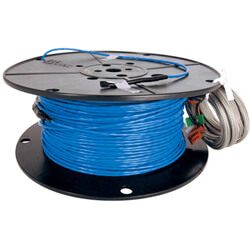
- LX Floor Heating Cable: LX floor heating cable is a resistance cable installed in a serpentine pattern beneath tile, stone, or engineered flooring to provide electric radiant heat. Installers select cable length based on the square footage of the room and the spacing required between cable runs. The cable connects to a dedicated thermostat that regulates floor temperature and prevents overheating of the flooring material. LX cable is typically installed in a thin mortar bed or self leveling compound.
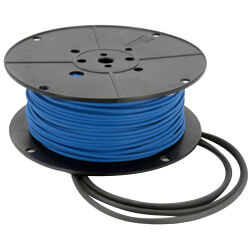
- LX Floor Heating Mats: LX floor heating mats consist of heating cable pre spaced and attached to a mesh backing, which speeds up installation compared to loose cable. Contractors use mats for rooms with simple, rectangular layouts where the pre set spacing matches the room dimensions closely. Mats are cut to fit around fixtures without cutting the heating cable itself, since cutting the cable damages the circuit. Like LX cable, mats require a compatible thermostat to control floor temperature.
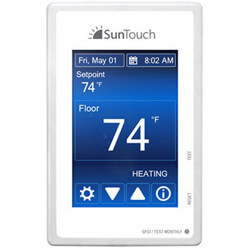
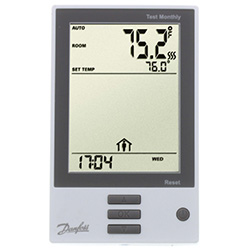
- LX Thermostats and Accessories: LX thermostats and accessories control the on off cycling of LX brand electric floor heating cable and mats, using a floor sensor to maintain the set temperature. Some models include programmable schedules so contractors can set different temperatures for different times of day. Accessories in this category include additional floor sensors and mounting hardware for the thermostat. Selecting a thermostat rated for the connected heating load is necessary to avoid overloading the control's internal relay.
- ProMelt Controls and Accessories: ProMelt controls and accessories manage outdoor snow melting systems, using temperature and moisture sensors embedded in the pavement to activate heating cables or mats automatically. Contractors install these controls on driveways, walkways, and entryways where manual activation would be impractical during a snow event. Accessories include sensor wiring, contactors sized for the connected heating load, and enclosures rated for outdoor installation. Proper sensor placement affects how quickly the system responds to changing weather conditions.
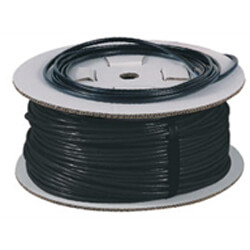
- ProMelt Snow Melting Cables: ProMelt snow melting cables are resistance heating cables rated for direct burial in concrete or asphalt, designed to melt snow and ice from driveways and walkways. Installers space the cable to achieve even heat distribution across the surface. The cables connect to a control system with embedded sensors that activate heating automatically when snow or ice is detected. ProMelt cable is rated for the mechanical stress of being embedded in poured concrete or asphalt.
Buying Guide
Choosing an electric radiant heat system starts with identifying the application: indoor floor heating for comfort, or outdoor snow melting for driveways, walkways, and roof edges. Indoor and outdoor products use different cable ratings, control strategies, and installation methods, so confirming the intended use narrows the product selection quickly.
For indoor installations, measuring the actual heated square footage determines whether cable or mat products fit the space more efficiently. Mats work well in simple rectangular rooms, while loose cable offers more flexibility around irregular layouts, fixtures, and cabinetry.
Electric radiant heat systems draw a specific electrical load that needs to match the available circuit capacity. Reviewing the amperage draw of the heating cable or mat against the electrical panel's available capacity prevents circuit overloads and helps size the breaker correctly.
Outdoor snow melting installations depend on accurate sensor placement to activate the system only when needed, which reduces energy use compared to a system left running continuously. Confirming that the sensor and control system are rated for the local climate and the pavement type being heated supports reliable long term operation.
Every electric radiant heat installation needs a thermostat or control matched to the connected heating cable or mat. Mismatched components can lead to inaccurate temperature readings or premature control failure. Confirming compatibility between the heating element and its control before purchase avoids return trips and reinstallation.
Frequently Asked Questions
Can electric floor heating cable be installed under any type of flooring?
Electric floor heating cable works best under tile, stone, and some engineered flooring rated for radiant heat. Not all flooring materials tolerate the heat and moisture involved in installation. Confirming the flooring is rated for radiant heat before installation prevents warping or adhesive failure.
What is the difference between floor heating cable and floor heating mats?
Floor heating cable is installed loose and spaced by the installer. This gives more flexibility for irregular room shapes. Floor heating mats have cable pre attached to a mesh backing for faster installation in simple, rectangular spaces. Both connect to the same type of thermostat and perform the same heating function.
How do snow melting systems know when to turn on?
Most snow melting systems use embedded sensors that detect moisture and temperature at the pavement surface, activating the heating cable automatically when conditions indicate snow or ice. This automatic activation reduces energy use compared to running the system continuously.
Do electric radiant heat systems need a dedicated electrical circuit?
Yes, most electric radiant heat systems require a dedicated circuit sized to the cable or mat's amperage draw. Sharing a circuit with other loads can trip the breaker or affect performance. Reviewing the product's electrical specifications before installation confirms the correct breaker size.
Can a thermostat from one brand control another brand's heating cable?
Compatibility between thermostats and heating cable varies by manufacturer, and using a mismatched combination can result in inaccurate temperature control or void the product warranty. Confirming the thermostat is rated for the connected cable or mat's wattage and sensor type keeps the system operating as intended.
Resources

 --%3E %3C!DOCTYPE svg PUBLIC '-//W3C//DTD SVG 1.1//EN' 'http://www.w3.org/Graphics/SVG/1.1/DTD/svg11.dtd'%3E %3Csvg version='1.1' id='Layer_1' xmlns='http://www.w3.org/2000/svg' xmlns:xlink='http://www.w3.org/1999/xlink' x='0px' y='0px' width='90px' height='90px' viewBox='0 0 90 90' enable-background='new 0 0 90 90' xml:space='preserve'%3E %3Crect x='27' y='23' fill='%23FFFFFF' width='43' height='44'/%3E %3Cg%3E %3Cdefs%3E %3Crect id='SVGID_1_' width='90' height='90'/%3E %3C/defs%3E %3CclipPath id='SVGID_2_'%3E %3Cuse xlink:href='%23SVGID_1_' overflow='visible'/%3E %3C/clipPath%3E %3Cpath clip-path='url(%23SVGID_2_)' fill='%234186AD' d='M45,0C20.1,0,0,20.1,0,45c0,24.9,20.1,45,45,45c24.9,0,45-20.1,45-45 C90,20.1,69.9,0,45,0'/%3E %3C/g%3E %3Cpath fill='%23FFFFFF' d='M60.6,47.4l-22.5,14c-0.5,0.3-1,0.399-1.5,0.399s-0.9-0.1-1.4-0.399c-0.9-0.5-1.4-1.4-1.4-2.5v-28 c0-1,0.6-2,1.4-2.5c0.9-0.5,2-0.5,2.9,0.1l22.5,14.1C61.4,43.1,61.9,44,61.9,45S61.4,46.9,60.6,47.4'/%3E %3C/svg%3E)
Subcategories
- GX Controls and Accessories: GX controls and accessories manage electric radiant floor heating systems, handling functions like temperature sensing, timer scheduling, and circuit protection. Contractors pair these controls with GX brand heating cables and mats during new installations to keep the system operating within its rated temperature range. Accessories in this category include sensor probes, junction boxes, and mounting hardware needed for a complete installation. Matching the control to the specific cable or mat model helps maintain the manufacturer's warranty coverage.
- LX Floor Heating Cable: LX floor heating cable is a resistance cable installed in a serpentine pattern beneath tile, stone, or engineered flooring to provide electric radiant heat. Installers select cable length based on the square footage of the room and the spacing required between cable runs. The cable connects to a dedicated thermostat that regulates floor temperature and prevents overheating of the flooring material. LX cable is typically installed in a thin mortar bed or self leveling compound.
- LX Floor Heating Mats: LX floor heating mats consist of heating cable pre spaced and attached to a mesh backing, which speeds up installation compared to loose cable. Contractors use mats for rooms with simple, rectangular layouts where the pre set spacing matches the room dimensions closely. Mats are cut to fit around fixtures without cutting the heating cable itself, since cutting the cable damages the circuit. Like LX cable, mats require a compatible thermostat to control floor temperature.
- LX Thermostats and Accessories: LX thermostats and accessories control the on off cycling of LX brand electric floor heating cable and mats, using a floor sensor to maintain the set temperature. Some models include programmable schedules so contractors can set different temperatures for different times of day. Accessories in this category include additional floor sensors and mounting hardware for the thermostat. Selecting a thermostat rated for the connected heating load is necessary to avoid overloading the control's internal relay.
- ProMelt Controls and Accessories: ProMelt controls and accessories manage outdoor snow melting systems, using temperature and moisture sensors embedded in the pavement to activate heating cables or mats automatically. Contractors install these controls on driveways, walkways, and entryways where manual activation would be impractical during a snow event. Accessories include sensor wiring, contactors sized for the connected heating load, and enclosures rated for outdoor installation. Proper sensor placement affects how quickly the system responds to changing weather conditions.
- ProMelt Snow Melting Cables: ProMelt snow melting cables are resistance heating cables rated for direct burial in concrete or asphalt, designed to melt snow and ice from driveways and walkways. Installers space the cable to achieve even heat distribution across the surface. The cables connect to a control system with embedded sensors that activate heating automatically when snow or ice is detected. ProMelt cable is rated for the mechanical stress of being embedded in poured concrete or asphalt.
Buying Guide
Choosing an electric radiant heat system starts with identifying the application: indoor floor heating for comfort, or outdoor snow melting for driveways, walkways, and roof edges. Indoor and outdoor products use different cable ratings, control strategies, and installation methods, so confirming the intended use narrows the product selection quickly.
For indoor installations, measuring the actual heated square footage determines whether cable or mat products fit the space more efficiently. Mats work well in simple rectangular rooms, while loose cable offers more flexibility around irregular layouts, fixtures, and cabinetry.
Electric radiant heat systems draw a specific electrical load that needs to match the available circuit capacity. Reviewing the amperage draw of the heating cable or mat against the electrical panel's available capacity prevents circuit overloads and helps size the breaker correctly.
Outdoor snow melting installations depend on accurate sensor placement to activate the system only when needed, which reduces energy use compared to a system left running continuously. Confirming that the sensor and control system are rated for the local climate and the pavement type being heated supports reliable long term operation.
Every electric radiant heat installation needs a thermostat or control matched to the connected heating cable or mat. Mismatched components can lead to inaccurate temperature readings or premature control failure. Confirming compatibility between the heating element and its control before purchase avoids return trips and reinstallation.
Frequently Asked Questions
Can electric floor heating cable be installed under any type of flooring?
Electric floor heating cable works best under tile, stone, and some engineered flooring rated for radiant heat. Not all flooring materials tolerate the heat and moisture involved in installation. Confirming the flooring is rated for radiant heat before installation prevents warping or adhesive failure.
What is the difference between floor heating cable and floor heating mats?
Floor heating cable is installed loose and spaced by the installer. This gives more flexibility for irregular room shapes. Floor heating mats have cable pre attached to a mesh backing for faster installation in simple, rectangular spaces. Both connect to the same type of thermostat and perform the same heating function.
How do snow melting systems know when to turn on?
Most snow melting systems use embedded sensors that detect moisture and temperature at the pavement surface, activating the heating cable automatically when conditions indicate snow or ice. This automatic activation reduces energy use compared to running the system continuously.
Do electric radiant heat systems need a dedicated electrical circuit?
Yes, most electric radiant heat systems require a dedicated circuit sized to the cable or mat's amperage draw. Sharing a circuit with other loads can trip the breaker or affect performance. Reviewing the product's electrical specifications before installation confirms the correct breaker size.
Can a thermostat from one brand control another brand's heating cable?
Compatibility between thermostats and heating cable varies by manufacturer, and using a mismatched combination can result in inaccurate temperature control or void the product warranty. Confirming the thermostat is rated for the connected cable or mat's wattage and sensor type keeps the system operating as intended.