




Filters
SORT
Product Availability –
Review Score –
 --%3E %3Csvg version='1.1' id='Fill' xmlns='http://www.w3.org/2000/svg' xmlns:xlink='http://www.w3.org/1999/xlink' x='0px' y='0px' viewBox='0 0 100 100' enable-background='new 0 0 100 100' xml:space='preserve'%3E %3Cpath fill='%23F15C02' d='M79.44,0.95H20.56C9.78,0.95,0.95,9.78,0.95,20.56v58.87c0,10.79,8.82,19.61,19.61,19.61h58.87 c10.79,0,19.61-8.83,19.61-19.61V20.56C99.05,9.78,90.22,0.95,79.44,0.95z M65.38,58.24l9.38,29.58L49.69,69.78L24.5,87.82 l9.34-29.6L8.8,39.6l30.73-0.17c0,0,6.98-19.61,10-28.93c0.54,1.36,9.88,29.1,9.88,29.1H91.2L65.38,58.24z'/%3E %3C/svg%3E)
Price Range –
Suntouch Thermostats & Accessories


 --%3E %3Csvg version='1.1' id='No-RB' xmlns='http://www.w3.org/2000/svg' xmlns:xlink='http://www.w3.org/1999/xlink' x='0px' y='0px' viewBox='0 0 100 100' enable-background='new 0 0 100 100' xml:space='preserve'%3E %3Cpath fill='%23CECECE' d='M79.44,0.95H20.56C9.78,0.95,0.95,9.78,0.95,20.56v58.87c0,10.79,8.82,19.61,19.61,19.61h58.87 c10.79,0,19.61-8.83,19.61-19.61V20.56C99.05,9.78,90.22,0.95,79.44,0.95z M65.38,58.24l9.38,29.58L49.69,69.78L24.5,87.82 l9.34-29.6L8.8,39.6l30.73-0.17c0,0,6.98-19.61,10-28.93c0.54,1.36,9.88,29.1,9.88,29.1H91.2L65.38,58.24z'/%3E %3C/svg%3E)


 --%3E %3Csvg version='1.1' id='Half' xmlns='http://www.w3.org/2000/svg' xmlns:xlink='http://www.w3.org/1999/xlink' x='0px' y='0px' viewBox='0 0 100 100' enable-background='new 0 0 100 100' xml:space='preserve'%3E %3Cg%3E %3Cpath fill='%23F15C02' d='M30.05,70.23l3.79-12.01L8.8,39.6l30.73-0.17c0,0,6.98-19.61,10-28.93c0.54,1.36,9.88,29.1,9.88,29.1h1.58 L93.71,7.18c-3.58-3.82-8.66-6.23-14.28-6.23H20.56C9.78,0.95,0.95,9.78,0.95,20.56v58.87c0,5.41,2.22,10.32,5.79,13.88 L30.05,70.23z'/%3E %3C/g%3E %3Cpath fill='%23FBC8B4' d='M93.71,7.18L60.98,39.6H91.2L65.38,58.24l9.38,29.58L49.69,69.78L24.5,87.82l5.55-17.59L6.75,93.32 c3.55,3.54,8.44,5.73,13.82,5.73h58.87c10.79,0,19.61-8.83,19.61-19.61V20.56C99.05,15.4,97.01,10.69,93.71,7.18z'/%3E %3C/svg%3E)

Suntouch Thermostats & Accessories control electric radiant floor heating systems, letting installers set, program, and monitor floor temperature from a single wall-mounted control. Each thermostat pairs with a floor sensor that reads slab or subfloor temperature directly rather than relying on ambient air readings alone, which keeps the heating element cycling accurately. A single SunStat thermostat is a dual-voltage unit rated for up to 15 amps, covering up to 150 square feet on a 120 volt circuit or 300 square feet on a 240 volt circuit before a relay is needed. Built-in GFCI protection comes standard on SunStat controls, removing the need for a separate GFCI breaker in many code jurisdictions and simplifying the electrical rough-in. Most installers set floor temperature starting around 80 degrees Fahrenheit, since manufacturers of wood and laminate flooring often recommend staying below 82 to 84 degrees to protect the flooring material. Bathroom remodels, kitchen floors, and whole-room radiant installations all rely on correctly sized thermostats to keep energy use in check while maintaining comfortable floor temperatures through the heating season.
Subcategories
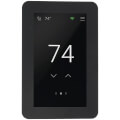
- Non-Programmable Thermostats: Non-programmable thermostats, such as the SunStat Core, let installers set a single fixed floor temperature with an up or down button rather than scheduling multiple setpoints. Budget-conscious jobs and simple single-room installations often use this style since there's less wiring and setup involved at commissioning. The floor sensor still provides direct temperature feedback, so the thermostat cycles the heating element based on actual floor conditions. Built-in GFCI protection comes standard on this model line.
- Programmable Thermostats: Programmable models such as the SunStat Pro II support multiple daily setpoints and can drive up to 10 relays, extending coverage to 1,650 square feet on a 120 volt circuit or 3,300 square feet on a 240 volt circuit. Larger radiant floor zones, such as open-concept kitchens or multi-room installations, need this level of relay support to stay within a single thermostat's control. Scheduling features let the system reduce floor temperature during unoccupied hours to cut energy use. A backlit display keeps setpoints readable in low-light bathrooms and basements.
- WiFi-Connected Thermostats: WiFi-connected models such as the SunStat ConnectPlus support both 120 volt and 240 volt systems up to 15 amps with built-in GFCI protection and energy monitoring built into the control. Remote access lets homeowners or facility managers adjust floor temperature from a phone app instead of walking to the thermostat, which matters most in vacation properties or multi-zone commercial spaces. Energy monitoring tracks usage so property owners can compare heating costs across zones. Installers still need to pair the thermostat with a compatible floor sensor during setup.
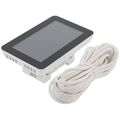
- Relays and Accessories: Relays extend a single programmable thermostat's control to additional zones or circuits, letting one control panel manage floor areas beyond what a single 15 amp thermostat can carry directly. A single SunStat control can accommodate up to 10 relays, with each relay adding 150 square feet of coverage at 120 volts or 300 square feet at 240 volts. Floor sensors, needed alongside every thermostat, are required accessories since the thermostat depends on direct floor temperature readings rather than air temperature. Replacement sensors and mounting accessories round out the accessory lineup for service calls.
Buying Guide
Start by sizing the heated floor area and matching it to the thermostat's amp rating. A single standard thermostat handles up to 15 amps, which covers about 150 square feet on 120 volts or 300 square feet on 240 volts. Larger rooms or open floor plans need either a relay-compatible thermostat or additional relays that can drive multiple zones from one control point.
Next, decide how much scheduling control the job calls for. Simple single-room jobs, like a small bathroom retrofit, often do fine with a non-programmable thermostat where the only adjustment is a target temperature. Larger homes or commercial spaces benefit from programmable or WiFi-connected models that let occupants set daily schedules and monitor energy use by zone. Suntouch Thermostats & Accessories cover both ends of that range, so match the control complexity to how the space actually gets used rather than defaulting to the most feature-rich model.
Check the electrical requirements before finalizing a model. Built-in GFCI protection on SunStat thermostats removes the need for a separate GFCI breaker in many jurisdictions, but local code should always get the final say. Confirm the floor sensor is compatible with the chosen thermostat, since the sensor is what drives accurate cycling. Finally, verify voltage, 120 or 240, matches the heating element being installed before ordering, since thermostats are not universally compatible across both voltages on every model.
Frequently Asked Questions
How much floor area can one Suntouch thermostat control?
A single SunStat thermostat is rated for up to 15 amps, which covers roughly 150 square feet on a 120 volt heating circuit or 300 square feet on a 240 volt circuit. Larger areas need a relay-compatible thermostat, such as the SunStat Pro II, paired with additional relays to extend coverage.
Do Suntouch thermostats need a separate GFCI breaker?
SunStat thermostats include built-in ground fault protection, which removes the need for a separate GFCI breaker in many code jurisdictions. Local electrical code should always get confirmed before finalizing the installation, since GFCI requirements vary by location.
What is the difference between the SunStat Core and SunStat Pro II?
The SunStat Core is a non-programmable thermostat that sets a single fixed floor temperature, making it suited to simple single-room jobs. The SunStat Pro II is programmable, supports multiple daily setpoints, and can drive up to 10 relays to cover larger multi-zone installations.
Can a Suntouch thermostat be controlled remotely?
WiFi-connected models such as the SunStat ConnectPlus support remote access through a phone app, letting occupants adjust floor temperature away from the thermostat itself. Built-in energy monitoring on this model also tracks usage so heating costs can be compared across zones.
Is a floor sensor required with every Suntouch thermostat?
Yes, Suntouch thermostats rely on a floor sensor to read actual slab or subfloor temperature rather than ambient air temperature, so accurate cycling depends on a properly installed sensor. Replacement sensors are available separately for service calls when an existing sensor fails.
