




Filters
SORT
Product Availability –
Voltage –
0" Ps –
0.2" Ps –
0.4" Ps –
0.6" Ps –
0.8" Ps –
1.0" Ps –
1.5" Ps –
2.0" Ps –
Review Score –
 --%3E %3Csvg version='1.1' id='Fill' xmlns='http://www.w3.org/2000/svg' xmlns:xlink='http://www.w3.org/1999/xlink' x='0px' y='0px' viewBox='0 0 100 100' enable-background='new 0 0 100 100' xml:space='preserve'%3E %3Cpath fill='%23F15C02' d='M79.44,0.95H20.56C9.78,0.95,0.95,9.78,0.95,20.56v58.87c0,10.79,8.82,19.61,19.61,19.61h58.87 c10.79,0,19.61-8.83,19.61-19.61V20.56C99.05,9.78,90.22,0.95,79.44,0.95z M65.38,58.24l9.38,29.58L49.69,69.78L24.5,87.82 l9.34-29.6L8.8,39.6l30.73-0.17c0,0,6.98-19.61,10-28.93c0.54,1.36,9.88,29.1,9.88,29.1H91.2L65.38,58.24z'/%3E %3C/svg%3E)
 --%3E %3Csvg version='1.1' id='With-RB' xmlns='http://www.w3.org/2000/svg' xmlns:xlink='http://www.w3.org/1999/xlink' x='0px' y='0px' viewBox='0 0 100 100' enable-background='new 0 0 100 100' xml:space='preserve'%3E %3Cpath fill='%23FBC8B4' d='M79.44,0.95H20.56C9.78,0.95,0.95,9.78,0.95,20.56v58.87c0,10.79,8.82,19.61,19.61,19.61h58.87 c10.79,0,19.61-8.83,19.61-19.61V20.56C99.05,9.78,90.22,0.95,79.44,0.95z M65.38,58.24l9.38,29.58L49.69,69.78L24.5,87.82 l9.34-29.6L8.8,39.6l30.73-0.17c0,0,6.98-19.61,10-28.93c0.54,1.36,9.88,29.1,9.88,29.1H91.2L65.38,58.24z'/%3E %3C/svg%3E)
Price Range –
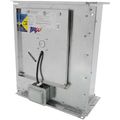
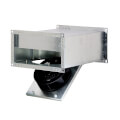
FRD Series Inline Rectangular Low Profile Centrifugal Fans

 --%3E %3Csvg version='1.1' id='No-RB' xmlns='http://www.w3.org/2000/svg' xmlns:xlink='http://www.w3.org/1999/xlink' x='0px' y='0px' viewBox='0 0 100 100' enable-background='new 0 0 100 100' xml:space='preserve'%3E %3Cpath fill='%23CECECE' d='M79.44,0.95H20.56C9.78,0.95,0.95,9.78,0.95,20.56v58.87c0,10.79,8.82,19.61,19.61,19.61h58.87 c10.79,0,19.61-8.83,19.61-19.61V20.56C99.05,9.78,90.22,0.95,79.44,0.95z M65.38,58.24l9.38,29.58L49.69,69.78L24.5,87.82 l9.34-29.6L8.8,39.6l30.73-0.17c0,0,6.98-19.61,10-28.93c0.54,1.36,9.88,29.1,9.88,29.1H91.2L65.38,58.24z'/%3E %3C/svg%3E)

 --%3E %3Csvg version='1.1' id='Half' xmlns='http://www.w3.org/2000/svg' xmlns:xlink='http://www.w3.org/1999/xlink' x='0px' y='0px' viewBox='0 0 100 100' enable-background='new 0 0 100 100' xml:space='preserve'%3E %3Cg%3E %3Cpath fill='%23F15C02' d='M30.05,70.23l3.79-12.01L8.8,39.6l30.73-0.17c0,0,6.98-19.61,10-28.93c0.54,1.36,9.88,29.1,9.88,29.1h1.58 L93.71,7.18c-3.58-3.82-8.66-6.23-14.28-6.23H20.56C9.78,0.95,0.95,9.78,0.95,20.56v58.87c0,5.41,2.22,10.32,5.79,13.88 L30.05,70.23z'/%3E %3C/g%3E %3Cpath fill='%23FBC8B4' d='M93.71,7.18L60.98,39.6H91.2L65.38,58.24l9.38,29.58L49.69,69.78L24.5,87.82l5.55-17.59L6.75,93.32 c3.55,3.54,8.44,5.73,13.82,5.73h58.87c10.79,0,19.61-8.83,19.61-19.61V20.56C99.05,15.4,97.01,10.69,93.71,7.18z'/%3E %3C/svg%3E)
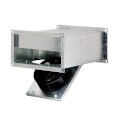


FRD Series inline rectangular low profile centrifugal fans are compact duct fans built to move air through tight rectangular ductwork in commercial buildings such as schools, offices, and hospitals where a bulkier round inline fan will not fit. Fantech manufactures the FRD line with an airtight galvanized steel housing that resists corrosion while containing air leakage along the duct run, and the fan mounts directly in line with duct sizes ranging from smaller residential runs up to large commercial ductwork. Motor and impeller form a single sealed assembly with an external rotor design, which sheds heat efficiently even when the fan runs at reduced speed for balanced airflow. A hinged access door on the housing lets a technician reach the motor and wiring without disconnecting the duct on either side, cutting down on service time during retrofits or troubleshooting calls.
Subcategories
- Compact Duct Fans: Compact duct fans in this line fit rectangular duct runs that don't have room for a standard round inline fan housing. Fantech builds the housings from galvanized steel to resist rust in mechanical rooms and exterior duct runs. Sizes scale from small residential exhaust runs up to large commercial supply and exhaust ducts. Matching the fan's rectangular opening to the existing duct size avoids the need for a transition fitting.
- High-CFM Commercial Fans: High-CFM commercial fans handle the larger air volumes found in schools, hospitals, and office buildings where ventilation code requirements call for continuous fresh air exchange. Larger models in the FRD line move well over a thousand CFM depending on static pressure in the duct system. Sizing correctly for the building's ductwork keeps static pressure losses from cutting into rated airflow. Commercial installations typically call for a licensed mechanical contractor familiar with local ventilation code.
- Retrofit-Ready Fans: Retrofit-ready fans in this category ship fully assembled and can be installed at any angle, which matters when replacing an older fan in a space that was never designed with service access in mind. A hinged motor door lets a technician reach the electrical connections without removing the fan from the duct. Sealed ball bearings and automatic thermal overload protection reduce the odds of a mid-season failure, and the combination shortens both installation and future service calls.
Buying Guide
Selecting an FRD Series fan starts with matching the rectangular duct opening on hand, since these fans are designed to mount directly in line with rectangular ductwork rather than requiring a round-to-rectangular transition. Measuring the existing duct height and width first narrows the model choice before airflow requirements even come into play. Once duct size is confirmed, the next factor is required CFM at the system's actual static pressure, not just the fan's rated free-air CFM, since ductwork length, elbows, and grilles all add resistance that reduces real-world airflow. A fan sized only to free-air CFM figures often underperforms once installed in a long or restrictive duct run. Building type also affects the decision: schools, offices, and hospitals typically fall under ventilation codes that specify minimum air changes per hour, so the fan needs enough capacity to meet code even after real-world static pressure losses are accounted for. Installation orientation is flexible with this series since units ship ready to mount at any angle, but access for future service should still be planned, ideally near the hinged motor door so a technician isn't forced to work in a cramped space. Electrical requirements, including voltage and phase, should be confirmed against the building's available power before finalizing a model, particularly on larger commercial units that may require three-phase service.
Frequently Asked Questions
What is the benefit of an inline rectangular fan over a round inline duct fan?
A rectangular inline fan mounts directly into existing rectangular ductwork without a round transition fitting, which saves installation space and labor. The space savings matter most in mechanical rooms or ceiling plenums where clearance is already tight.
How is an FRD Series fan sized for a commercial building?
Sizing starts with the building's required air changes per hour under local ventilation code, then accounts for static pressure losses from duct length, elbows, and grilles. A fan chosen only on free-air CFM ratings without factoring in static pressure often falls short of the airflow a space actually needs.
Can an FRD Series fan be mounted in any orientation?
Yes, these fans ship fully assembled and are designed for mounting at any angle, which gives more flexibility during retrofit installations where the original duct layout limits mounting position.
What maintenance does an FRD Series fan need?
Routine maintenance is minimal thanks to sealed ball bearings and an automatic thermal overload protector, though periodic inspection through the hinged motor door helps catch dust buildup or wiring issues early. Sealed bearings reduce the need for the manual lubrication older fan motors required.
What building types typically use FRD Series fans?
Schools, hospitals, and office buildings commonly use this series because of the large ventilation volumes required in spaces with limited room for bulky fan housings. Compact rectangular housings let the fan sit directly within the ductwork rather than needing extra space for a round housing transition.
