



'/%3E%3C/svg%3E)
 --%3E %3Csvg version='1.1' id='Fill' xmlns='http://www.w3.org/2000/svg' xmlns:xlink='http://www.w3.org/1999/xlink' x='0px' y='0px' viewBox='0 0 100 100' enable-background='new 0 0 100 100' xml:space='preserve'%3E %3Cpath fill='%23F15C02' d='M79.44,0.95H20.56C9.78,0.95,0.95,9.78,0.95,20.56v58.87c0,10.79,8.82,19.61,19.61,19.61h58.87 c10.79,0,19.61-8.83,19.61-19.61V20.56C99.05,9.78,90.22,0.95,79.44,0.95z M65.38,58.24l9.38,29.58L49.69,69.78L24.5,87.82 l9.34-29.6L8.8,39.6l30.73-0.17c0,0,6.98-19.61,10-28.93c0.54,1.36,9.88,29.1,9.88,29.1H91.2L65.38,58.24z'/%3E %3C/svg%3E)
 --%3E %3Csvg version='1.1' id='Half' xmlns='http://www.w3.org/2000/svg' xmlns:xlink='http://www.w3.org/1999/xlink' x='0px' y='0px' viewBox='0 0 100 100' enable-background='new 0 0 100 100' xml:space='preserve'%3E %3Cg%3E %3Cpath fill='%23F15C02' d='M30.05,70.23l3.79-12.01L8.8,39.6l30.73-0.17c0,0,6.98-19.61,10-28.93c0.54,1.36,9.88,29.1,9.88,29.1h1.58 L93.71,7.18c-3.58-3.82-8.66-6.23-14.28-6.23H20.56C9.78,0.95,0.95,9.78,0.95,20.56v58.87c0,5.41,2.22,10.32,5.79,13.88 L30.05,70.23z'/%3E %3C/g%3E %3Cpath fill='%23FBC8B4' d='M93.71,7.18L60.98,39.6H91.2L65.38,58.24l9.38,29.58L49.69,69.78L24.5,87.82l5.55-17.59L6.75,93.32 c3.55,3.54,8.44,5.73,13.82,5.73h58.87c10.79,0,19.61-8.83,19.61-19.61V20.56C99.05,15.4,97.01,10.69,93.71,7.18z'/%3E %3C/svg%3E)


MANUALS (1)
Product Highlights


Description
Specs
| Material: | Galvanized Steel Lightweight Aluminum |
|---|---|
| Duct Size: | 10" |
| Type: | Spring Loaded |
| Warranty: | 5 Year |


Questions?
You May Also Need
Product Reviews
Most Liked Positive Review
No more cold drafts in the kitchen
Most Liked Negative Review
 --%3E %3Csvg version='1.1' id='With-RB' xmlns='http://www.w3.org/2000/svg' xmlns:xlink='http://www.w3.org/1999/xlink' x='0px' y='0px' viewBox='0 0 100 100' enable-background='new 0 0 100 100' xml:space='preserve'%3E %3Cpath fill='%23FBC8B4' d='M79.44,0.95H20.56C9.78,0.95,0.95,9.78,0.95,20.56v58.87c0,10.79,8.82,19.61,19.61,19.61h58.87 c10.79,0,19.61-8.83,19.61-19.61V20.56C99.05,9.78,90.22,0.95,79.44,0.95z M65.38,58.24l9.38,29.58L49.69,69.78L24.5,87.82 l9.34-29.6L8.8,39.6l30.73-0.17c0,0,6.98-19.61,10-28.93c0.54,1.36,9.88,29.1,9.88,29.1H91.2L65.38,58.24z'/%3E %3C/svg%3E)
DON'T BUY THIS BACKDRAFT DAMPER!!!
Next time I'll look for another brand
High Quality and Worked Great.
Product was just what we needed
Perfect Replacement
Good product
Tight fit
The products were excellent.
Top draft pick!
Works well for me
Solid Quality
Product Q&A
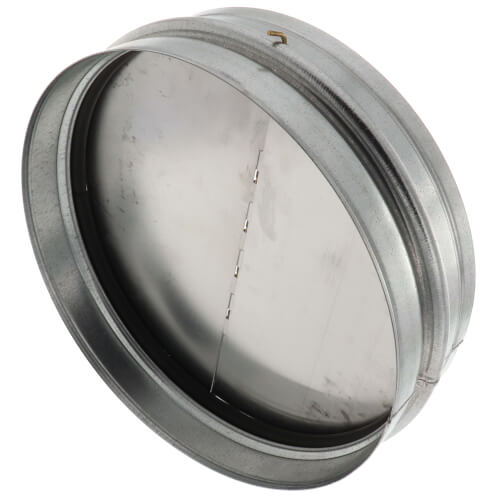
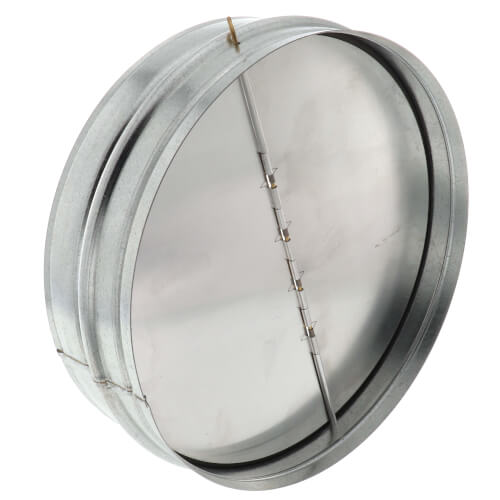
8 QuestionsQ: Is there a gasket to seal the damper itself (inside the unit), or is it just metal on metal contact?
Asked by Jay 8 years ago
Add your answer
Verified Reply- SupplyHouse StaffYes, there is a rubber gasket.
Q: What are the dimensions? (Depth)
Asked by JJ 10 years ago
Add your answer
When you slide it in between two pieces of 8” pipe only about 1 1/2” of it is exposed between the 2 pieces of pipe.
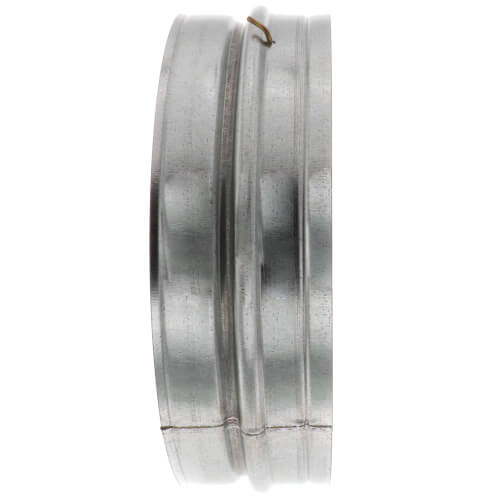
8 in dia, i.e., will fit in a pipe with internal diameter 8.0 inches. The length (end to end)is 3-1/8 in.
Q: Is this damper installed between to motor and the grill, or between the motor and the outside exhaust?
Asked by DIY Joe 12 years ago
Add your answer
I have it between the motor and outside exhaust, to prevent cold air from seeping into the system. Works quite well. Sent from my iPad
The damper is designed to be installed in a vertical duct before the motor.
Hello, I'm not sure what unit you are using, but I installed 4 of these valve/dampers on my air exchanger. I mounted them on the outside of the unit where the ductwork attaches to the unit. They are just to reduce the back flow of cool air back into the unit when the unit is not running. I don't run my exchanger very often, but so far the dampers have worked well. Hope this helps,
For me, the damper is installed with a kitchen range hood. So the damper is between the motor/fan and the exhaust. Ron Sent from my iPhone
You install it on the intake side. Between the intake and the unit. It is suppose to close when the unit is off so no outside air gets into the unit. The spring on the doors are a little weak and it does not close all the way. I also recommend installing the extra filter unit they have. It traps all out side dirt from getting into the unit. Hope this helps.
You can put it anywhere in the exhaust line. I try to locate it wherever the insulation is so that you might minimize conductive heat loss from cold air entering through your duct. Kevin Murphy
Q: Can I install this between my dryer and an exhaust duct that has other dryers attached to the exhaust duct. I am in condo on 2nd floor. When other dryers run, their exhaust comes inside my dryer and into the unit with smells and heat. My concern is that if other dryers are running and mine is not that the damper may work fine, but if I run my dryer when others are also running I am concerned that the damper may not open and vent my dryer
Asked by John the handyman 13 years ago
Add your answer
works fine in two locations for me
this product should not be used for a dryer vent due to lint build up and possible blockage. I suggest installing a fan tech booster in line fan that should be wired to run weather 1 or more dryers are running.
I don't think that this 4" Duct Backdraft Damper is designed to handle lint from driers. I am using it to prevent backdrafts with a room exaust fan. The application you plan will make it inaccessible for cleaning and may result in a fire. The danger is that this damper will get lint build up on the wire axle. Blown lint collecting on the axle may result in the damper getting stuck in the closed position. Without free air flow the dryer can overheat igniting any lint in the dryer and/or ducts. Dampers exist that are designed for handling lint like the "Cape Backdraft Damper". It might be that you have a damper on your dryer but it is clogged with lint and stuck in the open position. Cleaning of the vent is a regular maintanence procedure that should be followed in any case. There are likely local code requirements that were not met by this installation if you have no damper installed. The common pipe needs to be much larger thatn 4", and all dryers connected to it are supposed to have backdraft dampers.
John... No, sorry, the pressure from the other dryers will keep this from opening, just as you thought. A solenoid operated or motorized damper is what you need. Another thing to consider...I had this same problem crop up with a condo owner who is a client of mine. We ended up using a Fantech dryer booster fan, which runs only when the dryer is on. Worked like a charm. Good luck, Erik Klaproth Sent from Windows Mail
I think there's a danger this in-line damper will become clogged with lint if not cleaned on a VERY regular basis. If that happens it will not only cease to stop back drafts but can also become a fire hazard. (I think some building codes do not even allow sheet metal screws to protrude into clothes dryer ducts for fear they will collect lint.) The other unknown is your condo complex might have a partially clogged "main duct" that carries dryer exhaust from each condo to a point outside the building. Your problem may simply be the result of neighbor's exhaust following the path of least resistance into your condo, and the problem might disappear entirely if the main duct (or point where the main duct exits the building) is properly cleaned out.
Your concern is valid, it all comes down to how much pressure you can develop across the damper. I think that your chance of success is very high. The reason is that you currently use the dryer without regard to who else is also using their dryer, so you obviously can provide flow into the main duct regardless of other users. The flow is also adequate to keep the vent thermostat in your dryer from shutting the dryer down due to high vent temperatures i.e. just normal operation. Therefore, when your dryer starts it will easily overcome the main duct pressure and begin to open the damper. The air pressure immediately equalizes on both sides of the damper. The damper vanes then just act like "sails" and the air flow holds them open. They are frequently flat against each other right in the middle of the pipe during operation. That would not necessarily be the case if you install the damper with the shaft horizontal as the picture below . With this installation the lower vane must also open against gravity. This is not desirable. Install the damper in a horizontal run of pipe or plastic duct and set the vane axle so it is vertical. This damper should do everything you need! Good Luck! Norm http://s3.pexsupply.com/images/products/large/rsk4-2.jpg
I used the damper to prevent a draft coming in to the house from the outside when it was windy through my cooker hood. It works very well, you hear it snap shut when the fan on the hood turns off and it stopped the draft dead in it's tracks. If your dryer has enough force it will open easily in the intended direction. Does you dryer have a fan to exhaust the hot air, if it does then you should use this product. If not then select one that does not have the spring mechanism to force it closed, that will acommplish the desired outcome.
To be honest with you I can't answer your question with certainty. I will tell you that for my application I have had no issues and it may give you some insight into what you are trying to do and if it would work. I use the vent to block cold air from back flowing into my house from the exhaust fan on my gas range. The exhaust fan is approximately 8 - 10 feet from the damper and then another 4 - 5 feet to the exhaust on the side of the house. This is a pretty large run. When the fan is on and smoke/exhaust is being pushed through the vent and the damper I have never had any problem. The spring on damper does not offer too much resistance. I think that it would still work for your application even if the neighbor's driers are running. Worst case scenario you're out a couple of dollars and you have to remove the damper from your vent. I don't think it would take much effort to test out your theory. Hope this helps.
This damper is very easy to open. The springs do not provide much resistance so it should not be a problem for your drier to open it.
Hi. This damper may do just what you are trying to achieve. It needs very little force to open and it has a bit of a seal to keep it shut on back draft - it seats quite well. I am using it successfully with a duct fan, which I believe has less flow/pressure than a dryer does. Hopefully, this will solve the annoyance with air coming back to your place from the neighbors. Ideally, each dryer would be vented individually, but... that is beyond your control.
Q: Will this backdraft damper work at the vertical position of the Y adapter for an inline bathroom ventilator (FR110)? Will it fit inside the top of the adapter or is a adapter collar needed?
Asked by DD 14 years ago
Add your answer
Verified Reply- PexSupply StaffIf you are using an FR110 I would not suggest splitting the Fan into 2 areas. I am not exactly sure if it will mate up to the Y exactly; I would put it in the duct up the line.
There is a good chance it will work in the vertical position. Depending upon whether you want it to open in the up position or the down position will make a big difference. Also, I was able to shorten the damper I used by just cutting off a ring of damper duct on the upstream side with no problems. It would then fit in a tight location.
The RSK damper will work in both a horizontal or vertical position. These are well made and do a great job doing what they are designed to do, stop the back draft.
Q: I'm looking for a backdraft damper I can use with a kitchen hood. From the hood my duct goes vertical at first, turns horizontal then vertical again. Can this damper be installed in the vertical section with airflow UP? I noticed some comments on the springs on this model not always closing the flaps tightly. I would think if the butterfly is pushed up by the airflow it would drop back nicely when the fan shuts off. Are there any problems using an inline butterfly type damper with a stove hood (ie:do they gum up)? I do have a flapper on the external vent but it doesn't close completely and I don't want cold air backflow when the fan is off. Thanks.
Asked by DIY 15 years ago
Add your answer
Verified Reply- PexSupply StaffAccording to the manufacturer, you can use these dampers going vertically. You can only use them in a horizontal run if the hinge pin is vertical. They are spring-loaded, so they shouldn't get gummed up.
Q: can this be installed vertical with a downward thrust
Asked by 15 years ago
Add your answer
Verified Reply- PexSupply StaffThe product would not work in a vertical downward thrust application.
Q: Is this product safe to use in a GAS DRYER duct ?
Asked by ng0n 15 years ago
Add your answer
Verified Reply- PexSupply StaffWe do not recommend using a backdraft in a dryer booster system. Lint would get caught on it and restrict the line.
I would not put one in as it would collect lint and be a fire hazard. Also the foam gasket might not hold up to the heat and also be a fire hazard. I think the louvered vent on the outside wall is your best bet.