




Filters
SORT
Product Availability –
Length (Inches) –
Review Score –
 --%3E %3Csvg version='1.1' id='Fill' xmlns='http://www.w3.org/2000/svg' xmlns:xlink='http://www.w3.org/1999/xlink' x='0px' y='0px' viewBox='0 0 100 100' enable-background='new 0 0 100 100' xml:space='preserve'%3E %3Cpath fill='%23F15C02' d='M79.44,0.95H20.56C9.78,0.95,0.95,9.78,0.95,20.56v58.87c0,10.79,8.82,19.61,19.61,19.61h58.87 c10.79,0,19.61-8.83,19.61-19.61V20.56C99.05,9.78,90.22,0.95,79.44,0.95z M65.38,58.24l9.38,29.58L49.69,69.78L24.5,87.82 l9.34-29.6L8.8,39.6l30.73-0.17c0,0,6.98-19.61,10-28.93c0.54,1.36,9.88,29.1,9.88,29.1H91.2L65.38,58.24z'/%3E %3C/svg%3E)
Price Range –
Fencing Pliers



 --%3E %3Csvg version='1.1' id='No-RB' xmlns='http://www.w3.org/2000/svg' xmlns:xlink='http://www.w3.org/1999/xlink' x='0px' y='0px' viewBox='0 0 100 100' enable-background='new 0 0 100 100' xml:space='preserve'%3E %3Cpath fill='%23CECECE' d='M79.44,0.95H20.56C9.78,0.95,0.95,9.78,0.95,20.56v58.87c0,10.79,8.82,19.61,19.61,19.61h58.87 c10.79,0,19.61-8.83,19.61-19.61V20.56C99.05,9.78,90.22,0.95,79.44,0.95z M65.38,58.24l9.38,29.58L49.69,69.78L24.5,87.82 l9.34-29.6L8.8,39.6l30.73-0.17c0,0,6.98-19.61,10-28.93c0.54,1.36,9.88,29.1,9.88,29.1H91.2L65.38,58.24z'/%3E %3C/svg%3E)




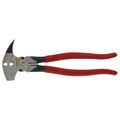
Fencing Pliers are hand tools that combine gripping, pulling, and wire cutting for fence installation and repair. Malco builds its FP1 at 8 inches (203 mm) and its FP2 at 10 inches (254 mm), both in hardened all-steel. Each model has three serrated jaw areas for gripping and pulling wire and three built-in cutter locations with a 9-gauge (3.8 mm) capacity for chain link fence or tensioning wire. A compact, rounded, tapered nose reaches into tight areas, and textured handle surfaces help keep control. Crews that install chain link fence or repair tension wire can handle gripping, pulling, and cutting without carrying a separate tool for each step. Selecting the correct length and jaw layout matters because the tool does repetitive work all day, and fit affects both speed and hand fatigue.
Subcategories
- 8-Inch Fencing Pliers: The Malco FP1 measures 8 inches (203 mm) and is described by Malco as compact and highly maneuverable. Installers use a short pair for gripping and pulling wire in confined spots. It keeps the three serrated jaw areas and three built-in cutter locations found on both Malco models. Pick it when handling ease matters more than leverage.
- 10-Inch Fencing Pliers: The Malco FP2 measures 10 inches (254 mm) and is described by Malco as a high leverage design. Crews use the longer handles when pulling and cutting need more force. Its cutter locations share the 9-gauge (3.8 mm) capacity of the FP1. Both models use hardened all-steel construction.
- Built-In Wire Cutter Pliers: Three built-in cutter locations let a crew cut chain link fence or tensioning wire without switching tools. The Malco models carry a 9-gauge (3.8 mm) cutting capacity. Stay within that gauge, since heavier wire calls for a dedicated cutter.
- Serrated Jaw Pliers: Three serrated jaw areas grip and pull fence wire. Fence installers use them to hold wire during tensioning and repair work. The Malco FP1 and FP2 both add a compact, rounded, tapered nose for tight areas. Textured handle surfaces support control.
Buying Guide
Start with wire gauge, because cutting capacity sets the limit for the job. The Malco FP1 and FP2 both carry a 9-gauge (3.8 mm) capacity for chain link fence or tensioning wire, so heavier wire calls for a different cutter.
Next, choose the length. The FP1 measures 8 inches (203 mm) and is described as compact and highly maneuverable. The FP2 measures 10 inches (254 mm) and is described as a high leverage design. Shorter pliers favor tight access, while longer handles favor force.
Check the jaw and cutter layout. Both models have three serrated jaw areas for gripping and pulling and three built-in cutter locations, so one tool covers holding, pulling, and cutting. The compact, rounded, tapered nose reaches into tight areas.
When comparing Fencing Pliers, also look at construction and grip. Hardened all-steel construction is built for durability, and textured handle surfaces help control the tool. Hand size and glove thickness affect comfort, so crews should handle a pair before standardizing on one length.
Finally, match the tool to the work mix. Crews that mostly install chain link fence or repair tension wire can usually cover the job with one model, while crews with heavier pulling work may keep the 10-inch for leverage and the 8-inch for confined spots.
Frequently Asked Questions
What are fencing pliers used for?
Fencing Pliers grip, pull, and cut fence wire, with three serrated jaw areas and three built-in cutter locations on the Malco FP1 and FP2. Crews use them on chain link fence and tensioning wire without switching tools. A compact, rounded, tapered nose reaches into tight areas.
What size wire can Malco fencing pliers cut?
The built-in cutters on Malco fencing pliers handle chain link fence or tensioning wire to 9-gauge (3.8 mm). The capacity applies to both the FP1 and the FP2. Heavier wire needs a dedicated cutter.
What is the difference between the FP1 and FP2 fencing pliers?
The FP1 is 8 inches (203 mm) and described as compact and highly maneuverable, while the FP2 is 10 inches (254 mm) and described as a high leverage design. Both fencing pliers use hardened all-steel construction. Pick by how much leverage versus access the work needs.
Do fencing pliers have more than one gripping surface?
Yes. The Malco FP1 and FP2 fencing pliers have three serrated jaw areas for gripping and pulling wire. They also carry three built-in cutter locations, so one tool handles several wire tasks.
What are Malco fencing pliers made of?
Malco fencing pliers use hardened all-steel construction with textured handle surfaces. The FP1 and FP2 both follow that design. Textured surfaces help control during repetitive wire work.
