




Filters
SORT
Product Availability –
Brand –
Size –
Review Score –
 --%3E %3Csvg version='1.1' id='Fill' xmlns='http://www.w3.org/2000/svg' xmlns:xlink='http://www.w3.org/1999/xlink' x='0px' y='0px' viewBox='0 0 100 100' enable-background='new 0 0 100 100' xml:space='preserve'%3E %3Cpath fill='%23F15C02' d='M79.44,0.95H20.56C9.78,0.95,0.95,9.78,0.95,20.56v58.87c0,10.79,8.82,19.61,19.61,19.61h58.87 c10.79,0,19.61-8.83,19.61-19.61V20.56C99.05,9.78,90.22,0.95,79.44,0.95z M65.38,58.24l9.38,29.58L49.69,69.78L24.5,87.82 l9.34-29.6L8.8,39.6l30.73-0.17c0,0,6.98-19.61,10-28.93c0.54,1.36,9.88,29.1,9.88,29.1H91.2L65.38,58.24z'/%3E %3C/svg%3E)
Price Range –
Gas Compression Risers



 --%3E %3Csvg version='1.1' id='No-RB' xmlns='http://www.w3.org/2000/svg' xmlns:xlink='http://www.w3.org/1999/xlink' x='0px' y='0px' viewBox='0 0 100 100' enable-background='new 0 0 100 100' xml:space='preserve'%3E %3Cpath fill='%23CECECE' d='M79.44,0.95H20.56C9.78,0.95,0.95,9.78,0.95,20.56v58.87c0,10.79,8.82,19.61,19.61,19.61h58.87 c10.79,0,19.61-8.83,19.61-19.61V20.56C99.05,9.78,90.22,0.95,79.44,0.95z M65.38,58.24l9.38,29.58L49.69,69.78L24.5,87.82 l9.34-29.6L8.8,39.6l30.73-0.17c0,0,6.98-19.61,10-28.93c0.54,1.36,9.88,29.1,9.88,29.1H91.2L65.38,58.24z'/%3E %3C/svg%3E)


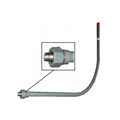
Gas compression risers are pre-fabricated pipe sections that bring an underground gas service line up above grade to connect to a meter or appliance, using compression fittings at each end instead of a threaded or welded joint. The riser's job is to make that below-to-above-grade transition without requiring a field weld or a fusion joint on site, which speeds up meter installs and service line repairs.
Because the riser spans the transition point where an underground line meets exposed piping, it takes on stresses a straight run of pipe doesn't see, including soil settling, frost heave, and vehicle traffic near the meter set. Installers pick a riser based on the diameter and length needed to clear the specific installation, plus the coating or coil type appropriate for the soil and code jurisdiction it's going into.
Subcategories
- Coated Steel Risers: Coated risers add a corrosion-resistant exterior coating over the steel body, intended for direct burial applications where the below-grade portion needs protection beyond bare steel. Installers select coating type based on local soil conditions and utility specifications. These are common on new gas service installs rather than above-grade-only repairs.
- Anodeless Risers: Anodeless risers combine a polyethylene underground section with a steel above-grade section in one factory-fabricated unit, eliminating the separate anode bag some older transition fittings required. They're a common choice on new residential and light commercial service line installs where a single compact fitting speeds up the connection to the meter.
- Riser Fittings & Transition Adapters: This group covers the compression fittings, transition adapters, and mechanical joints used to connect a riser to the existing service line or meter set piping. Techs stock these separately from full risers since a repair job often only needs the fitting, not a full new riser assembly.
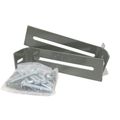
- Riser Guards & Supports: Guards and support brackets protect the above-grade portion of a riser from vehicle impact and physical damage near the meter set. Utilities and code jurisdictions frequently require a guard on risers installed in areas with vehicle traffic, so this is a common add-on to a riser order rather than a standalone repair part.
Buying Guide
Confirm the pipe diameter and overall riser length needed for the specific installation before ordering, since risers are supplied as fixed-length assemblies rather than cut to order on site. Measuring the depth of the existing service line and the height needed above grade to reach the meter avoids a mismatched riser that's too short or requires field splicing.
Match the riser type to the installation, not just the pipe size. A straightforward meter set replacement in stable soil may only need a standard coated steel riser, while a new service line install often calls for an anodeless riser that combines the underground poly transition and above-grade steel section in one factory joint.
Check the local utility's or code jurisdiction's requirements for riser guards before finishing the job, particularly in areas with vehicle traffic near the meter set. Many utilities specify a guard as part of the standard install rather than treating it as optional hardware.
Verify the compression fitting size matches both the riser and the existing service line pipe on the other end of the connection, since a compression fitting sized even slightly off the pipe's actual outside diameter won't seal reliably under gas pressure.
For repair work rather than new installs, confirm whether the job actually needs a full riser replacement or just a transition fitting or adapter. Replacing the whole assembly when only the above-grade fitting has failed adds unnecessary excavation and cost.
Frequently Asked Questions
What's the difference between a coated steel riser and an anodeless riser?
A coated steel riser is a bare steel body with an added corrosion-resistant coating for direct burial, while an anodeless riser factory-joins a polyethylene underground section to a steel above-grade section in a single fitting.
Do I need a riser guard on every installation?
Not always, but many utilities and code jurisdictions require one where the riser is exposed to vehicle traffic near the meter set. Check local requirements before finishing the install.
Can I cut a compression riser to a custom length on site?
Risers are supplied as fixed-length assemblies, so measure the required length before ordering rather than planning to field-modify the unit.
How do I know if a job needs a full riser or just a transition fitting?
If the below-grade poly line and the meter set connection are both sound and only the above-grade fitting has failed, a transition fitting or adapter alone usually resolves the repair without a full riser replacement.
What causes a gas riser to fail prematurely?
Physical impact near the meter set, soil movement or frost heave stressing the underground transition, and coating damage exposing bare steel to corrosion are the most common causes.
