




Filters
SORT
Product Availability –
Size –
Connection Type –
Review Score –
 --%3E %3Csvg version='1.1' id='Fill' xmlns='http://www.w3.org/2000/svg' xmlns:xlink='http://www.w3.org/1999/xlink' x='0px' y='0px' viewBox='0 0 100 100' enable-background='new 0 0 100 100' xml:space='preserve'%3E %3Cpath fill='%23F15C02' d='M79.44,0.95H20.56C9.78,0.95,0.95,9.78,0.95,20.56v58.87c0,10.79,8.82,19.61,19.61,19.61h58.87 c10.79,0,19.61-8.83,19.61-19.61V20.56C99.05,9.78,90.22,0.95,79.44,0.95z M65.38,58.24l9.38,29.58L49.69,69.78L24.5,87.82 l9.34-29.6L8.8,39.6l30.73-0.17c0,0,6.98-19.61,10-28.93c0.54,1.36,9.88,29.1,9.88,29.1H91.2L65.38,58.24z'/%3E %3C/svg%3E)
 --%3E %3Csvg version='1.1' id='With-RB' xmlns='http://www.w3.org/2000/svg' xmlns:xlink='http://www.w3.org/1999/xlink' x='0px' y='0px' viewBox='0 0 100 100' enable-background='new 0 0 100 100' xml:space='preserve'%3E %3Cpath fill='%23FBC8B4' d='M79.44,0.95H20.56C9.78,0.95,0.95,9.78,0.95,20.56v58.87c0,10.79,8.82,19.61,19.61,19.61h58.87 c10.79,0,19.61-8.83,19.61-19.61V20.56C99.05,9.78,90.22,0.95,79.44,0.95z M65.38,58.24l9.38,29.58L49.69,69.78L24.5,87.82 l9.34-29.6L8.8,39.6l30.73-0.17c0,0,6.98-19.61,10-28.93c0.54,1.36,9.88,29.1,9.88,29.1H91.2L65.38,58.24z'/%3E %3C/svg%3E)
Price Range –
Gastite CSST Fittings


 --%3E %3Csvg version='1.1' id='No-RB' xmlns='http://www.w3.org/2000/svg' xmlns:xlink='http://www.w3.org/1999/xlink' x='0px' y='0px' viewBox='0 0 100 100' enable-background='new 0 0 100 100' xml:space='preserve'%3E %3Cpath fill='%23CECECE' d='M79.44,0.95H20.56C9.78,0.95,0.95,9.78,0.95,20.56v58.87c0,10.79,8.82,19.61,19.61,19.61h58.87 c10.79,0,19.61-8.83,19.61-19.61V20.56C99.05,9.78,90.22,0.95,79.44,0.95z M65.38,58.24l9.38,29.58L49.69,69.78L24.5,87.82 l9.34-29.6L8.8,39.6l30.73-0.17c0,0,6.98-19.61,10-28.93c0.54,1.36,9.88,29.1,9.88,29.1H91.2L65.38,58.24z'/%3E %3C/svg%3E)
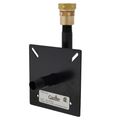
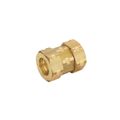


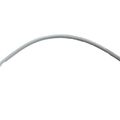
Gastite CSST fittings connect corrugated stainless steel tubing runs to appliances, manifolds, and other gas piping components in a flexible gas piping system. Gastite's FlashShield CSST is built from ASTM A240 Type 304/321 stainless steel with a UV-resistant polyethylene jacket, and it's the only metallically-shielded CSST product on the market, giving it higher lightning resistivity than conventional flexible gas piping. Plumbers and gas fitters use Gastite fittings on both new construction and retrofit jobs delivering natural gas or liquefied petroleum gas to residential and commercial appliances.
Because CSST routes through framing more easily than rigid pipe, fittings are what make the transitions at appliance connections, wall penetrations, and manifold takeoffs actually work. Matching the fitting type and size to the specific CSST run keeps the system sealed and code-compliant, and Gastite's system carries CSA, ICC-ES, and IAPMO listings that inspectors look for during rough-in and final inspection.
Subcategories
- Termination Fittings: Termination fittings connect the end of a CSST run to an appliance shutoff valve, manifold, or other rigid piping connection point. They're the fitting a gas fitter reaches for at nearly every appliance hookup on a CSST job. Sizing them correctly to the tubing diameter keeps the connection sealed under normal operating pressure.
- Manifold Fittings: Manifold fittings connect multiple CSST branch lines back to a central gas manifold, which is how most modern CSST systems distribute gas to individual appliances from one supply point. Contractors use manifold-based layouts to simplify sizing calculations across a whole house or building. Fitting choice at the manifold has to match both the branch tubing size and the manifold's port configuration.
- Bonding and Grounding Accessories: Bonding and grounding accessories help satisfy the electrical bonding requirements that apply to CSST installations under most current gas codes. Proper bonding is part of what protects a CSST system in the event of a nearby lightning strike or electrical fault. Gas fitters install these components as part of a complete, code-compliant CSST system rather than as an optional add-on.
Buying Guide
Match every fitting to the exact CSST size it will connect to, since Gastite's tubing, fittings, and system components are engineered to work together as a matched system rather than as interchangeable parts across brands. Mixing components from different CSST systems can compromise the sealing performance and may not satisfy the listings the local inspector is checking for.
Confirm which local code requirements apply to bonding and shielding before finalizing a materials list. Gastite's FlashShield product is built with an integrated metallic shield that gives it higher lightning resistivity than standard CSST, which can simplify some of the supplemental bonding work required with unshielded systems, but local code still determines exactly what's required on a given job. Checking with the local authority having jurisdiction before rough-in avoids a failed inspection over a bonding detail.
Keep documentation on hand for the listings that back the system, since inspectors commonly ask for them during rough-in walkthroughs. Gastite's FlashShield system carries a CSA certificate along with ICC-ES and IAPMO listings, and having that paperwork ready alongside the installed materials speeds up the inspection process considerably.
Frequently Asked Questions
Can Gastite fittings be mixed with another brand's CSST tubing?
It's best to stick with matched components from the same system, since CSST tubing and fittings are engineered together for a proper seal. Mixing brands can affect performance and may not meet the certifications required for inspection.
What makes Gastite's FlashShield different from standard CSST?
FlashShield includes an integrated metallic shield, making it the only metallically-shielded CSST product on the market and giving it higher lightning resistivity than conventional flexible gas piping. It's built from ASTM A240 Type 304/321 stainless steel with a UV-resistant polyethylene jacket.
Do CSST systems need special bonding?
Most current gas codes require electrical bonding on CSST installations, and Gastite offers bonding and grounding accessories as part of a complete system. Local code requirements still determine the specifics, so it's worth confirming with the local inspector before rough-in.
What listings should Gastite CSST fittings carry?
Gastite's FlashShield system holds a CSA certificate along with ICC-ES and IAPMO listings. Having that documentation available during a rough-in or final inspection helps keep the process moving smoothly.
Is Gastite CSST approved for both residential and commercial gas piping?
Yes, FlashShield is designed to deliver natural gas or liquefied petroleum gas to appliances in both residential and commercial settings. It's suitable for all construction modes, from new builds to retrofits.
