




Filters
SORT
Product Availability –
Brand –
Product Type –
Volume –
Review Score –
 --%3E %3Csvg version='1.1' id='Fill' xmlns='http://www.w3.org/2000/svg' xmlns:xlink='http://www.w3.org/1999/xlink' x='0px' y='0px' viewBox='0 0 100 100' enable-background='new 0 0 100 100' xml:space='preserve'%3E %3Cpath fill='%23F15C02' d='M79.44,0.95H20.56C9.78,0.95,0.95,9.78,0.95,20.56v58.87c0,10.79,8.82,19.61,19.61,19.61h58.87 c10.79,0,19.61-8.83,19.61-19.61V20.56C99.05,9.78,90.22,0.95,79.44,0.95z M65.38,58.24l9.38,29.58L49.69,69.78L24.5,87.82 l9.34-29.6L8.8,39.6l30.73-0.17c0,0,6.98-19.61,10-28.93c0.54,1.36,9.88,29.1,9.88,29.1H91.2L65.38,58.24z'/%3E %3C/svg%3E)
 --%3E %3Csvg version='1.1' id='With-RB' xmlns='http://www.w3.org/2000/svg' xmlns:xlink='http://www.w3.org/1999/xlink' x='0px' y='0px' viewBox='0 0 100 100' enable-background='new 0 0 100 100' xml:space='preserve'%3E %3Cpath fill='%23FBC8B4' d='M79.44,0.95H20.56C9.78,0.95,0.95,9.78,0.95,20.56v58.87c0,10.79,8.82,19.61,19.61,19.61h58.87 c10.79,0,19.61-8.83,19.61-19.61V20.56C99.05,9.78,90.22,0.95,79.44,0.95z M65.38,58.24l9.38,29.58L49.69,69.78L24.5,87.82 l9.34-29.6L8.8,39.6l30.73-0.17c0,0,6.98-19.61,10-28.93c0.54,1.36,9.88,29.1,9.88,29.1H91.2L65.38,58.24z'/%3E %3C/svg%3E)
Price Range –
Heat Paste & Compounds



 --%3E %3Csvg version='1.1' id='Half' xmlns='http://www.w3.org/2000/svg' xmlns:xlink='http://www.w3.org/1999/xlink' x='0px' y='0px' viewBox='0 0 100 100' enable-background='new 0 0 100 100' xml:space='preserve'%3E %3Cg%3E %3Cpath fill='%23F15C02' d='M30.05,70.23l3.79-12.01L8.8,39.6l30.73-0.17c0,0,6.98-19.61,10-28.93c0.54,1.36,9.88,29.1,9.88,29.1h1.58 L93.71,7.18c-3.58-3.82-8.66-6.23-14.28-6.23H20.56C9.78,0.95,0.95,9.78,0.95,20.56v58.87c0,5.41,2.22,10.32,5.79,13.88 L30.05,70.23z'/%3E %3C/g%3E %3Cpath fill='%23FBC8B4' d='M93.71,7.18L60.98,39.6H91.2L65.38,58.24l9.38,29.58L49.69,69.78L24.5,87.82l5.55-17.59L6.75,93.32 c3.55,3.54,8.44,5.73,13.82,5.73h58.87c10.79,0,19.61-8.83,19.61-19.61V20.56C99.05,15.4,97.01,10.69,93.71,7.18z'/%3E %3C/svg%3E)

 --%3E %3Csvg version='1.1' id='No-RB' xmlns='http://www.w3.org/2000/svg' xmlns:xlink='http://www.w3.org/1999/xlink' x='0px' y='0px' viewBox='0 0 100 100' enable-background='new 0 0 100 100' xml:space='preserve'%3E %3Cpath fill='%23CECECE' d='M79.44,0.95H20.56C9.78,0.95,0.95,9.78,0.95,20.56v58.87c0,10.79,8.82,19.61,19.61,19.61h58.87 c10.79,0,19.61-8.83,19.61-19.61V20.56C99.05,9.78,90.22,0.95,79.44,0.95z M65.38,58.24l9.38,29.58L49.69,69.78L24.5,87.82 l9.34-29.6L8.8,39.6l30.73-0.17c0,0,6.98-19.61,10-28.93c0.54,1.36,9.88,29.1,9.88,29.1H91.2L65.38,58.24z'/%3E %3C/svg%3E)





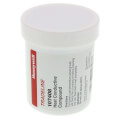
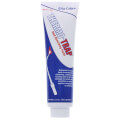
Heat Paste & Compounds are pastes HVAC technicians apply at a sensor, bulb, or well connection, or at a joint being soldered or brazed, to manage heat transfer or heat exposure at that specific point. Honeywell's heat conductive compound, sold in a 4 ounce container, fills microscopic gaps between a sensing element and the surface it touches, since air trapped in that gap would otherwise slow heat transfer and throw off a control reading. White Rodgers offers a similar conductive compound that ships with a built-in well adapter, pairing the paste with hardware for inserting a sensor into an immersion well. A different product in this category, Nu-Calgon's Thermo-Trap Paste, works the opposite way, absorbing and blocking heat to protect a nearby valve or old solder joint while a technician solders, welds, or brazes close by. Keeping the right type of compound in a service bag prevents a sensor reading error on one call and heat damage to a sensitive part on another.
Subcategories
- Standard Heat Conductive Compound: Standard heat conductive compound is a paste applied between a sensor or bulb and the metal surface it monitors to fill microscopic air gaps that would otherwise slow heat transfer. Honeywell's version ships in a 4 ounce container sized for repeated use across multiple service calls. Technicians apply a thin layer directly to the sensor before securing it in place, since too thick a layer can trap air instead of displacing it. This compound works across general sensor and bulb mounting applications where direct metal-to-metal contact is not possible.
- Compound with Well Adapter: Compound with a well adapter pairs heat conductive paste with hardware designed for inserting a sensor into an immersion well rather than clamping it to an exposed surface. White Rodgers packages its compound this way for sensors that mount inside a well fitting on a boiler or water heater. Technicians use this version when the application calls for a sensor to sit inside a well rather than strap onto a pipe exterior. The included adapter saves a trip back to the counter for a separate well-mounting part.
- Heat Absorbing Paste: Heat absorbing paste works the opposite way from a conductive compound, blocking and drawing off heat instead of transferring it. Nu-Calgon's Thermo-Trap Paste protects sensitive material such as valves and old solder joints from heat generated during soldering, welding, or brazing on a nearby connection. Technicians pack this paste around a component that needs to stay cool while torch work happens close by on the same line. The paste is harmless to skin and clothing, which matters since it often gets applied by hand in tight quarters.
Buying Guide
Start by identifying whether the job calls for transferring heat or blocking it, since this category covers both functions. A sensor or bulb that needs accurate contact with a surface calls for a conductive compound, while a valve or old solder joint that needs protection from a nearby torch calls for a heat absorbing paste instead.
Check whether the sensor mounts directly against a surface or inserts into an immersion well, since a well-mounted sensor needs an adapter alongside the conductive compound rather than the compound alone. Heat Paste & Compounds that include a built-in well adapter save a technician from sourcing a separate mounting part for that style of installation.
Apply conductive compound only as a thin layer, since the purpose of the paste is to fill microscopic air gaps between two surfaces, not to create a thick cushion between them. A layer applied too heavily can trap air instead of displacing it, which defeats the purpose of using the compound in the first place.
Pack heat absorbing paste generously around whatever needs protecting from torch heat, since that product's job is blocking heat rather than conducting it. Keeping a small container of each type in a service bag covers both soldering protection and sensor mounting needs without carrying a bulk size that sits unused between calls.
Frequently Asked Questions
What does heat conductive compound actually do at a sensor connection?
Heat conductive compound fills microscopic air gaps between a sensor or bulb and the metal surface it monitors, since trapped air would otherwise slow heat transfer and skew the reading. Applying a thin layer at the contact point improves how accurately the sensor tracks the actual surface temperature. A properly applied compound layer stays thin rather than thick, since the goal is displacing air, not adding bulk.
What is the difference between conductive compound and heat absorbing paste?
Conductive compound transfers heat more effectively between a sensor and a surface, while heat absorbing paste like Nu-Calgon's Thermo-Trap Paste blocks and draws off heat to protect a nearby valve or solder joint during soldering or brazing. The two products serve opposite purposes even though both are called heat pastes. Checking a product's intended use before applying it avoids reaching for the wrong type on a job.
Why does a conductive compound sometimes come packaged with a well adapter?
A compound packaged with a well adapter, like White Rodgers' version, is built for sensors that insert into an immersion well on equipment such as a boiler or water heater rather than strapping onto an exposed pipe. Including the adapter with the compound saves a technician from sourcing a separate well-mounting part for that installation. Checking whether a sensor mounts externally or inserts into a well determines which compound version fits the job.
Can applying too much heat conductive compound cause a problem?
Applying too much heat conductive compound can trap air instead of displacing it, which defeats the purpose of using the compound at the contact point. A thin, even layer transfers heat more effectively than a thick application. Technicians get the best result by spreading a small amount across the contact surface rather than packing it on heavily.
When would a technician use heat absorbing paste instead of conductive compound?
A technician reaches for heat absorbing paste, such as Nu-Calgon's Thermo-Trap Paste, when soldering, welding, or brazing near a valve or old solder joint that needs protection from the heat of that torch work. Conductive compound would not help in this situation since its purpose is transferring heat, not blocking it. Packing the absorbing paste around the sensitive component before applying heat nearby keeps that part from taking damage.
