




Filters
SORT
Product Availability –
Capacity (Gallons/day) –
Review Score –
 --%3E %3Csvg version='1.1' id='Fill' xmlns='http://www.w3.org/2000/svg' xmlns:xlink='http://www.w3.org/1999/xlink' x='0px' y='0px' viewBox='0 0 100 100' enable-background='new 0 0 100 100' xml:space='preserve'%3E %3Cpath fill='%23F15C02' d='M79.44,0.95H20.56C9.78,0.95,0.95,9.78,0.95,20.56v58.87c0,10.79,8.82,19.61,19.61,19.61h58.87 c10.79,0,19.61-8.83,19.61-19.61V20.56C99.05,9.78,90.22,0.95,79.44,0.95z M65.38,58.24l9.38,29.58L49.69,69.78L24.5,87.82 l9.34-29.6L8.8,39.6l30.73-0.17c0,0,6.98-19.61,10-28.93c0.54,1.36,9.88,29.1,9.88,29.1H91.2L65.38,58.24z'/%3E %3C/svg%3E)
 --%3E %3Csvg version='1.1' id='With-RB' xmlns='http://www.w3.org/2000/svg' xmlns:xlink='http://www.w3.org/1999/xlink' x='0px' y='0px' viewBox='0 0 100 100' enable-background='new 0 0 100 100' xml:space='preserve'%3E %3Cpath fill='%23FBC8B4' d='M79.44,0.95H20.56C9.78,0.95,0.95,9.78,0.95,20.56v58.87c0,10.79,8.82,19.61,19.61,19.61h58.87 c10.79,0,19.61-8.83,19.61-19.61V20.56C99.05,9.78,90.22,0.95,79.44,0.95z M65.38,58.24l9.38,29.58L49.69,69.78L24.5,87.82 l9.34-29.6L8.8,39.6l30.73-0.17c0,0,6.98-19.61,10-28.93c0.54,1.36,9.88,29.1,9.88,29.1H91.2L65.38,58.24z'/%3E %3C/svg%3E)
Price Range –
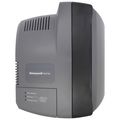
Honeywell Home TrueEASE Humidifiers


 --%3E %3Csvg version='1.1' id='Half' xmlns='http://www.w3.org/2000/svg' xmlns:xlink='http://www.w3.org/1999/xlink' x='0px' y='0px' viewBox='0 0 100 100' enable-background='new 0 0 100 100' xml:space='preserve'%3E %3Cg%3E %3Cpath fill='%23F15C02' d='M30.05,70.23l3.79-12.01L8.8,39.6l30.73-0.17c0,0,6.98-19.61,10-28.93c0.54,1.36,9.88,29.1,9.88,29.1h1.58 L93.71,7.18c-3.58-3.82-8.66-6.23-14.28-6.23H20.56C9.78,0.95,0.95,9.78,0.95,20.56v58.87c0,5.41,2.22,10.32,5.79,13.88 L30.05,70.23z'/%3E %3C/g%3E %3Cpath fill='%23FBC8B4' d='M93.71,7.18L60.98,39.6H91.2L65.38,58.24l9.38,29.58L49.69,69.78L24.5,87.82l5.55-17.59L6.75,93.32 c3.55,3.54,8.44,5.73,13.82,5.73h58.87c10.79,0,19.61-8.83,19.61-19.61V20.56C99.05,15.4,97.01,10.69,93.71,7.18z'/%3E %3C/svg%3E)


Honeywell Home TrueEASE humidifiers are whole-house bypass humidifiers installed inline with a home's ducted heating system to add moisture across every room rather than treating one space at a time. The bypass design pulls warm air from the supply duct through a moistened evaporator pad and returns it to the return duct, so the humidifier only draws water and runs air when the home actually needs added humidity. Honeywell Home built the TrueEASE line to use up to 30% less water than comparable bypass models, with a design aimed at saving up to 10,000 gallons of water a year compared with older humidifiers left running continuously. The evaporator pad is the main wear part and snaps into place for tool-free replacement, which keeps routine maintenance simple for a homeowner or service tech. For a technician sizing a whole-house humidifier, the TrueEASE lineup spans several capacities to match different home sizes and duct systems.
Subcategories
- Small and Mid-Size Bypass Humidifiers: Smaller TrueEASE models are sized for compact homes and duct systems with lower total conditioned square footage. They use a smaller evaporator pad and lower airflow bypass than the larger models in the lineup. A tech typically selects one of these based on the home's square footage and the manufacturer's sizing chart for the ductwork involved.
- Large Bypass Humidifiers: Larger TrueEASE models handle bigger homes or duct systems that need a higher volume of moisture added per day. A larger evaporator pad and higher rated airflow in these models keep pace with the added square footage. Correct sizing matters because an undersized unit struggles to maintain target humidity in a large home during the coldest months.
- Replacement Pads and Accessories: The evaporator pad is the main wear part in a TrueEASE humidifier and is designed to snap into place without tools for routine replacement. A pad left in service too long loses its ability to hold and evaporate water efficiently, which reduces humidity output even if the rest of the unit works correctly. Saddle valves, water lines, and drain fittings round out the accessories needed for a complete installation.
Buying Guide
Sizing a whole-house humidifier starts with the home's square footage and how tight the building envelope is, since a newer, well-sealed home holds humidity differently than an older home with more air infiltration. Honeywell Home TrueEASE humidifiers come in a range of capacities, and manufacturer sizing charts typically account for both square footage and construction type when recommending a model.
Duct configuration matters just as much as capacity. A bypass humidifier needs enough static pressure difference between the supply and return ducts to pull air through the evaporator pad, so installers should confirm duct layout and furnace blower capacity before selecting a unit. In some retrofit situations a bypass duct needs to be added or resized to get proper airflow through the humidifier.
Water supply and drainage also factor into the decision. A bypass humidifier needs a dedicated water line, typically tapped from a nearby cold water supply, along with a drain for water the pad doesn't absorb. Confirming there's a practical route for both before the job starts avoids surprises mid-install.
Maintenance requirements are worth discussing with the homeowner at the time of sale. The evaporator pad needs periodic replacement, more often in areas with hard water, and skipping that maintenance is the most common reason a bypass humidifier underperforms over time.
Frequently Asked Questions
How is a TrueEASE humidifier sized for a home?
Sizing is based mainly on the home's square footage and construction type, since a tightly sealed newer home retains humidity differently than an older, drafty one. Manufacturer sizing charts match specific TrueEASE models to a square footage range. Duct static pressure and blower capacity should also be checked, since airflow through the bypass duct affects how well the humidifier performs regardless of its rated capacity.
Does a bypass humidifier need a dedicated water line?
A bypass humidifier needs its own water supply line, usually tapped from a nearby cold water pipe with a saddle valve or dedicated fitting. It also needs a drain line for water the evaporator pad doesn't absorb during operation. Confirming a practical route for both lines before starting the install avoids delays mid-job.
How often does the evaporator pad need to be replaced?
The pad should be checked at the start of each heating season and replaced once it shows mineral buildup or reduced water absorption. Homes on hard water typically need pad changes more often than homes with softened water. A pad left in service too long reduces humidity output even when the rest of the unit is functioning correctly.
Can a TrueEASE humidifier be installed on any furnace?
A TrueEASE humidifier is designed for forced-air duct systems with enough supply-to-return pressure difference to move air through the bypass duct and evaporator pad. Furnaces with very low blower capacity or duct systems without room for a bypass connection may need modification before installation. Confirming duct layout and airflow during the initial site visit prevents installation problems later.
What causes low humidity output from a bypass humidifier?
A worn or mineral-caked evaporator pad is the most common cause of reduced humidity output, since it can no longer absorb and evaporate water efficiently. Low water pressure or a clogged saddle valve can also starve the pad of the water it needs. Insufficient airflow through the bypass duct, often from a closed damper or undersized duct, is another common cause worth checking.
