




Filters
SORT
Product Availability –
Size –
Flow Capacity (Cv) –
Review Score –
 --%3E %3Csvg version='1.1' id='Fill' xmlns='http://www.w3.org/2000/svg' xmlns:xlink='http://www.w3.org/1999/xlink' x='0px' y='0px' viewBox='0 0 100 100' enable-background='new 0 0 100 100' xml:space='preserve'%3E %3Cpath fill='%23F15C02' d='M79.44,0.95H20.56C9.78,0.95,0.95,9.78,0.95,20.56v58.87c0,10.79,8.82,19.61,19.61,19.61h58.87 c10.79,0,19.61-8.83,19.61-19.61V20.56C99.05,9.78,90.22,0.95,79.44,0.95z M65.38,58.24l9.38,29.58L49.69,69.78L24.5,87.82 l9.34-29.6L8.8,39.6l30.73-0.17c0,0,6.98-19.61,10-28.93c0.54,1.36,9.88,29.1,9.88,29.1H91.2L65.38,58.24z'/%3E %3C/svg%3E)
Honeywell V5013B Mixing Valves

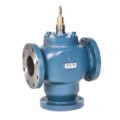
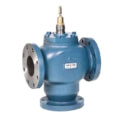
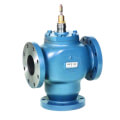
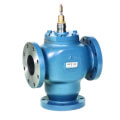
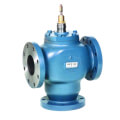


Honeywell V5013B Mixing Valves are three-way motorized valves used in hydronic heating systems to blend hot boiler supply water with cooler return water, delivering a controlled, tempered water temperature to radiant floor loops, baseboard zones, or fan coil units. The valve body has three ports, one for hot supply, one for return, and one common outlet, with an internal plug that rotates to proportion the mix based on signals from a connected actuator and controller. Contractors specify these valves in systems where a single boiler needs to supply both a high-temperature zone and a lower-temperature zone, such as a radiant floor loop that would otherwise run too hot if fed directly from boiler supply water. Because the valve body pairs with a separate actuator, replacement projects need to confirm compatibility between the valve and whichever actuator drives it. Correctly matched and installed, this pairing gives a hydronic system precise temperature control across zones with very different heating requirements.
Subcategories
- Valve Actuators: Actuators mount to the V5013B valve body and rotate its internal plug in response to a signal from a mixing controller or outdoor reset control, determining how much hot and return water blend at any given moment. Actuators are sold separately from the valve body in many cases, so replacing a failed actuator does not always require swapping the entire valve. Confirming voltage and control signal type, such as floating point or proportional, is necessary before ordering a replacement actuator.
- Repair Kits and Seals: Repair kits typically include the internal seals, gaskets, and sometimes the rotating plug assembly needed to service a valve that has started leaking or sticking without replacing the entire valve body. These kits are a lower-cost option for older installations where the valve body itself is still in serviceable condition but the internal wear components have degraded over years of operation.
- Replacement Valve Bodies: A full valve body replacement is typically needed when the body itself has corroded, cracked, or developed a leak that a seal kit cannot resolve. Matching pipe size and connection type, whether threaded or flanged, to the existing piping is the main consideration when ordering a replacement body, since the actuator from the old valve may be reusable if it is still functioning correctly.
- Linkage and Mounting Hardware: Linkage and mounting hardware connects the actuator to the valve stem and secures the actuator housing to the valve body, and a worn or improperly adjusted linkage can cause the valve to fail to reach its full range of motion. Contractors check this hardware when a mixing valve is not achieving the expected blended temperature even though the actuator itself is confirmed to be working.
Buying Guide
Start with pipe size and connection type. The valve body needs to match the existing piping's diameter and whether it is threaded or flanged, since adapting a mismatched connection adds cost and potential leak points to the job. Next, confirm the valve's flow characteristics are appropriate for the zone it will serve, since a valve sized for a large zone can behave poorly when installed on a smaller loop with lower flow, and the reverse is true as well.
When shopping for Honeywell V5013B Mixing Valves, pay close attention to actuator compatibility, since the valve body and actuator are often sold and replaced independently. Confirm the actuator's voltage, control signal type, and mounting pattern match the valve body being installed or repaired. Decide whether the application calls for floating point control, proportional control, or a simpler on-off arrangement, since the mixing controller and actuator both need to support the same control method to work together. Finally, consider serviceability: a valve installed with isolation valves on either side and a way to bypass it during service will save significant time on future maintenance calls, since draining and refilling a hydronic loop for every repair adds unnecessary labor to a job.
Frequently Asked Questions
What does a Honeywell V5013B mixing valve do in a hydronic system?
It blends hot boiler supply water with cooler return water to deliver a tempered, controlled temperature to a specific heating zone, such as a radiant floor loop that needs lower water temperatures than the boiler's main supply.
Can I replace just the actuator without replacing the valve body?
In most cases yes, since the actuator and valve body are separate components. Confirming that the replacement actuator matches the original's voltage, control signal type, and mounting pattern is necessary before ordering.
How do I know if my mixing valve actuator has failed versus the valve body?
If the actuator runs and moves but the outlet temperature never reaches the expected blend, the valve body or its internal plug may be worn or stuck. If the actuator does not respond to a control signal at all, testing its power and control wiring first will usually narrow down the fault.
What is the difference between floating point and proportional control on these valves?
Floating point control sends open and close signals in short pulses to gradually move the valve to a new position, while proportional control sends a continuously variable signal that positions the valve more precisely. The mixing controller and actuator both need to support the same control type.
Do I need isolation valves around a mixing valve installation?
Isolation valves are not strictly required but are strongly recommended, since they allow a contractor to service or replace the mixing valve without draining the entire hydronic loop, saving time and reducing the risk of introducing air into the system.
