




Filters
SORT
Product Availability –
Category –
Brand –
Application –
Size –
Connection Type –
Connection Method –
Max Temp (F) –
Min Temp (F) –
Flow Capacity (Cv) –
Review Score –
 --%3E %3Csvg version='1.1' id='Fill' xmlns='http://www.w3.org/2000/svg' xmlns:xlink='http://www.w3.org/1999/xlink' x='0px' y='0px' viewBox='0 0 100 100' enable-background='new 0 0 100 100' xml:space='preserve'%3E %3Cpath fill='%23F15C02' d='M79.44,0.95H20.56C9.78,0.95,0.95,9.78,0.95,20.56v58.87c0,10.79,8.82,19.61,19.61,19.61h58.87 c10.79,0,19.61-8.83,19.61-19.61V20.56C99.05,9.78,90.22,0.95,79.44,0.95z M65.38,58.24l9.38,29.58L49.69,69.78L24.5,87.82 l9.34-29.6L8.8,39.6l30.73-0.17c0,0,6.98-19.61,10-28.93c0.54,1.36,9.88,29.1,9.88,29.1H91.2L65.38,58.24z'/%3E %3C/svg%3E)
 --%3E %3Csvg version='1.1' id='With-RB' xmlns='http://www.w3.org/2000/svg' xmlns:xlink='http://www.w3.org/1999/xlink' x='0px' y='0px' viewBox='0 0 100 100' enable-background='new 0 0 100 100' xml:space='preserve'%3E %3Cpath fill='%23FBC8B4' d='M79.44,0.95H20.56C9.78,0.95,0.95,9.78,0.95,20.56v58.87c0,10.79,8.82,19.61,19.61,19.61h58.87 c10.79,0,19.61-8.83,19.61-19.61V20.56C99.05,9.78,90.22,0.95,79.44,0.95z M65.38,58.24l9.38,29.58L49.69,69.78L24.5,87.82 l9.34-29.6L8.8,39.6l30.73-0.17c0,0,6.98-19.61,10-28.93c0.54,1.36,9.88,29.1,9.88,29.1H91.2L65.38,58.24z'/%3E %3C/svg%3E)
Price Range –
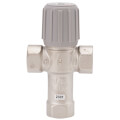
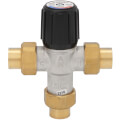
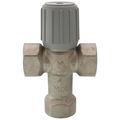
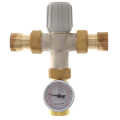
Honeywell, Honeywell Home & Resideo Mixing Valves



 --%3E %3Csvg version='1.1' id='Half' xmlns='http://www.w3.org/2000/svg' xmlns:xlink='http://www.w3.org/1999/xlink' x='0px' y='0px' viewBox='0 0 100 100' enable-background='new 0 0 100 100' xml:space='preserve'%3E %3Cg%3E %3Cpath fill='%23F15C02' d='M30.05,70.23l3.79-12.01L8.8,39.6l30.73-0.17c0,0,6.98-19.61,10-28.93c0.54,1.36,9.88,29.1,9.88,29.1h1.58 L93.71,7.18c-3.58-3.82-8.66-6.23-14.28-6.23H20.56C9.78,0.95,0.95,9.78,0.95,20.56v58.87c0,5.41,2.22,10.32,5.79,13.88 L30.05,70.23z'/%3E %3C/g%3E %3Cpath fill='%23FBC8B4' d='M93.71,7.18L60.98,39.6H91.2L65.38,58.24l9.38,29.58L49.69,69.78L24.5,87.82l5.55-17.59L6.75,93.32 c3.55,3.54,8.44,5.73,13.82,5.73h58.87c10.79,0,19.61-8.83,19.61-19.61V20.56C99.05,15.4,97.01,10.69,93.71,7.18z'/%3E %3C/svg%3E)






 --%3E %3Csvg version='1.1' id='No-RB' xmlns='http://www.w3.org/2000/svg' xmlns:xlink='http://www.w3.org/1999/xlink' x='0px' y='0px' viewBox='0 0 100 100' enable-background='new 0 0 100 100' xml:space='preserve'%3E %3Cpath fill='%23CECECE' d='M79.44,0.95H20.56C9.78,0.95,0.95,9.78,0.95,20.56v58.87c0,10.79,8.82,19.61,19.61,19.61h58.87 c10.79,0,19.61-8.83,19.61-19.61V20.56C99.05,9.78,90.22,0.95,79.44,0.95z M65.38,58.24l9.38,29.58L49.69,69.78L24.5,87.82 l9.34-29.6L8.8,39.6l30.73-0.17c0,0,6.98-19.61,10-28.93c0.54,1.36,9.88,29.1,9.88,29.1H91.2L65.38,58.24z'/%3E %3C/svg%3E)


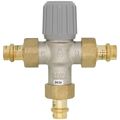
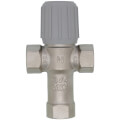
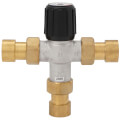
Honeywell, Honeywell Home, and Resideo mixing valves blend hot and cold water to deliver a stable, adjustable output temperature for hydronic heating loops and domestic water systems. Contractors install these valves downstream of a boiler or water heater to protect equipment from overheating while keeping supply water at a usable, consistent temperature for radiant floors, baseboard loops, and fixture branches. Honeywell, Honeywell Home, and Resideo each appear as separate brand names on the mixing valve hardware carried in this category, and matching a replacement valve to the exact brand name, housing, and connection style already installed keeps a repair straightforward and avoids re-piping. For new installs, sizing a mixing valve to the loop's flow rate and adding isolation valves on both the hot and cold inlets makes future service far easier. Getting the valve type right up front matters for system longevity and for keeping occupants comfortable, whether the job is a single-zone radiant retrofit or a multi-zone commercial boiler room.
Subcategories
- Honeywell Mixing Valves: Honeywell mixing valves cover legacy thermostatic and manual valve bodies used across older hydronic and radiant heat installations. Boiler technicians and radiant heat installers rely on this line when repairing or replacing valves in systems that were originally installed with Honeywell-branded hardware. Matching housing size and thread pattern to the existing valve keeps a swap simple without cutting into surrounding piping.
- Honeywell Home Mixing Valves: Honeywell Home mixing valves are a separate, more recent product line built for residential radiant heat and domestic hot water tempering. Installers use them in retrofit and new-construction jobs where a compact, adjustable valve is needed close to the heat source. Honeywell Home is a distinct brand from Honeywell, and the two product lines are not interchangeable component for component.
- Resideo Mixing Valves: Resideo mixing valves round out the category with additional configurations for both residential and light commercial hydronic systems. Plumbers and heating contractors select a Resideo valve when a job calls for connection sizes or flow ratings that differ from the Honeywell or Honeywell Home options in this category. Reviewing the exact model already installed before ordering a replacement avoids a mismatched connection.
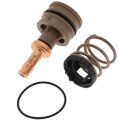
- Mixing Valve Replacement Parts: Replacement parts for these mixing valve lines include cartridges, actuators, and gauge kits that let a technician rebuild a valve instead of replacing the entire body. Facility maintenance teams often keep a small stock of these parts on hand for older systems still in active service. Confirming the parent valve's brand and model before ordering parts prevents a wasted trip back to the supply counter.
Buying Guide
Choosing the right mixing valve starts with identifying what's already installed, since these three brand names cover a wide range of valve bodies, connection types, and control methods that are not always interchangeable. Pulling the model number or checking the valve's markings before ordering a replacement is the fastest way to avoid a return trip. For new construction or a full valve swap, match the valve to the system's flow rate and to the piping material already in place, whether copper, PEX, or threaded iron. Thermostatic mixing valves adjust automatically to hold a set output temperature even as inlet temperatures shift, which makes them a common choice for domestic hot water tempering and for scald protection ahead of fixtures. Manually adjustable valves cost less and work well in simpler radiant heat loops where the target temperature rarely changes. Contractors working across a mix of older and newer installations often end up stocking valves from all three brand names in this category, since a homeowner's existing system may have been installed years apart from a later repair. Isolation valves on both the hot and cold supply lines make future service, cleaning, or full valve replacement far less disruptive. Anyone unfamiliar with a specific installation's history should confirm the brand and connection type in person rather than guessing from the boiler or water heater's age alone, since retrofits and prior repairs can mix components from different product generations.
Frequently Asked Questions
What's the difference between Honeywell, Honeywell Home, and Resideo mixing valves?
The three names cover different valve bodies and product generations sold in this category, not interchangeable variations of the same part. Honeywell and Honeywell Home are distinct product lines, and Resideo covers its own separate range of valves. Checking the exact model and connection type on the existing valve is the most reliable way to order a matching replacement.
How do I know if a mixing valve needs to be thermostatic or manually adjustable?
Thermostatic valves suit applications like domestic hot water tempering where the target temperature needs to stay steady even as inlet conditions change. Manually adjustable valves work fine in simpler radiant heat loops with a fixed setpoint that rarely needs adjustment. Reviewing how the existing system is used day to day usually points to the right choice.
Can a mixing valve from one of these brands replace a valve from another?
Not always. Housing dimensions, connection sizes, and control mechanisms can differ between Honeywell, Honeywell Home, and Resideo valves even when they serve a similar function. Matching brand and model as closely as possible avoids piping modifications during the swap.
Do these valves need isolation valves installed with them?
Isolation valves on both the hot and cold supply lines make later service, cleaning, or replacement much easier without draining the whole system. Many jobs add them during the original install even when the mixing valve itself doesn't require them to function. It's a small added cost that pays off the first time the valve needs attention.
How often do these mixing valves need maintenance?
Most mixing valves in this category hold up well with routine system maintenance and don't require a separate service schedule of their own. Sediment or mineral buildup in the water supply can affect valve performance over time, so periodic checks make sense on systems with harder water. Replacing worn cartridges or seals when a valve stops holding its set temperature is usually simpler than replacing the entire valve body.
