




Filters
SORT
Product Availability –
Shape –
MFD –
Voltage –
Used With –
Review Score –
 --%3E %3Csvg version='1.1' id='Fill' xmlns='http://www.w3.org/2000/svg' xmlns:xlink='http://www.w3.org/1999/xlink' x='0px' y='0px' viewBox='0 0 100 100' enable-background='new 0 0 100 100' xml:space='preserve'%3E %3Cpath fill='%23F15C02' d='M79.44,0.95H20.56C9.78,0.95,0.95,9.78,0.95,20.56v58.87c0,10.79,8.82,19.61,19.61,19.61h58.87 c10.79,0,19.61-8.83,19.61-19.61V20.56C99.05,9.78,90.22,0.95,79.44,0.95z M65.38,58.24l9.38,29.58L49.69,69.78L24.5,87.82 l9.34-29.6L8.8,39.6l30.73-0.17c0,0,6.98-19.61,10-28.93c0.54,1.36,9.88,29.1,9.88,29.1H91.2L65.38,58.24z'/%3E %3C/svg%3E)
Price Range –
ICP Heil Quaker Capacitors

 --%3E %3Csvg version='1.1' id='No-RB' xmlns='http://www.w3.org/2000/svg' xmlns:xlink='http://www.w3.org/1999/xlink' x='0px' y='0px' viewBox='0 0 100 100' enable-background='new 0 0 100 100' xml:space='preserve'%3E %3Cpath fill='%23CECECE' d='M79.44,0.95H20.56C9.78,0.95,0.95,9.78,0.95,20.56v58.87c0,10.79,8.82,19.61,19.61,19.61h58.87 c10.79,0,19.61-8.83,19.61-19.61V20.56C99.05,9.78,90.22,0.95,79.44,0.95z M65.38,58.24l9.38,29.58L49.69,69.78L24.5,87.82 l9.34-29.6L8.8,39.6l30.73-0.17c0,0,6.98-19.61,10-28.93c0.54,1.36,9.88,29.1,9.88,29.1H91.2L65.38,58.24z'/%3E %3C/svg%3E)

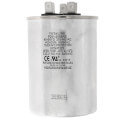
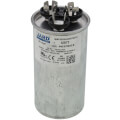
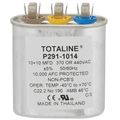
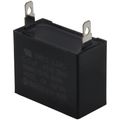
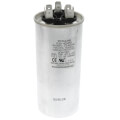
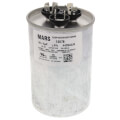
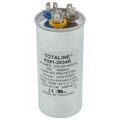

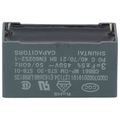
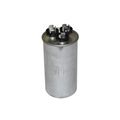
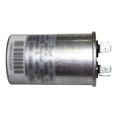
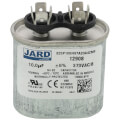
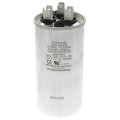

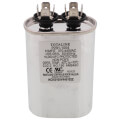
ICP Heil Quaker capacitors are replacement electrical components built for HVAC equipment manufactured under the Heil, Tempstar, Comfortmaker, and other ICP-family brands. These capacitors store and release electrical energy to start and keep compressor, condenser fan, and blower motors running smoothly, and a failing one is one of the most common reasons an otherwise healthy air conditioner or furnace blower stops working. Technicians stock these parts because capacitor failure often shows up as a hard-starting or humming motor, a tripped breaker, or a unit that hums but never actually starts. Because capacitor ratings must match the connected motor closely, sourcing the correct microfarad and voltage rating for a specific ICP unit prevents motor damage and repeat service calls, which is why having the right capacitor on the truck matters for a same-visit repair.
Subcategories
- Run Capacitors: Round or oval capacitors that stay in the circuit continuously to keep a compressor or fan motor running at full efficiency. Contractors match these by microfarad rating and voltage class to the specific ICP condenser or air handler model. Round capacitors typically serve smaller motors while oval styles support larger compressor loads.
- Dual Run Capacitors: Combine the run capacitor for a compressor and the run capacitor for a condenser fan motor into a single component with three or four terminals. These are common on packaged and split-system units where panel space is limited, and they simplify a service call by replacing two failing parts at once.
- Start Capacitors: Deliver a short, high-energy boost to help a motor overcome initial resistance and reach operating speed, then disconnect from the circuit. Used mainly on compressors that struggle to start under load, such as those in older or larger-tonnage ICP equipment, and often paired with a start relay.
- Capacitor Kits: Bundle a capacitor with mounting hardware, wire terminals, or a bracket so a technician has everything needed to complete a swap without a second trip. Useful for stocking a service vehicle with a ready-to-install fix for the most frequent ICP capacitor failures.
Buying Guide
Matching a capacitor to the exact motor it serves is the first and most important step when replacing one on ICP Heil Quaker equipment. Every capacitor is rated in microfarads (MFD) and voltage, and both numbers need to match the original part or the motor can run hot, short-cycle, or fail early. A quick visual check of the old capacitor's label, or a match against the equipment's wiring diagram, confirms the right part before a technician heads back to the truck.
Physical fit matters as much as electrical rating. Round and oval capacitor cases are not interchangeable in every cabinet, and dual run capacitors need to match the terminal layout of the original so existing wires connect without splicing. Checking cabinet clearance ahead of time avoids a capacitor that technically works electrically but will not physically mount where the old one sat.
Voltage tolerance is another detail worth confirming. A capacitor rated for 370V will typically also cover equipment originally spec'd at 440V, since higher-voltage capacitors are built to handle lower-voltage applications, but the reverse substitution is not safe. Contractors who keep both 370V and 440V options on hand can cover most ICP service calls without a special order.
Finally, consider stocking a small assortment of the most common MFD values for run and dual run capacitors rather than ordering one at a time. Capacitor failure is predictable and seasonal, tracking closely with peak cooling demand, so having the top handful of ratings already on the shelf keeps repeat truck rolls to a minimum during the busiest months.
Frequently Asked Questions
How can a technician tell if an ICP capacitor has failed?
Common signs include a motor that hums but does not start, a compressor or fan that starts slowly, a breaker that trips on startup, or a capacitor case that looks visibly swollen or bulged. A capacitance meter reading well below the rated MFD confirms the failure.
Can a higher microfarad capacitor be used as a substitute?
No. Installing a capacitor rated significantly above the original MFD value can cause a motor to run too hot and fail prematurely. The replacement should match the original rating as closely as possible, ideally within the manufacturer's stated tolerance.
Is it safe to use a 440V capacitor in place of a 370V original?
Yes, a 440V-rated capacitor can safely replace a 370V unit because it is built to handle a higher voltage load. The reverse substitution, using a 370V-rated capacitor where a 440V original was installed, is not recommended.
What is the difference between a run capacitor and a start capacitor?
A run capacitor stays in the circuit the entire time a motor operates, keeping it running efficiently, while a start capacitor only provides a brief energy boost during startup and then disconnects. Compressors that struggle to start often use both in combination.
Why do dual run capacitors fail more often in packaged units?
Dual run capacitors handle the load of two motors at once and sit in a single case exposed to compressor heat, which accelerates wear compared to a single-function capacitor. Rooftop and packaged units also see more temperature extremes, adding to the stress on the component.
