




Filters
SORT
Product Availability –
Horse Power –
Voltage –
Review Score –
 --%3E %3Csvg version='1.1' id='Fill' xmlns='http://www.w3.org/2000/svg' xmlns:xlink='http://www.w3.org/1999/xlink' x='0px' y='0px' viewBox='0 0 100 100' enable-background='new 0 0 100 100' xml:space='preserve'%3E %3Cpath fill='%23F15C02' d='M79.44,0.95H20.56C9.78,0.95,0.95,9.78,0.95,20.56v58.87c0,10.79,8.82,19.61,19.61,19.61h58.87 c10.79,0,19.61-8.83,19.61-19.61V20.56C99.05,9.78,90.22,0.95,79.44,0.95z M65.38,58.24l9.38,29.58L49.69,69.78L24.5,87.82 l9.34-29.6L8.8,39.6l30.73-0.17c0,0,6.98-19.61,10-28.93c0.54,1.36,9.88,29.1,9.88,29.1H91.2L65.38,58.24z'/%3E %3C/svg%3E)
 --%3E %3Csvg version='1.1' id='With-RB' xmlns='http://www.w3.org/2000/svg' xmlns:xlink='http://www.w3.org/1999/xlink' x='0px' y='0px' viewBox='0 0 100 100' enable-background='new 0 0 100 100' xml:space='preserve'%3E %3Cpath fill='%23FBC8B4' d='M79.44,0.95H20.56C9.78,0.95,0.95,9.78,0.95,20.56v58.87c0,10.79,8.82,19.61,19.61,19.61h58.87 c10.79,0,19.61-8.83,19.61-19.61V20.56C99.05,9.78,90.22,0.95,79.44,0.95z M65.38,58.24l9.38,29.58L49.69,69.78L24.5,87.82 l9.34-29.6L8.8,39.6l30.73-0.17c0,0,6.98-19.61,10-28.93c0.54,1.36,9.88,29.1,9.88,29.1H91.2L65.38,58.24z'/%3E %3C/svg%3E)
Price Range –
Blower Motors


 --%3E %3Csvg version='1.1' id='No-RB' xmlns='http://www.w3.org/2000/svg' xmlns:xlink='http://www.w3.org/1999/xlink' x='0px' y='0px' viewBox='0 0 100 100' enable-background='new 0 0 100 100' xml:space='preserve'%3E %3Cpath fill='%23CECECE' d='M79.44,0.95H20.56C9.78,0.95,0.95,9.78,0.95,20.56v58.87c0,10.79,8.82,19.61,19.61,19.61h58.87 c10.79,0,19.61-8.83,19.61-19.61V20.56C99.05,9.78,90.22,0.95,79.44,0.95z M65.38,58.24l9.38,29.58L49.69,69.78L24.5,87.82 l9.34-29.6L8.8,39.6l30.73-0.17c0,0,6.98-19.61,10-28.93c0.54,1.36,9.88,29.1,9.88,29.1H91.2L65.38,58.24z'/%3E %3C/svg%3E)
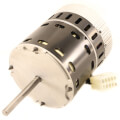
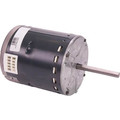
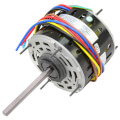
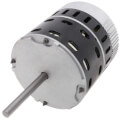
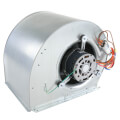

Blower motors are the components that move air through a Nordyne-brand furnace, air handler, or packaged HVAC unit, pulling return air across the heat exchanger or evaporator coil and pushing conditioned air into the supply ductwork. Replacement blower motors for Nordyne equipment fall into two broad categories: permanent split capacitor (PSC) motors, which run at a small number of fixed speed taps, and electronically commutated motors (ECM), which vary speed continuously to match airflow demand and typically draw less electricity over a heating or cooling season. Matching horsepower, voltage, rotation, and shaft configuration to the original equipment is critical, since an undersized or mismatched motor can shorten compressor life or trip a limit switch. Stocking common PSC and ECM replacements alongside matched capacitors keeps furnace and air handler repairs moving without a special order.
Subcategories
- PSC Blower Motors: Permanent split capacitor motors are the traditional replacement choice for older Nordyne furnaces and air handlers, running at one fixed speed per tap rather than ramping output up or down. Contractors favor PSC motors for straightforward swaps where the original equipment used a multi-speed shaded-pole or PSC design and a lower-cost repair is the priority. Correct rotation and horsepower still have to match the nameplate before installation.
- ECM Blower Motors: Electronically commutated motors use a built-in module to vary speed continuously, adjusting output to hold steady airflow as filters load up or ductwork static pressure changes. Many newer Nordyne furnaces and air handlers were built around ECM platforms for quieter operation and lower standby electrical draw. Replacing an ECM motor typically means matching both the motor and its control module to the original part number.
- Blower Motor Capacitors: Run capacitors store and release the electrical charge that keeps a PSC blower motor's auxiliary winding in phase, and a weak or failed capacitor is one of the most common reasons a blower motor won't start or runs hot. Replacing the capacitor alongside an aging motor is common practice, since a mismatched microfarad rating can shorten the life of a brand-new motor. Capacitors are sized by microfarad rating and voltage to match the motor being installed.
- Blower Wheels & Mounting Hardware: Blower wheels, motor mounts, and set screws round out a blower motor replacement, since a worn or unbalanced wheel can cause vibration and premature bearing wear even on a new motor. Mounting brackets and shaft collars are specific to the furnace or air handler cabinet size, so matching the original equipment's mounting pattern avoids a field-fabricated bracket. Keeping wheel and hardware sets on hand alongside motors reduces a single repair into two truck rolls.
Buying Guide
Selecting a replacement blower motor starts with the equipment nameplate, not the failed part alone: horsepower, voltage, RPM, rotation direction, and shaft diameter all have to match the furnace or air handler the motor serves. A motor rated too small for the static pressure of the duct system will run hot and fail early, while an oversized motor can overwhelm a coil or heat exchanger sized for a specific airflow. For PSC motors, matching the number of speed taps to the original wiring keeps the low, medium, and high fan speeds working as the equipment control board expects. Blower Motors sold as ECM replacements need their control module matched to the motor as a set, since mixing modules across manufacturers or model families is rarely supported and can prevent the motor from starting at all. Rotation direction, clockwise or counterclockwise viewed from the shaft end, is a frequent point of confusion since a motor with the wrong rotation will run backward and starve the system of airflow even though it spins normally. Replacing the run capacitor at the same time as the motor is inexpensive insurance against a callback, particularly on furnaces that have been in service more than a few heating seasons. For jobs where the original part number is no longer available, cross-reference guides that match horsepower, voltage, rotation, and frame size are the safest way to find a compatible substitute without guessing.
Frequently Asked Questions
How do I know if a blower motor or the capacitor failed?
A blower motor that hums but doesn't spin, or that starts and then shuts off on thermal overload, often points to a bad run capacitor rather than the motor windings. Testing the capacitor's microfarad rating with a meter and comparing it to the nameplate value is the quickest way to rule it out before replacing the motor itself. If the capacitor tests within range and the motor still won't run, the motor is likely the failed component.
Can a PSC blower motor be replaced with an ECM motor?
Some universal ECM replacements are built to bolt into a PSC motor's mounting pattern and wire into its existing speed taps, but the control board still has to support the ECM's signal type. Checking the equipment manufacturer's approved parts list before substituting motor types avoids a control board that can't properly communicate with the new motor.
What causes a blower motor to run but move little air?
A dirty or unbalanced blower wheel, a slipping set screw, or a collapsed section of flexible duct can all cut airflow even when the motor itself is healthy. Checking the wheel for buildup and confirming it's still secured to the shaft is a quick first step before assuming the motor is undersized.
Does rotation direction matter when installing a replacement blower motor?
Rotation direction matters because a blower wheel is shaped to move air efficiently in one direction only, and a motor spinning the wrong way will still turn but move far less air. Rotation is specified on the motor nameplate as viewed from the shaft end, so confirming it before wiring saves a return trip.
How often should blower motor bearings be checked?
Older motors with grease fittings benefit from a check at the start of each heating and cooling season, since dry bearings are a common source of the grinding or squealing noise that precedes a full motor failure. Sealed, permanently lubricated motors don't need service but should still be inspected for excess play in the shaft during a seasonal tune-up.
