




Filters
SORT
Product Availability –
Category –
Grade –
Size –
Length (Feet) –
Color –
Review Score –
 --%3E %3Csvg version='1.1' id='Fill' xmlns='http://www.w3.org/2000/svg' xmlns:xlink='http://www.w3.org/1999/xlink' x='0px' y='0px' viewBox='0 0 100 100' enable-background='new 0 0 100 100' xml:space='preserve'%3E %3Cpath fill='%23F15C02' d='M79.44,0.95H20.56C9.78,0.95,0.95,9.78,0.95,20.56v58.87c0,10.79,8.82,19.61,19.61,19.61h58.87 c10.79,0,19.61-8.83,19.61-19.61V20.56C99.05,9.78,90.22,0.95,79.44,0.95z M65.38,58.24l9.38,29.58L49.69,69.78L24.5,87.82 l9.34-29.6L8.8,39.6l30.73-0.17c0,0,6.98-19.61,10-28.93c0.54,1.36,9.88,29.1,9.88,29.1H91.2L65.38,58.24z'/%3E %3C/svg%3E)
Price Range –
PEX Pipe & Tubing



 --%3E %3Csvg version='1.1' id='No-RB' xmlns='http://www.w3.org/2000/svg' xmlns:xlink='http://www.w3.org/1999/xlink' x='0px' y='0px' viewBox='0 0 100 100' enable-background='new 0 0 100 100' xml:space='preserve'%3E %3Cpath fill='%23CECECE' d='M79.44,0.95H20.56C9.78,0.95,0.95,9.78,0.95,20.56v58.87c0,10.79,8.82,19.61,19.61,19.61h58.87 c10.79,0,19.61-8.83,19.61-19.61V20.56C99.05,9.78,90.22,0.95,79.44,0.95z M65.38,58.24l9.38,29.58L49.69,69.78L24.5,87.82 l9.34-29.6L8.8,39.6l30.73-0.17c0,0,6.98-19.61,10-28.93c0.54,1.36,9.88,29.1,9.88,29.1H91.2L65.38,58.24z'/%3E %3C/svg%3E)

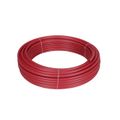
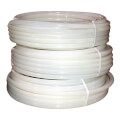

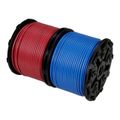


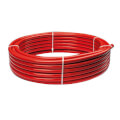


PEX tubing is cross-linked polyethylene pipe used throughout residential and light commercial plumbing for both potable water distribution and hydronic heating applications. Manufacturers cross-link the polyethylene during production, which gives the material flexibility that rigid copper or CPVC pipe does not have, letting installers route tubing through wall cavities and around obstacles with fewer fittings than a rigid pipe run would need. PEX also resists the pinhole corrosion that can develop in copper piping over time in aggressive water conditions, and it tolerates freeze-related expansion better than copper in most cases. Because PEX comes in more than one cross-linking method, matching tubing type to the connection system already in use on a job, whether crimp, cinch, or expansion fittings, keeps the installation consistent rather than mixing incompatible fitting families on the same run.
Subcategories
- PEX-A Tubing: Manufactured using the Engel or peroxide cross-linking method, which produces tubing flexible enough for expansion-style fittings and cold expansion connections. Plumbers favor PEX-A for radiant floor loops where tight bend radii around joists are common.
- PEX-B Tubing: Cross-linked using a moisture-cure silane method that produces a slightly stiffer tube than PEX-A, typically paired with crimp or clamp fittings rather than expansion connections. It is a common choice for whole-house repipe jobs where cost per foot matters alongside performance.
- PEX-C Tubing: Produced through electron beam irradiation after extrusion, giving it a straighter memory that some installers prefer for exposed runs. It uses the same crimp and clamp fitting families as PEX-B in most installations.
- Oxygen Barrier PEX Tubing: Includes an EVOH layer that blocks oxygen diffusion through the tube wall, protecting ferrous components like cast iron boiler sections and steel circulators from corrosion in closed hydronic loops. Non-barrier PEX is reserved for potable water lines where that protection is unnecessary.
Buying Guide
Choosing PEX tubing for a job starts with matching the tubing type to the fitting system already stocked on the truck, since PEX-A, PEX-B, and PEX-C use different connection methods and are not always interchangeable without adapters. PEX-A supports expansion fittings that leave the tube's original inner diameter largely intact at the joint, which some installers prefer for radiant heating loops with many connections, while PEX-B and PEX-C typically pair with crimp or cinch fittings that are faster to install with a single tool. For potable water applications, non-barrier PEX tubing is standard, while closed hydronic heating loops call for oxygen barrier PEX tubing to protect ferrous system components like boiler sections and cast iron circulators from oxygen-related corrosion. Tubing diameter should match the fixture unit count and run length calculated for the branch, since undersizing a long PEX tubing run can create pressure drop problems that are harder to diagnose once the walls are closed. Manufacturers rate PEX tubing for a maximum operating temperature and pressure that vary by type and application, so checking the tubing's printed rating against the system's design conditions is worth doing before ordering in bulk for a project, particularly on hydronic loops running hotter than typical potable water lines. Local plumbing codes may also restrict which PEX type is approved for certain applications, so confirming code compliance before specifying a tubing type on a job avoids a failed inspection.
Frequently Asked Questions
What is the difference between PEX-A, PEX-B, and PEX-C?
The three types differ mainly in how the manufacturer cross-links the polyethylene during production, which affects flexibility and which fittings are compatible. PEX-A is generally the most flexible and pairs with expansion fittings, while PEX-B and PEX-C are slightly stiffer and typically use crimp or cinch connections.
Can different PEX types be connected together on the same job?
Yes, PEX-A, PEX-B, and PEX-C tubing can generally be joined using the same brass or poly fittings rated for PEX, though the crimp, cinch, or expansion tool used has to match the fitting type rather than the tubing type. Mixing tubing types on one job is common as long as the fitting system stays consistent at each connection.
When is oxygen barrier PEX tubing required?
Oxygen barrier PEX tubing is typically specified for closed hydronic heating loops that include ferrous components such as cast iron boiler sections, steel circulators, or steel radiators, since oxygen diffusion through non-barrier tubing can accelerate corrosion in those parts. Potable water systems do not need the oxygen barrier, since a closed loop is not part of that installation.
Does PEX tubing need UV protection?
Most PEX tubing degrades with prolonged direct sunlight exposure, so manufacturers generally limit outdoor exposure during storage and installation to a short window before the tubing must be covered or installed. Checking the specific manufacturer's UV exposure limit before leaving tubing staged outdoors on a job site helps avoid material degradation before it is even installed.
What tools are needed to install PEX tubing?
The required tool depends on the tubing and fitting type: PEX-A expansion systems need an expansion tool and cone-style fitting, while PEX-B and PEX-C crimp or cinch systems need a crimp tool or cinch clamp tool along with a go/no-go gauge to verify each connection. Keeping the correct gauge on hand for the fitting brand in use is part of confirming every connection before the wall closes.
