




PEX Valves
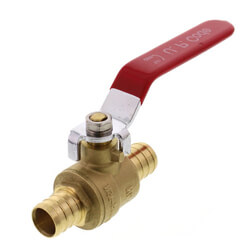
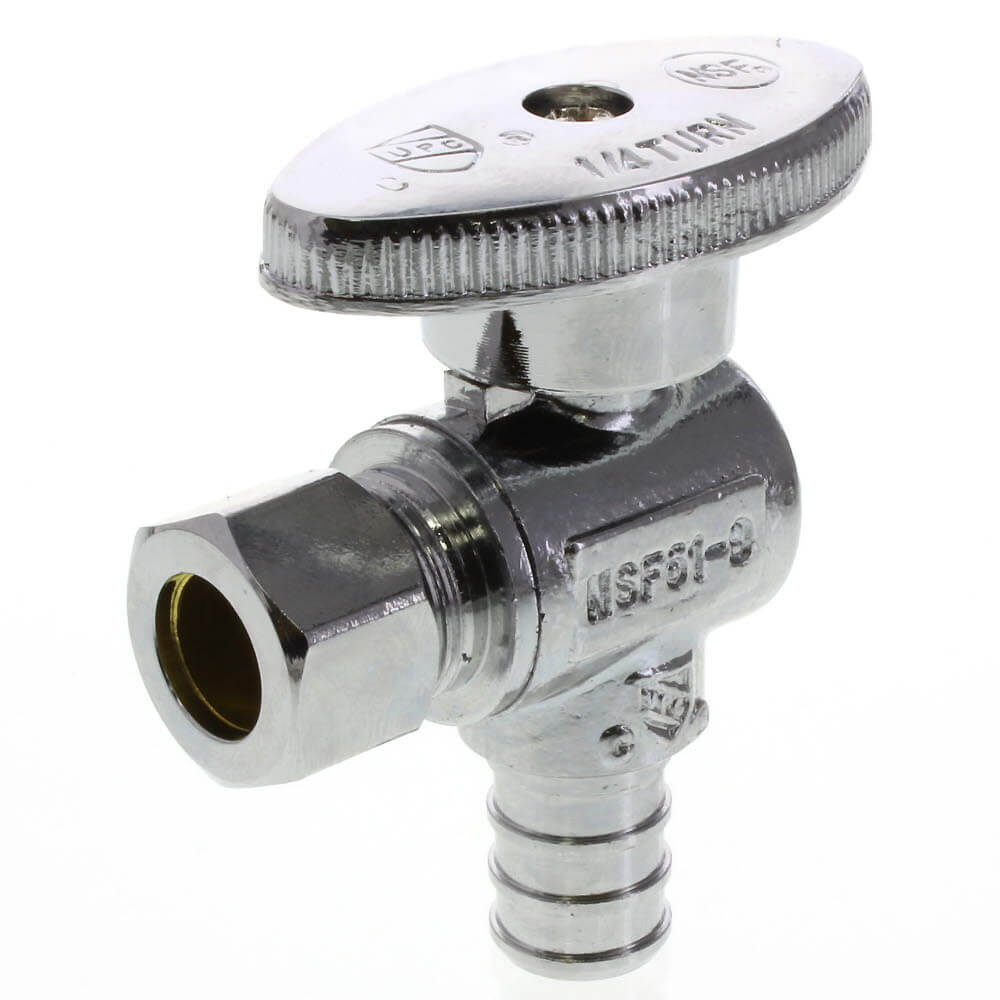
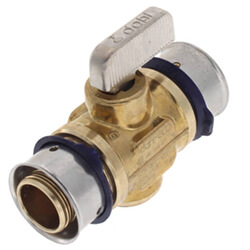
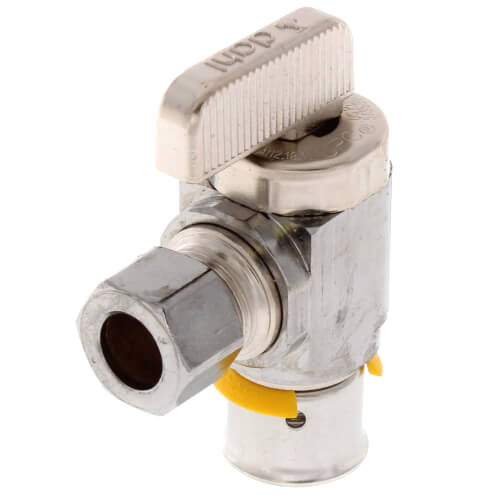
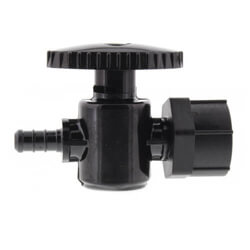
PEX valves cover the shutoff, check, mixing, and specialty valves built with end connections designed for direct PEX tubing connection. The category spans crimp, press, push-fit, and expansion connection styles to match whichever PEX system a job already uses.
Selecting a valve connection style that matches the rest of the PEX run keeps the installation consistent and avoids the need for a separate adapter fitting. Plumbers working across multiple PEX brands often keep valves in more than one connection style on hand to match whatever tubing is already installed.




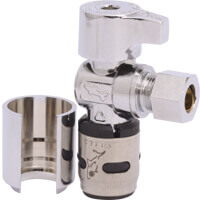

Subcategories
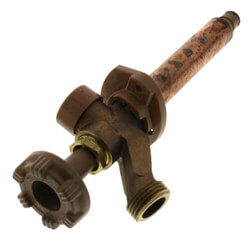
- PEX Sillcocks: PEX sillcocks provide an outdoor hose bib connection point built to accept PEX tubing directly, eliminating the need for a separate adapter fitting at the wall penetration. They are commonly used on exterior wall installations where the supply line running to the sillcock is PEX rather than copper. Frost resistant designs extend further into the wall cavity to keep the shutoff point on the warm side of the insulation in colder climates.
Buying Guide
Selecting a PEX valve starts with identifying the connection method used elsewhere on the job, since crimp, press, and push fit valves each attach to PEX tubing differently and require their own tool or fitting.
Application matters next. Indoor shutoff valves prioritize compact size and ease of access, while outdoor sillcock valves need to handle exposure to the elements and, in colder climates, the risk of a frozen supply line.
Frost resistant sillcock designs extend the shutoff point further back into the wall cavity, keeping it on the warm side of the insulation. Contractors in colder regions typically prioritize this feature over a standard sillcock when replacing an exterior valve.
Valve body material and pressure rating should match the rest of the system's specifications, since mixing components rated for different pressure ranges can create a weak point in an otherwise consistent PEX system.
Standardizing on one valve type and connection method across a job reduces the number of tools and adapter fittings needed on site, which simplifies both installation and future repairs.
Frequently Asked Questions
What's the difference between a crimp and a press connection for PEX valves?
A crimp connection uses a copper ring compressed around the tubing and fitting with a crimping tool, while a press connection uses a stainless steel ring compressed with a press tool designed for that fitting style. Both create a permanent connection, but the tools and rings are not interchangeable between the two methods.
Why would a sillcock need to be frost resistant?
A frost resistant sillcock extends the shutoff valve further into the wall cavity, keeping the point where water can freeze on the warm side of the home's insulation. Standard sillcocks in colder climates are more prone to a frozen and potentially burst supply line during winter months.
Can push fit valves be used with PEX tubing?
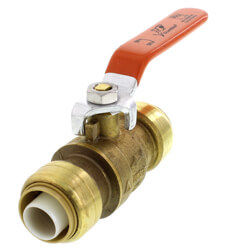
Push fit valves are designed to accept PEX tubing directly without a crimping or pressing tool, making them a common choice for repair work or tight spaces where installing a permanent crimp or press connection is not practical. Many plumbers keep a few on hand for exactly that kind of job.
Do all PEX valves work with every PEX tubing size?
Valve sizing needs to match the tubing's diameter, so confirming the tubing size before ordering a valve is necessary regardless of connection type. A valve sized for a different diameter will not create a secure connection even if the connection method matches.
Where should a main shutoff valve be located in a PEX system?
A main shutoff valve is typically placed where the water line enters the building, ahead of any branch lines feeding individual fixtures. Placing it in an accessible location makes it easier to shut off water quickly in an emergency rather than searching for a valve buried behind finished walls.
Resources
Subcategories
- PEX Sillcocks: PEX sillcocks provide an outdoor hose bib connection point built to accept PEX tubing directly, eliminating the need for a separate adapter fitting at the wall penetration. They are commonly used on exterior wall installations where the supply line running to the sillcock is PEX rather than copper. Frost resistant designs extend further into the wall cavity to keep the shutoff point on the warm side of the insulation in colder climates.
Buying Guide
Selecting a PEX valve starts with identifying the connection method used elsewhere on the job, since crimp, press, and push fit valves each attach to PEX tubing differently and require their own tool or fitting.
Application matters next. Indoor shutoff valves prioritize compact size and ease of access, while outdoor sillcock valves need to handle exposure to the elements and, in colder climates, the risk of a frozen supply line.
Frost resistant sillcock designs extend the shutoff point further back into the wall cavity, keeping it on the warm side of the insulation. Contractors in colder regions typically prioritize this feature over a standard sillcock when replacing an exterior valve.
Valve body material and pressure rating should match the rest of the system's specifications, since mixing components rated for different pressure ranges can create a weak point in an otherwise consistent PEX system.
Standardizing on one valve type and connection method across a job reduces the number of tools and adapter fittings needed on site, which simplifies both installation and future repairs.
Frequently Asked Questions
What's the difference between a crimp and a press connection for PEX valves?
A crimp connection uses a copper ring compressed around the tubing and fitting with a crimping tool, while a press connection uses a stainless steel ring compressed with a press tool designed for that fitting style. Both create a permanent connection, but the tools and rings are not interchangeable between the two methods.
Why would a sillcock need to be frost resistant?
A frost resistant sillcock extends the shutoff valve further into the wall cavity, keeping the point where water can freeze on the warm side of the home's insulation. Standard sillcocks in colder climates are more prone to a frozen and potentially burst supply line during winter months.
Can push fit valves be used with PEX tubing?
Push fit valves are designed to accept PEX tubing directly without a crimping or pressing tool, making them a common choice for repair work or tight spaces where installing a permanent crimp or press connection is not practical. Many plumbers keep a few on hand for exactly that kind of job.
Do all PEX valves work with every PEX tubing size?
Valve sizing needs to match the tubing's diameter, so confirming the tubing size before ordering a valve is necessary regardless of connection type. A valve sized for a different diameter will not create a secure connection even if the connection method matches.
Where should a main shutoff valve be located in a PEX system?
A main shutoff valve is typically placed where the water line enters the building, ahead of any branch lines feeding individual fixtures. Placing it in an accessible location makes it easier to shut off water quickly in an emergency rather than searching for a valve buried behind finished walls.