



Filters
SORT
Product Availability –
Brand –
Valve Type –
Inlet Size –
Outlet Size –
Inlet Type –
Outlet Type –
PEX Size –
Review Score –
 --%3E %3Csvg version='1.1' id='Fill' xmlns='http://www.w3.org/2000/svg' xmlns:xlink='http://www.w3.org/1999/xlink' x='0px' y='0px' viewBox='0 0 100 100' enable-background='new 0 0 100 100' xml:space='preserve'%3E %3Cpath fill='%23F15C02' d='M79.44,0.95H20.56C9.78,0.95,0.95,9.78,0.95,20.56v58.87c0,10.79,8.82,19.61,19.61,19.61h58.87 c10.79,0,19.61-8.83,19.61-19.61V20.56C99.05,9.78,90.22,0.95,79.44,0.95z M65.38,58.24l9.38,29.58L49.69,69.78L24.5,87.82 l9.34-29.6L8.8,39.6l30.73-0.17c0,0,6.98-19.61,10-28.93c0.54,1.36,9.88,29.1,9.88,29.1H91.2L65.38,58.24z'/%3E %3C/svg%3E)
Price Range –
PEX Shut-off Valves




 --%3E %3Csvg version='1.1' id='Half' xmlns='http://www.w3.org/2000/svg' xmlns:xlink='http://www.w3.org/1999/xlink' x='0px' y='0px' viewBox='0 0 100 100' enable-background='new 0 0 100 100' xml:space='preserve'%3E %3Cg%3E %3Cpath fill='%23F15C02' d='M30.05,70.23l3.79-12.01L8.8,39.6l30.73-0.17c0,0,6.98-19.61,10-28.93c0.54,1.36,9.88,29.1,9.88,29.1h1.58 L93.71,7.18c-3.58-3.82-8.66-6.23-14.28-6.23H20.56C9.78,0.95,0.95,9.78,0.95,20.56v58.87c0,5.41,2.22,10.32,5.79,13.88 L30.05,70.23z'/%3E %3C/g%3E %3Cpath fill='%23FBC8B4' d='M93.71,7.18L60.98,39.6H91.2L65.38,58.24l9.38,29.58L49.69,69.78L24.5,87.82l5.55-17.59L6.75,93.32 c3.55,3.54,8.44,5.73,13.82,5.73h58.87c10.79,0,19.61-8.83,19.61-19.61V20.56C99.05,15.4,97.01,10.69,93.71,7.18z'/%3E %3C/svg%3E)

 --%3E %3Csvg version='1.1' id='No-RB' xmlns='http://www.w3.org/2000/svg' xmlns:xlink='http://www.w3.org/1999/xlink' x='0px' y='0px' viewBox='0 0 100 100' enable-background='new 0 0 100 100' xml:space='preserve'%3E %3Cpath fill='%23CECECE' d='M79.44,0.95H20.56C9.78,0.95,0.95,9.78,0.95,20.56v58.87c0,10.79,8.82,19.61,19.61,19.61h58.87 c10.79,0,19.61-8.83,19.61-19.61V20.56C99.05,9.78,90.22,0.95,79.44,0.95z M65.38,58.24l9.38,29.58L49.69,69.78L24.5,87.82 l9.34-29.6L8.8,39.6l30.73-0.17c0,0,6.98-19.61,10-28.93c0.54,1.36,9.88,29.1,9.88,29.1H91.2L65.38,58.24z'/%3E %3C/svg%3E)
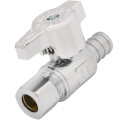
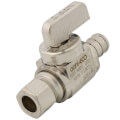
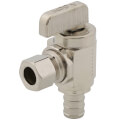

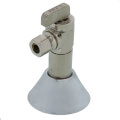

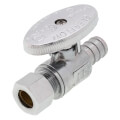
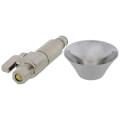
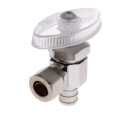
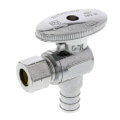

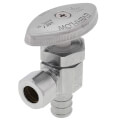


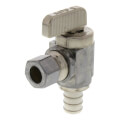
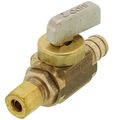

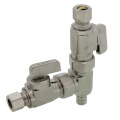
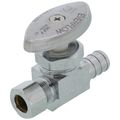
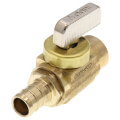
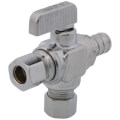
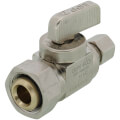
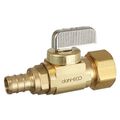
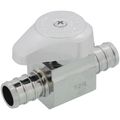
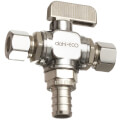
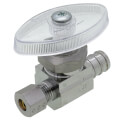
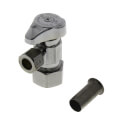
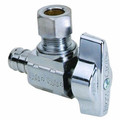
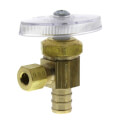
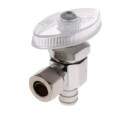
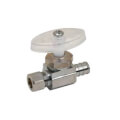
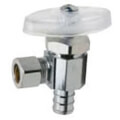
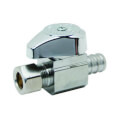
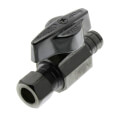


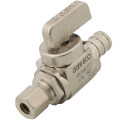
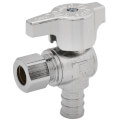
PEX Crimp Stop Valves are shutoff valves with a PEX crimp connection on the inlet side, built to terminate a PEX supply line at a fixture like a sink, toilet, or washing machine hookup. The crimp end accepts standard PEX tubing and a copper crimp ring, letting a plumber transition straight from PEX pipe to a code-compliant shutoff without an extra fitting in between. Quarter-turn ball valve designs have largely replaced the older multi-turn compression stops in new PEX installations, since a quarter turn shuts off water faster in an emergency and holds up better over repeated use. Matching outlet size and thread type to the fixture supply line, in addition to matching the crimp end to the PEX tubing size already run, keeps the finished connection leak-free.
Subcategories
- Quarter-Turn PEX Crimp Stop Valves: Quarter-turn valves use a ball valve mechanism that shuts off water with a single turn of the handle, which is faster in an emergency than older multi-turn designs. They also tend to hold up better over years of repeated use since there are fewer moving parts to wear out. Most new residential PEX installations default to this style. Contractors specifying stops for a full remodel usually standardize on quarter-turn across the job.
- Multi-Turn PEX Crimp Stop Valves: Multi-turn valves use a compression-style handle that closes gradually over several rotations. Some jobs still specify this style based on local code requirements or a customer's preference for a traditional look. They generally cost less than quarter-turn equivalents. Confirming which style a job calls for before ordering avoids buying the wrong configuration.
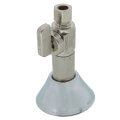
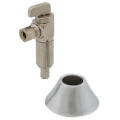
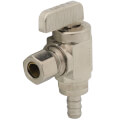
- Straight and Angle PEX Crimp Stops: Straight stops work when the PEX line comes out of the wall or floor in line with the fixture riser, while angle stops turn the connection ninety degrees. Angle configurations are the more common choice under a sink or behind a toilet, where the supply line typically comes up out of the floor. Choosing the wrong orientation forces an awkward riser bend at the fixture.
- Dual-Outlet PEX Crimp Stop Valves: Dual-outlet valves supply two fixtures, such as a toilet and a bidet attachment, from a single shutoff point. This avoids running a second dedicated supply line back to the main water source. They're most common in bathrooms being retrofit with an added fixture. Confirming both outlets match the connected fixtures' thread type is worth checking before installation.
Buying Guide
Outlet size and thread type need to match the fixture's supply line, most commonly a compression fitting sized for a braided or flexible riser. Confirming that measurement before purchase avoids a mismatch that shows up only once the valve is already crimped onto the PEX line.
PEX Crimp Stop Valves come in straight and angle configurations, and the choice depends on how the supply line approaches the fixture. A straight stop works when the PEX line comes straight out of the wall or floor in line with the fixture riser, while an angle stop turns the connection ninety degrees, which is the more common configuration under a sink or behind a toilet.
Quarter-turn ball valve handles shut off water with a single turn, which is faster in an emergency and generally holds up better over years of use than older multi-turn compression designs. Some jobs still call for the multi-turn style based on local code or customer preference, so confirming which is required is worth doing before ordering.
Crimp ring size has to match both the valve's crimp barb and the PEX tubing diameter already run to the fixture. Using a ring sized for the wrong tubing diameter is one of the more common causes of a slow leak at this connection, so double-checking tubing size against the valve's rated inlet keeps that failure point out of the finished job.
Frequently Asked Questions
What size PEX tubing do these valves accept?
Crimp inlet sizes vary by model, with common residential sizes matching standard PEX tubing diameters used for fixture supply lines. Checking the valve's rated inlet size against the tubing already run is the reliable way to confirm fit before crimping the connection.
Are quarter-turn valves required by code, or is it a preference?
Requirements vary by jurisdiction, and some areas do specify quarter-turn shutoffs on new fixture supply lines while others leave it as a preference. Checking local plumbing code before finalizing the spec avoids a failed inspection over valve style.
Can a PEX crimp stop valve be swapped onto an existing compression stop without repiping?
Not directly, since a crimp valve needs a PEX crimp connection rather than a compression fitting. Swapping styles generally means cutting back to bare PEX tubing and crimping the new valve on, rather than adapting the existing compression body.
What crimp ring size matches a PEX crimp stop valve?
The ring size needs to match both the tubing diameter and the valve's crimp barb, which is specified by the manufacturer for each model. Using a ring sized for a different tubing diameter is a common cause of a slow leak at the connection.
Should a plumber use a straight stop or angle stop for a toilet supply?
An angle stop is the more common choice for a toilet, since the supply line typically comes up out of the floor and needs to turn toward the fixture. A straight stop is used when the line already runs in line with the riser, which is less common at a toilet location.
