




Filters
SORT
Product Availability –
Size –
Review Score –
 --%3E %3Csvg version='1.1' id='Fill' xmlns='http://www.w3.org/2000/svg' xmlns:xlink='http://www.w3.org/1999/xlink' x='0px' y='0px' viewBox='0 0 100 100' enable-background='new 0 0 100 100' xml:space='preserve'%3E %3Cpath fill='%23F15C02' d='M79.44,0.95H20.56C9.78,0.95,0.95,9.78,0.95,20.56v58.87c0,10.79,8.82,19.61,19.61,19.61h58.87 c10.79,0,19.61-8.83,19.61-19.61V20.56C99.05,9.78,90.22,0.95,79.44,0.95z M65.38,58.24l9.38,29.58L49.69,69.78L24.5,87.82 l9.34-29.6L8.8,39.6l30.73-0.17c0,0,6.98-19.61,10-28.93c0.54,1.36,9.88,29.1,9.88,29.1H91.2L65.38,58.24z'/%3E %3C/svg%3E)
Price Range –
PVC DWV Couplings

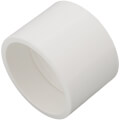

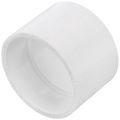
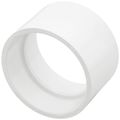


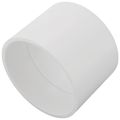


PVC DWV Couplings are fittings used to join two lengths of Schedule 40 PVC pipe in a straight run within a drain, waste, and vent system. The fittings are manufactured to ASTM D2665, the specification covering PVC drain, waste, and vent pipe and fittings, and install using a primer and solvent cement weld rather than mechanical or threaded connections. Plumbers use them anywhere a DWV run needs to extend beyond a single length of pipe or replace a damaged section without recutting the entire line. PVC construction gives the coupling high tensile and impact strength along with better sound-deadening qualities compared to foam core PVC DWV pipe. Because DWV systems operate at atmospheric pressure rather than under supply-line pressure, a properly solvent-welded coupling only needs to hold a watertight seal, making installation faster than pressure-rated pipe joints.
Subcategories
- Standard Hub Couplings: Standard hub couplings join two lengths of Schedule 40 PVC pipe in a straight run, with a hub on each end sized to accept the pipe's outside diameter for a solvent-welded joint. Plumbers use them anywhere a DWV run needs to extend past the length of a single pipe section. The fitting meets ASTM D2665, the specification covering PVC drain, waste, and vent pipe and fittings. A properly primed and solvent-welded hub coupling creates a permanent, watertight joint that will not loosen the way a threaded connection can over time.
- Repair Couplings: Repair couplings let a plumber cut out a damaged section of existing DWV pipe and splice in a new piece without disturbing the rest of the run. Service techs reach for them on repair calls where cutting back to the nearest fitting would mean opening up more wall or floor than necessary. Like standard couplings, repair couplings are manufactured from Schedule 40 PVC to the same ASTM D2665 specification. Using a repair coupling instead of two standard couplings and a short pipe stub often saves time on a tight repair job.
- Reducing Couplings: Reducing couplings join two different pipe diameters within the same DWV run, such as transitioning from a larger main stack down to a smaller branch line. Plumbers use them where the drainage code calls for a pipe size change partway through a run rather than sizing the entire line to the largest diameter needed. Reducing couplings are built to the same Schedule 40 PVC material standard as straight couplings, keeping tensile and impact strength consistent across the fitting change. Solvent welding both ends the same way as a standard coupling keeps the transition watertight.
Buying Guide
Start by confirming the pipe diameter on both sides of the joint. A straight run with matching pipe sizes on each end calls for a standard hub coupling, while a transition between two different diameters needs a reducing coupling sized for both ends. Measuring the existing pipe's outside diameter before ordering avoids a coupling that does not seat properly in the hub.
Next, think about whether the job is new installation or a repair on an existing line. PVC DWV Couplings used in new construction are almost always standard hub couplings solvent-welded into a fresh run, while repair work on an existing line often calls for a repair coupling that lets a plumber cut out a damaged section and splice in new pipe without demolishing more of the wall or floor than necessary.
Also confirm the coupling meets ASTM D2665, the specification covering PVC drain, waste, and vent pipe and fittings, especially on jobs subject to local plumbing code inspection. Schedule 40 PVC fittings built to this standard offer high tensile and impact strength along with better sound-deadening than foam core alternatives, which matters in occupied buildings where drain noise can travel through walls.
Finally, always prime and solvent cement the joint according to the fitting manufacturer's instructions. A rushed or under-primed joint is one of the most common causes of a leaking DWV coupling after the wall closes up, and a proper solvent weld should be the priority on every joint regardless of coupling type.
Frequently Asked Questions
What is a PVC DWV coupling used for?
A PVC DWV coupling joins two lengths of Schedule 40 PVC pipe within a drain, waste, and vent system, either extending a straight run or repairing a damaged section. The fitting is solvent-welded to both pipe ends rather than threaded or mechanically clamped. DWV couplings meet ASTM D2665, the specification covering PVC drain, waste, and vent pipe and fittings.
How is a PVC DWV coupling installed?
A PVC DWV coupling installs using a primer and solvent cement applied to both the pipe end and the inside of the coupling hub. Pushing the pipe fully into the primed and cemented hub and holding it in place briefly creates a permanent, watertight, solvent-welded joint. No threading or mechanical clamping is required for a standard DWV coupling.
What is the difference between a standard coupling and a repair coupling?
A standard coupling has two hubs of equal size for joining new pipe in a straight run, while a repair coupling is designed to splice a new section of pipe into an existing line without cutting back to the nearest fitting. Plumbers use repair couplings mainly on service calls involving a damaged section of existing DWV pipe. Both types are manufactured from Schedule 40 PVC to the same material standard.
Can a PVC DWV coupling join two different pipe sizes?
A standard hub coupling only joins pipe of the same diameter on both ends, but a reducing coupling is manufactured specifically to transition between two different DWV pipe sizes. Reducing couplings maintain the same Schedule 40 PVC material and ASTM D2665 standard as straight couplings. Selecting the correct reducing coupling size for both the larger and smaller pipe keeps the transition watertight.
What standard governs PVC DWV coupling manufacturing?
PVC DWV couplings are manufactured to ASTM D2665, the specification covering solid wall Schedule 40 PVC drain, waste, and vent pipe and injection molded fittings. This standard defines material and performance requirements the fitting has to meet for drainage and venting applications. Fittings built to this standard offer high tensile and impact strength suited to non-pressure DWV systems.
