




Filters
SORT
Product Availability –
Capacity (Gallons) –
Diameter (Inches) –
Review Score –
 --%3E %3Csvg version='1.1' id='Fill' xmlns='http://www.w3.org/2000/svg' xmlns:xlink='http://www.w3.org/1999/xlink' x='0px' y='0px' viewBox='0 0 100 100' enable-background='new 0 0 100 100' xml:space='preserve'%3E %3Cpath fill='%23F15C02' d='M79.44,0.95H20.56C9.78,0.95,0.95,9.78,0.95,20.56v58.87c0,10.79,8.82,19.61,19.61,19.61h58.87 c10.79,0,19.61-8.83,19.61-19.61V20.56C99.05,9.78,90.22,0.95,79.44,0.95z M65.38,58.24l9.38,29.58L49.69,69.78L24.5,87.82 l9.34-29.6L8.8,39.6l30.73-0.17c0,0,6.98-19.61,10-28.93c0.54,1.36,9.88,29.1,9.88,29.1H91.2L65.38,58.24z'/%3E %3C/svg%3E)
 --%3E %3Csvg version='1.1' id='With-RB' xmlns='http://www.w3.org/2000/svg' xmlns:xlink='http://www.w3.org/1999/xlink' x='0px' y='0px' viewBox='0 0 100 100' enable-background='new 0 0 100 100' xml:space='preserve'%3E %3Cpath fill='%23FBC8B4' d='M79.44,0.95H20.56C9.78,0.95,0.95,9.78,0.95,20.56v58.87c0,10.79,8.82,19.61,19.61,19.61h58.87 c10.79,0,19.61-8.83,19.61-19.61V20.56C99.05,9.78,90.22,0.95,79.44,0.95z M65.38,58.24l9.38,29.58L49.69,69.78L24.5,87.82 l9.34-29.6L8.8,39.6l30.73-0.17c0,0,6.98-19.61,10-28.93c0.54,1.36,9.88,29.1,9.88,29.1H91.2L65.38,58.24z'/%3E %3C/svg%3E)
Price Range –
Peerless Indirect Water Heaters



 --%3E %3Csvg version='1.1' id='No-RB' xmlns='http://www.w3.org/2000/svg' xmlns:xlink='http://www.w3.org/1999/xlink' x='0px' y='0px' viewBox='0 0 100 100' enable-background='new 0 0 100 100' xml:space='preserve'%3E %3Cpath fill='%23CECECE' d='M79.44,0.95H20.56C9.78,0.95,0.95,9.78,0.95,20.56v58.87c0,10.79,8.82,19.61,19.61,19.61h58.87 c10.79,0,19.61-8.83,19.61-19.61V20.56C99.05,9.78,90.22,0.95,79.44,0.95z M65.38,58.24l9.38,29.58L49.69,69.78L24.5,87.82 l9.34-29.6L8.8,39.6l30.73-0.17c0,0,6.98-19.61,10-28.93c0.54,1.36,9.88,29.1,9.88,29.1H91.2L65.38,58.24z'/%3E %3C/svg%3E)
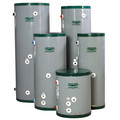


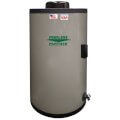
Peerless indirect water heaters are storage tanks that use hot water from a connected boiler to heat domestic water instead of relying on a dedicated burner or heating element. A coil or internal heat exchanger transfers heat from the boiler's hydronic loop into the tank, so the water heater draws on the boiler's output rather than firing independently. Contractors installing or replacing a Peerless boiler in a hydronic heating system often pair it with a matching indirect tank to keep the whole setup on one heat source.
Because the tank has no burner of its own, an indirect water heater runs quieter and has fewer combustion-related parts to service than a standalone gas or oil water heater. Recovery speed depends on the boiler's output and the tank's coil surface area, so sizing the tank to the connected boiler matters for consistent hot water during peak demand. This section covers the models, capacities, and accessories SupplyHouse carries for Peerless indirect systems, along with the parts needed to keep them running.
Subcategories
- Standard-Capacity Indirect Tanks: These are the tank sizes most commonly matched to residential Peerless boilers, built around a coil that transfers boiler heat into the stored water. They suit single-family homes with typical one- or two-bathroom hot water demand. Tank capacity and coil size are chosen based on the connected boiler's output rather than the tank alone.
- High-Capacity Indirect Tanks: Larger-volume tanks in this line serve multi-bathroom homes or light-commercial spaces where recovery time and peak draw matter more. A bigger coil surface area lets the tank recover faster between draws when paired with a properly sized boiler. Installers typically confirm the boiler's Btu output can support the tank before selecting one of these models.
- Replacement Coils and Internal Components: This group covers the internal heat-exchanger coils and related tank components used when servicing an existing Peerless indirect unit rather than replacing the whole tank. Technicians pull from here for repair jobs where the tank shell is still sound but the heat-transfer coil has scaled or failed. Matching the coil to the exact tank model is necessary for a proper fit.
- Tank Fittings and Accessories: Connection fittings, anode rods, and related hardware used to install or maintain a Peerless indirect tank are grouped here. Anode rods in particular need periodic replacement to protect the tank lining from corrosion. Contractors use this group both for new installs and for routine maintenance visits.
Buying Guide
Selecting a Peerless indirect water heater starts with the boiler it will pair with, not the tank by itself. Because the tank relies entirely on the boiler for heat, its recovery rate is tied directly to the boiler's Btu output and the coil's heat-transfer surface. A tank sized for a home with a much smaller boiler will recover slowly, especially during simultaneous heating-season demand when the boiler is also supplying space heat.
Tank capacity should reflect household size and peak simultaneous draw rather than just the number of bathrooms. A two-bathroom home with a soaking tub and a dishwasher running at the same time as a shower needs more standby volume than a home with lighter, staggered usage. Contractors sizing a replacement often look at the outgoing tank's capacity as a starting point, then adjust up if the homeowner has reported running short of hot water.
Space constraints in the mechanical room also factor into the decision. Indirect tanks come in a range of physical footprints, and a taller, narrower tank may fit where a wider tank won't, even at the same rated capacity. Clearances for the coil connections, relief valve, and anode rod access all need to be checked before finalizing a model.
Anode rod material and access matter for long-term maintenance. A tank installed in a tight closet with no room to pull the anode rod for inspection creates a service headache down the road, so it's worth checking clearance during the initial install, not just at replacement time.
Finally, confirm the tank's coil rating is compatible with the specific Peerless boiler model on the job. Manufacturers pair certain tanks with certain boiler outputs for expected performance, and mismatching the two can leave a homeowner with slower-than-expected recovery even though every individual component is functioning correctly.
Frequently Asked Questions
Does a Peerless indirect water heater need its own gas or electric connection?
No. An indirect tank has no burner or heating element of its own; it draws hot water from the connected boiler's loop through an internal coil, so it only needs a cold water supply, a hot water outlet, and the boiler piping connections.
How is an indirect water heater different from a standard gas water heater?
A standard gas water heater has its own burner and flue, firing independently to heat the tank. An indirect tank has no burner at all and instead relies on hot water piped in from a boiler, so its performance is tied to the boiler's output rather than a dedicated heat source.
Can I replace an indirect tank with a different capacity than the original?
Yes, as long as the new tank's coil rating is compatible with the existing boiler's output and there's room in the mechanical space. Going larger can improve recovery during peak demand, but only if the boiler has enough capacity to support it.
Do these tanks require regular maintenance?
Yes. The anode rod should be inspected periodically and replaced when worn to protect the tank lining from corrosion, and the tank and coil connections should be checked for leaks or scale buildup during routine boiler service.
Will the boiler still supply space heating while the indirect tank is drawing hot water?
Most systems prioritize domestic hot water production briefly when there's a call for it, then return to space heating. Recovery speed during that period depends on the boiler's total output relative to the tank's coil size.
