



Water Heaters
Water heaters cover the full range of residential and commercial equipment used to produce domestic hot water, spanning tank storage models, tankless units that heat on demand, indirect heaters tied to an existing boiler, and heat pump models that pull heat from ambient air.
Selecting the right water heater type depends on hot water demand, available fuel source or electrical capacity, and installation space, since a commercial system needs to sustain much higher output than a typical residential tank. Replacement parts for anode rods, dip tubes, and gas valves keep existing units in service longer.
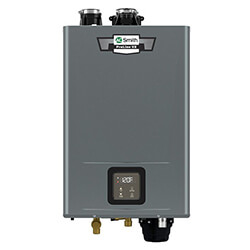



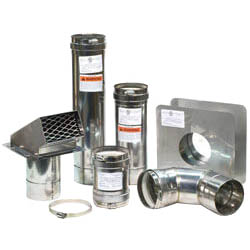
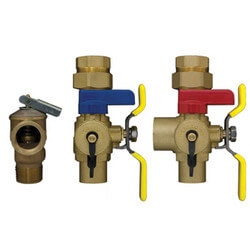
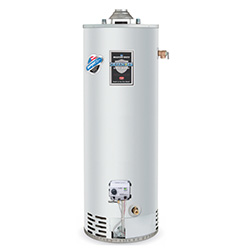

Tankless Water Heaters heat water on demand as it flows through the unit, with no storage tank and no standby heat loss. Tankless units are sized by flow rate in gallons per minute and the temperature rise required. Leading brands include Takagi, Navien, Rinnai, Eemax, and Stiebel Eltron in both gas and electric configurations.
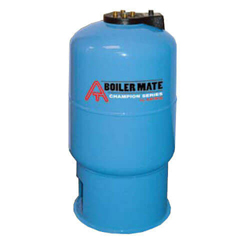
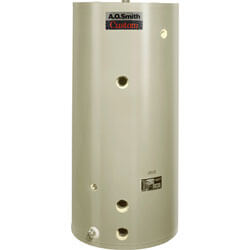
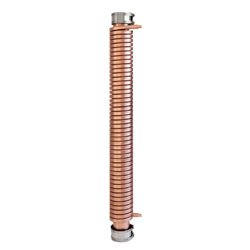
Indirect Water Heaters use heat transferred from an existing boiler to produce domestic hot water, storing it in a well-insulated tank with a heat exchanger coil inside. They are among the most efficient domestic hot water options when paired with a high-efficiency boiler. Leading brands include Amtrol, Triangle Tube, Weil-McLain, and Burnham.
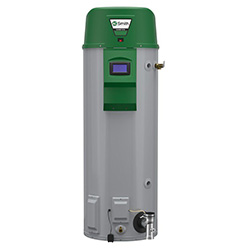
Residential Water Heaters are direct-fired tank storage water heaters designed for single-family and multi-family residential applications. Available in storage capacities from 20 to 100 gallons in natural gas, propane, and electric fuel options. AO Smith, Bradford White, and Ruud are among the leading residential water heater brands.
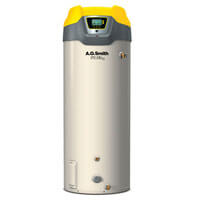
Commercial Water Heaters are high-capacity systems designed for the sustained hot water demand of restaurants, hotels, laundries, multi-family buildings, and other commercial applications. Sized by first-hour delivery, recovery rate, and storage capacity to match the peak demand profile of the application.
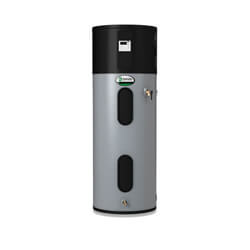
Heat Pump Water Heaters use a refrigeration cycle to move heat from the surrounding air into the water, achieving two to three times the efficiency of standard electric resistance water heaters. They require installation in a space with at least 700 to 1000 cubic feet of surrounding space. Rheem, AO Smith, and Bradford White offer heat pump water heater models.
Water Heater Parts include anode rods, dip tubes, heating elements, gas valves, thermostats, pressure relief valves, drain valves, and burner assemblies used to service and repair tank and tankless water heaters. Anode rods should be inspected every three to five years. Pressure relief valves must be replaced if they have opened under normal operating conditions or are more than five years old.
The right water heater type depends on the existing heat source, available fuel, and space constraints of the installation. Homes with high-efficiency boilers are strong candidates for indirect water heaters. Homes without a boiler typically use direct-fired gas tank or tankless water heaters. Heat pump water heaters offer significantly lower operating costs than standard electric models in climates where ambient temperature is adequate.
Venting requirements differ significantly between water heater types. Atmospheric gas water heaters require a B-vent or masonry chimney. Power-vent models use a fan to push exhaust through horizontal PVC. Direct-vent models draw combustion air from outside through a concentric pipe. Electric water heaters and heat pump water heaters require no combustion venting.
Energy factor and uniform energy factor ratings compare the efficiency of different water heater models. Gas condensing and tankless models achieve UEF ratings above 0.90, while standard atmospheric gas tanks range from 0.58 to 0.65. Heat pump water heaters achieve UEF ratings of 2.0 to 3.5.
What size water heater do I need for my home?
Tank water heater sizing is based on the first-hour rating, which should match the peak hour hot water demand. A general guideline is 12 gallons per person per day, with a first-hour rating of 60 to 80 gallons covering most four-person households. For tankless, add up flow rates of all fixtures that may run simultaneously and determine the required temperature rise from incoming to desired delivery temperature.
What is the difference between a power-vent and a direct-vent water heater?
A power-vent uses a blower motor to push exhaust through a horizontal PVC vent pipe, drawing combustion air from the room. A direct-vent uses a sealed combustion system with a concentric pipe that brings combustion air in from outside and exhausts through the same assembly. Direct-vent is preferred in tight, well-sealed spaces where drawing combustion air from the room would depressurize the space.
How long does a water heater typically last?
Tank water heaters have an average service life of 8 to 12 years. Proper anode rod maintenance can extend tank life significantly. Tankless water heaters typically last 15 to 20 years with proper descaling in hard water areas. Signs of a failing tank include rusty water, rumbling noise from sediment buildup, and moisture or corrosion around the base.
What is an anode rod and why does it need to be replaced?
An anode rod is a sacrificial magnesium or aluminum rod that protects the steel tank lining from corrosion by corroding preferentially to the tank. When the anode rod is fully depleted, corrosion begins attacking the tank itself. Anode rods should be inspected every 3 to 5 years and replaced when more than 50 percent of the coating has been consumed.
Can I install a tankless water heater to replace my tank water heater?
Yes, but several factors must be verified first. Gas tankless units require a larger gas supply line, typically 3/4" or 1", and new PVC venting. Electric whole-home tankless units often require 150 amps or more at 240 volts, which may require a panel upgrade. Point-of-use electric tankless heaters are smaller and can be installed on existing circuits for individual fixture service.
Resources

 --%3E %3C!DOCTYPE svg PUBLIC '-//W3C//DTD SVG 1.1//EN' 'http://www.w3.org/Graphics/SVG/1.1/DTD/svg11.dtd'%3E %3Csvg version='1.1' id='Layer_1' xmlns='http://www.w3.org/2000/svg' xmlns:xlink='http://www.w3.org/1999/xlink' x='0px' y='0px' width='90px' height='90px' viewBox='0 0 90 90' enable-background='new 0 0 90 90' xml:space='preserve'%3E %3Crect x='27' y='23' fill='%23FFFFFF' width='43' height='44'/%3E %3Cg%3E %3Cdefs%3E %3Crect id='SVGID_1_' width='90' height='90'/%3E %3C/defs%3E %3CclipPath id='SVGID_2_'%3E %3Cuse xlink:href='%23SVGID_1_' overflow='visible'/%3E %3C/clipPath%3E %3Cpath clip-path='url(%23SVGID_2_)' fill='%234186AD' d='M45,0C20.1,0,0,20.1,0,45c0,24.9,20.1,45,45,45c24.9,0,45-20.1,45-45 C90,20.1,69.9,0,45,0'/%3E %3C/g%3E %3Cpath fill='%23FFFFFF' d='M60.6,47.4l-22.5,14c-0.5,0.3-1,0.399-1.5,0.399s-0.9-0.1-1.4-0.399c-0.9-0.5-1.4-1.4-1.4-2.5v-28 c0-1,0.6-2,1.4-2.5c0.9-0.5,2-0.5,2.9,0.1l22.5,14.1C61.4,43.1,61.9,44,61.9,45S61.4,46.9,60.6,47.4'/%3E %3C/svg%3E)

Tankless Water Heaters heat water on demand as it flows through the unit, with no storage tank and no standby heat loss. Tankless units are sized by flow rate in gallons per minute and the temperature rise required. Leading brands include Takagi, Navien, Rinnai, Eemax, and Stiebel Eltron in both gas and electric configurations.
Indirect Water Heaters use heat transferred from an existing boiler to produce domestic hot water, storing it in a well-insulated tank with a heat exchanger coil inside. They are among the most efficient domestic hot water options when paired with a high-efficiency boiler. Leading brands include Amtrol, Triangle Tube, Weil-McLain, and Burnham.
Residential Water Heaters are direct-fired tank storage water heaters designed for single-family and multi-family residential applications. Available in storage capacities from 20 to 100 gallons in natural gas, propane, and electric fuel options. AO Smith, Bradford White, and Ruud are among the leading residential water heater brands.
Commercial Water Heaters are high-capacity systems designed for the sustained hot water demand of restaurants, hotels, laundries, multi-family buildings, and other commercial applications. Sized by first-hour delivery, recovery rate, and storage capacity to match the peak demand profile of the application.
Heat Pump Water Heaters use a refrigeration cycle to move heat from the surrounding air into the water, achieving two to three times the efficiency of standard electric resistance water heaters. They require installation in a space with at least 700 to 1000 cubic feet of surrounding space. Rheem, AO Smith, and Bradford White offer heat pump water heater models.
Water Heater Parts include anode rods, dip tubes, heating elements, gas valves, thermostats, pressure relief valves, drain valves, and burner assemblies used to service and repair tank and tankless water heaters. Anode rods should be inspected every three to five years. Pressure relief valves must be replaced if they have opened under normal operating conditions or are more than five years old.
The right water heater type depends on the existing heat source, available fuel, and space constraints of the installation. Homes with high-efficiency boilers are strong candidates for indirect water heaters. Homes without a boiler typically use direct-fired gas tank or tankless water heaters. Heat pump water heaters offer significantly lower operating costs than standard electric models in climates where ambient temperature is adequate.
Venting requirements differ significantly between water heater types. Atmospheric gas water heaters require a B-vent or masonry chimney. Power-vent models use a fan to push exhaust through horizontal PVC. Direct-vent models draw combustion air from outside through a concentric pipe. Electric water heaters and heat pump water heaters require no combustion venting.
Energy factor and uniform energy factor ratings compare the efficiency of different water heater models. Gas condensing and tankless models achieve UEF ratings above 0.90, while standard atmospheric gas tanks range from 0.58 to 0.65. Heat pump water heaters achieve UEF ratings of 2.0 to 3.5.
What size water heater do I need for my home?
Tank water heater sizing is based on the first-hour rating, which should match the peak hour hot water demand. A general guideline is 12 gallons per person per day, with a first-hour rating of 60 to 80 gallons covering most four-person households. For tankless, add up flow rates of all fixtures that may run simultaneously and determine the required temperature rise from incoming to desired delivery temperature.
What is the difference between a power-vent and a direct-vent water heater?
A power-vent uses a blower motor to push exhaust through a horizontal PVC vent pipe, drawing combustion air from the room. A direct-vent uses a sealed combustion system with a concentric pipe that brings combustion air in from outside and exhausts through the same assembly. Direct-vent is preferred in tight, well-sealed spaces where drawing combustion air from the room would depressurize the space.
How long does a water heater typically last?
Tank water heaters have an average service life of 8 to 12 years. Proper anode rod maintenance can extend tank life significantly. Tankless water heaters typically last 15 to 20 years with proper descaling in hard water areas. Signs of a failing tank include rusty water, rumbling noise from sediment buildup, and moisture or corrosion around the base.
What is an anode rod and why does it need to be replaced?
An anode rod is a sacrificial magnesium or aluminum rod that protects the steel tank lining from corrosion by corroding preferentially to the tank. When the anode rod is fully depleted, corrosion begins attacking the tank itself. Anode rods should be inspected every 3 to 5 years and replaced when more than 50 percent of the coating has been consumed.
Can I install a tankless water heater to replace my tank water heater?
Yes, but several factors must be verified first. Gas tankless units require a larger gas supply line, typically 3/4" or 1", and new PVC venting. Electric whole-home tankless units often require 150 amps or more at 240 volts, which may require a panel upgrade. Point-of-use electric tankless heaters are smaller and can be installed on existing circuits for individual fixture service.