




ProPress 316 Stainless Steel Fittings

Pipe Fittings & Nipples


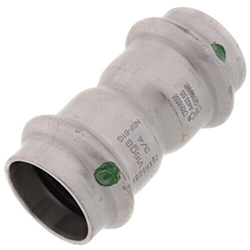

(IPS x CTS)






| PRODUCT | SIZE | SINGLE UNIT | BOX UP & SAVE | STOCK STATUS | LIST | COMPARE |
|---|

ProPress 316 stainless steel fittings are press-connect fittings designed for stainless steel pipe systems that need extra corrosion resistance beyond standard 304 stainless or copper. The 316 alloy adds molybdenum to the mix, which gives it better resistance to chlorides and other aggressive water chemistries found in coastal buildings, chemical processing areas, and marine applications. Contractors use a press tool with the correct jaw to join the fitting to the pipe in seconds, without a torch, flux, or open flame, which cuts installation time and removes hot-work permit requirements from many jobs.
These fittings work in potable water, process water, and other systems where corrosion resistance and connection speed both matter. Because the joint relies on a mechanical press rather than a soldered or welded connection, technicians can work in occupied buildings, tight mechanical rooms, or near flammable materials without a fire watch. Choosing 316 over 304 stainless makes sense whenever the piping will see higher chloride exposure or a more demanding water treatment profile.
Subcategories
- Elbows: 90-degree and 45-degree stainless steel press elbows change direction in a run without cutting and rethreading pipe. Contractors keep both angles on hand for tight mechanical room layouts where copper or steel elbows would require additional fittings to make the same turn.
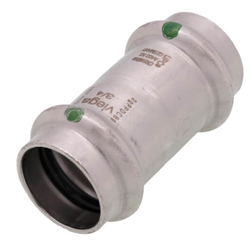
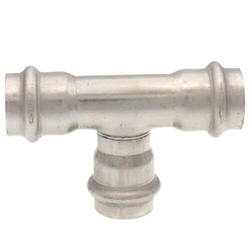
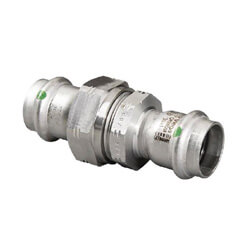
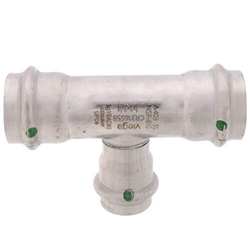
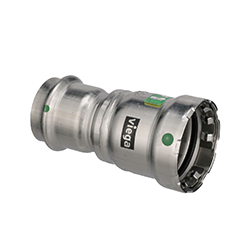
- Tees and Couplings: Tees branch a stainless steel line for a new fixture or loop, while couplings join two lengths of pipe in a straight run. Both are common repair and retrofit parts, since press tees let a tech add a branch without depressurizing and cutting into an existing header.
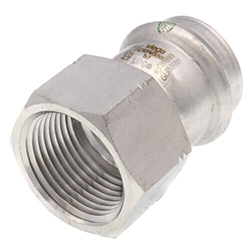
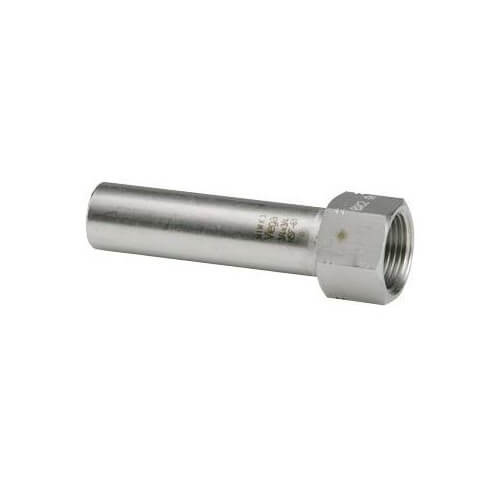
- Adapters: Adapters transition a press-fit stainless run to threaded, grooved, or copper connections. They're the piece that lets a stainless press system tie into existing building piping or into equipment with a threaded port, without a second style of fitting.
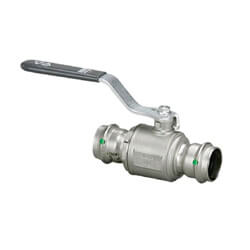
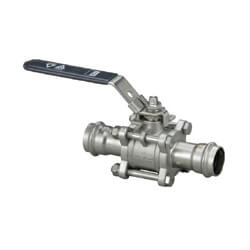
- Valves: Press-end ball and check valves in 316 stainless let a contractor isolate or protect a section of the system using the same press tool as the rest of the run. This keeps the whole assembly consistent instead of mixing threaded valve bodies into a pressed system.
Buying Guide
Start with pipe size and wall thickness, since a press fitting is only rated for a specific outer diameter and won't seal correctly on the wrong size. Confirm the fitting's material grade matches the pipe grade already in the system; mixing 316 fittings onto 304 pipe (or the reverse) can create a weak point at the joint even though both look similar.
Match the press tool jaw profile to the fitting manufacturer's specification. Press systems are not universal across brands, and using the wrong jaw can produce an unreliable seal that looks correct but fails under pressure. If the crew already owns a press tool for one brand, staying within that system avoids buying a second tool or a new jaw set.
Think about the fluid and pressure the system will carry. Potable water, hydronic heating, and process fluids each have different compatibility and pressure requirements, and a fitting rated for one may not carry the same rating for another. Check the working pressure and temperature rating printed on the fitting or listed in the manufacturer's technical data before specifying it for anything beyond straightforward domestic water use.
Consider the environment the piping will sit in. ProPress 316 stainless steel fittings are worth the added cost over 304 stainless in coastal buildings, food and beverage plants, or anywhere washdown chemicals or chlorides are part of daily operation. For a typical interior domestic water job without that exposure, 304 stainless may be sufficient and less expensive.
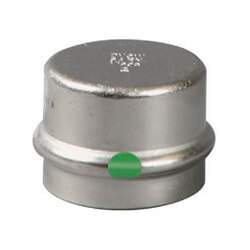
Finally, plan for inspection. Most press-fitting systems include a visual indicator, like a colored ring or stripe, that shows whether a joint has been pressed. Building that visual check into the rough-in and pressure-test process catches an unpressed joint before it becomes a leak behind a finished wall.
Frequently Asked Questions
What's the difference between 304 and 316 stainless steel press fittings?
316 stainless adds molybdenum to the alloy, which improves resistance to chlorides and other corrosive water conditions compared to 304. It costs more but holds up better in coastal, marine, or chemically aggressive environments.
Can I mix ProPress fittings from different manufacturers?
It's best to stay within one manufacturer's system for both fittings and press tool jaws. Mixing brands can affect how the joint seals, and it may void the fitting manufacturer's warranty on the connection.
Do these fittings require a special tool?
Yes. Press fittings need a press tool with a jaw sized and profiled for the specific fitting brand and pipe diameter. A standard crimping or compression tool won't create a proper seal.
Are stainless steel press fittings approved for potable water?
Many stainless steel press fittings are rated for potable water use, but always check the specific product's certification, such as NSF/ANSI 61, before installing on a domestic water line.
How do I know if a joint has been pressed correctly?
Most press-fitting lines include a visual indicator, such as a colored band or ring, that changes or becomes visible once the joint is properly pressed. Checking every joint against that indicator during rough-in helps catch a missed connection before pressure testing.
