




Filters
SORT
Product Availability –
Application –
Size –
Material –
Review Score –
 --%3E %3Csvg version='1.1' id='Fill' xmlns='http://www.w3.org/2000/svg' xmlns:xlink='http://www.w3.org/1999/xlink' x='0px' y='0px' viewBox='0 0 100 100' enable-background='new 0 0 100 100' xml:space='preserve'%3E %3Cpath fill='%23F15C02' d='M79.44,0.95H20.56C9.78,0.95,0.95,9.78,0.95,20.56v58.87c0,10.79,8.82,19.61,19.61,19.61h58.87 c10.79,0,19.61-8.83,19.61-19.61V20.56C99.05,9.78,90.22,0.95,79.44,0.95z M65.38,58.24l9.38,29.58L49.69,69.78L24.5,87.82 l9.34-29.6L8.8,39.6l30.73-0.17c0,0,6.98-19.61,10-28.93c0.54,1.36,9.88,29.1,9.88,29.1H91.2L65.38,58.24z'/%3E %3C/svg%3E)
 --%3E %3Csvg version='1.1' id='With-RB' xmlns='http://www.w3.org/2000/svg' xmlns:xlink='http://www.w3.org/1999/xlink' x='0px' y='0px' viewBox='0 0 100 100' enable-background='new 0 0 100 100' xml:space='preserve'%3E %3Cpath fill='%23FBC8B4' d='M79.44,0.95H20.56C9.78,0.95,0.95,9.78,0.95,20.56v58.87c0,10.79,8.82,19.61,19.61,19.61h58.87 c10.79,0,19.61-8.83,19.61-19.61V20.56C99.05,9.78,90.22,0.95,79.44,0.95z M65.38,58.24l9.38,29.58L49.69,69.78L24.5,87.82 l9.34-29.6L8.8,39.6l30.73-0.17c0,0,6.98-19.61,10-28.93c0.54,1.36,9.88,29.1,9.88,29.1H91.2L65.38,58.24z'/%3E %3C/svg%3E)
Price Range –
ProPress Copper Reducer FTG x Press

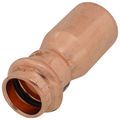

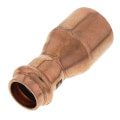
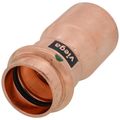
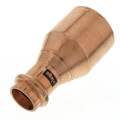
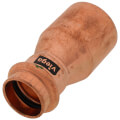
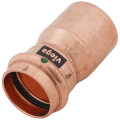
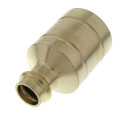
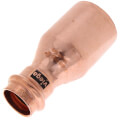
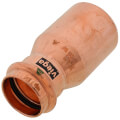
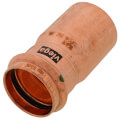
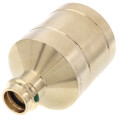
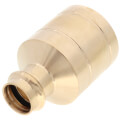
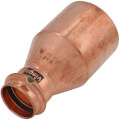
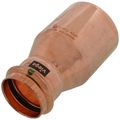
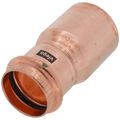
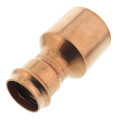
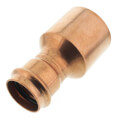
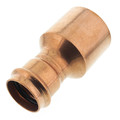
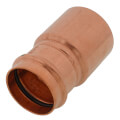
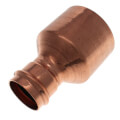
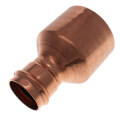
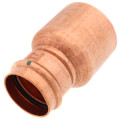
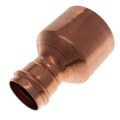
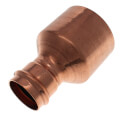
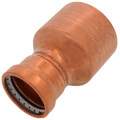
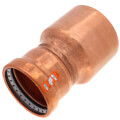


ProPress Copper Reducer FTG x Press fittings connect a threaded or soldered female-fitting (FTG) end on one side to a press-connect end on the other, letting plumbers tie a press-fit branch into an existing soldered or threaded copper system without converting the whole run. Sizes range from 3/4 inch by 1/2 inch up through 4 inch by 3 inch, covering residential branch transitions as well as larger commercial reducers. Each fitting includes Viega's Smart Connect feature, which leaves an unpressed connection visibly and functionally different so a technician can catch a missed press before the system is charged and pressurized. The zero-lead body works with ASTM B88 and B75 copper tubing, matching the material standard used across the rest of the ProPress copper line. Plumbing and mechanical contractors reach for the FTG x Press configuration specifically when extending or repairing an older soldered system, since one end solders in the traditional way while the press end closes a new branch in seconds without an additional torch pass on that side of the joint.
Subcategories
- Small Branch Reducers (3/4 to 1-1/4 Inch): Reducers in the 3/4 inch through 1-1/4 inch range cover the most common residential branch transitions, stepping a fixture or appliance line down from a larger trunk line. Plumbers solder the FTG end into an existing copper system, then press the reduced end closed without a second torch pass on that connection. The 78077 model, sized 3/4 inch by 1/2 inch, is representative of this size range. Smaller reducers in this range share the same zero-lead body as the rest of the ProPress copper line.
- Mid-Size Reducers (1-1/2 to 2 Inch): Reducers from 1-1/2 inch through 2 inch step down larger residential and light commercial trunk lines, often where a main distribution line branches off to a smaller zone. The 78102 model, sized 1-1/2 inch by 1 inch, and the 78117 model, sized 2 inch by 1-1/4 inch, fall in this range. Mechanical contractors use this size range on hydronic heating zones and larger domestic water branch lines. Every fitting in this range carries the Smart Connect feature that flags an unpressed joint before the system is charged.
- Large-Diameter Reducers (2-1/2 to 4 Inch): Reducers from 2-1/2 inch through 4 inch handle commercial risers and main distribution lines, requiring a larger press tool jaw than the smaller residential sizes. The 20783 model, sized 4 inch by 3 inch, represents the top of this size range and uses a zero-lead body. Mechanical contractors specify these large reducers on commercial and institutional plumbing systems where pipe size steps down partway through a vertical run. The FTG end still solders in with standard techniques, keeping one end of the transition compatible with existing soldered risers.
Buying Guide
Confirm which end of the joint needs to solder and which end needs to press before ordering, since ProPress Copper Reducer FTG x Press fittings are built specifically for a mixed connection: one end accepts a soldered or threaded female fitting connection while the other end closes with a press tool. The mixed connection fits repair and extension work on older, all-soldered copper systems better than an all-press reducer, since only one end of the new fitting requires a torch. Measure both tubing diameters carefully, since these reducers step down from one specific size to another rather than adapting across a range, and sizes run from small residential branches up through large-diameter commercial reducers that need a bigger press jaw. Confirm the press tool jaw on hand matches the pressed end's diameter before starting the job, particularly on transitions into the 2-1/2 inch through 4 inch range. Check that the existing copper tubing meets ASTM B88 or B75 standards, since these fittings are not rated for PEX or other plastic tubing. After pressing the connection, look for the Smart Connect feature to confirm a full press, since an unpressed joint looks visibly different and will leak or fail pressure testing if missed. Local plumbing code may require the zero-lead version on any fitting touching potable water, so confirm that requirement before ordering for a domestic water branch rather than a heating-only application.
Frequently Asked Questions
What does FTG x Press mean on a ProPress reducer fitting?
FTG refers to the fitting end built for a soldered or threaded female fitting connection, while Press refers to the opposite end that closes with a press tool. The configuration lets a contractor tie a press-fit branch into an existing soldered copper system without converting the whole run.
What sizes are available in the FTG x Press reducer line?
Sizes run from 3/4 inch by 1/2 inch up through 4 inch by 3 inch, covering residential branch transitions as well as larger commercial reducer applications. Confirming both diameters on the existing tubing before ordering avoids a size mismatch at the job site.
How can an installer tell if the pressed end of the fitting sealed correctly?
The Smart Connect feature leaves an unpressed connection visibly and functionally different from a completed one, so a missed press is easy to catch before the system is charged. Checking every pressed joint against this feature before pressure testing avoids a leak found after the wall is closed.
Do these reducers work with PEX tubing?
No, ProPress Copper Reducer FTG x Press fittings are built for ASTM B88 and B75 copper tubing and are not rated for PEX. A copper-to-PEX transition requires a fitting designed specifically for that connection.
Is a special press tool jaw needed for the larger reducer sizes?
Yes, reducers in the 2-1/2 inch through 4 inch range require a larger press tool jaw than standard residential sizes. Confirming jaw compatibility before starting a large-diameter job avoids a mid-installation tool swap.
