




QS-style Copper Pipe Adapters

 --%3E %3Csvg version='1.1' id='Fill' xmlns='http://www.w3.org/2000/svg' xmlns:xlink='http://www.w3.org/1999/xlink' x='0px' y='0px' viewBox='0 0 100 100' enable-background='new 0 0 100 100' xml:space='preserve'%3E %3Cpath fill='%23F15C02' d='M79.44,0.95H20.56C9.78,0.95,0.95,9.78,0.95,20.56v58.87c0,10.79,8.82,19.61,19.61,19.61h58.87 c10.79,0,19.61-8.83,19.61-19.61V20.56C99.05,9.78,90.22,0.95,79.44,0.95z M65.38,58.24l9.38,29.58L49.69,69.78L24.5,87.82 l9.34-29.6L8.8,39.6l30.73-0.17c0,0,6.98-19.61,10-28.93c0.54,1.36,9.88,29.1,9.88,29.1H91.2L65.38,58.24z'/%3E %3C/svg%3E)

 --%3E %3Csvg version='1.1' id='No-RB' xmlns='http://www.w3.org/2000/svg' xmlns:xlink='http://www.w3.org/1999/xlink' x='0px' y='0px' viewBox='0 0 100 100' enable-background='new 0 0 100 100' xml:space='preserve'%3E %3Cpath fill='%23CECECE' d='M79.44,0.95H20.56C9.78,0.95,0.95,9.78,0.95,20.56v58.87c0,10.79,8.82,19.61,19.61,19.61h58.87 c10.79,0,19.61-8.83,19.61-19.61V20.56C99.05,9.78,90.22,0.95,79.44,0.95z M65.38,58.24l9.38,29.58L49.69,69.78L24.5,87.82 l9.34-29.6L8.8,39.6l30.73-0.17c0,0,6.98-19.61,10-28.93c0.54,1.36,9.88,29.1,9.88,29.1H91.2L65.38,58.24z'/%3E %3C/svg%3E)

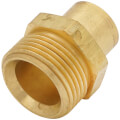
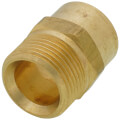
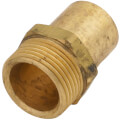
QS-style Copper Pipe Adapters are transition fittings that let installers move from Uponor PEX tubing to standard copper pipe without cutting into a soldered joint mid run. Sized in R20 and R25 to match Uponor's PEX tubing dimensions, the adapters connect to 1/2 inch, 3/4 inch, or 1 inch copper pipe when paired with the matching QS-style fitting assembly. Radiant heating and hydronic distribution systems built on Wirsbo hePEX tubing rely on these adapters wherever a manifold, boiler connection, or existing copper branch needs to tie into PEX. Because the copper side accepts standard sweat or press connections, a plumber can finish the transition with whatever copper joining method the rest of the job already uses. Keeping a stock of both R20 and R25 adapters covers the two most common Uponor tubing sizes found on residential and light commercial radiant jobs, cutting down on mid installation supply runs.
Subcategories
- R20 Copper Adapters: R20 copper adapters are sized for Uponor's smaller PEX tubing profile and connect to 1/2 inch or 3/4 inch copper pipe. Installers use them most often at manifold stations, where multiple small diameter PEX branches need a clean transition to copper before reaching a boiler or distribution header. The R20 size matches the crimp ring dimension used on Uponor's standard hePEX tubing runs. Because the copper end accepts a standard sweat joint, the adapter can be soldered in place using the same torch and solder already set up for the rest of the copper run.
- R25 Copper Adapters: R25 copper adapters cover Uponor's larger tubing profile, used where a radiant or hydronic system runs bigger PEX branches into copper. Contractors reach for R25 sizing on longer runs or higher flow zones where the smaller R20 profile would restrict flow. Matching the crimp ring size to the tubing diameter is critical, since an R25 adapter will not seat correctly on tubing sized for an R20 fitting. Like the R20 line, the copper end is finished with a standard sweat connection.
- Boiler and Heat Source Connections: Boiler and heat source connections are where copper pipe adapters see some of their heaviest use, since most boilers and heat exchangers arrive with copper stub outs rather than PEX connections. Pairing a QS-style copper adapter with the matching QS-style fitting assembly lets a Wirsbo hePEX distribution loop tie directly into the boiler's copper connection point. The transition covers 1/2 inch, 3/4 inch, and 1 inch copper sizing depending on the boiler's connection size. Techs servicing an existing hydronic system also use this connection point to isolate and repair a section of PEX without disturbing the boiler's copper stub out.
Buying Guide
Matching the adapter size to the Uponor tubing already installed is the first step, since R20 and R25 refer to specific crimp ring dimensions rather than a generic size range. Pulling the tubing spec off the manifold label or the original installation paperwork confirms which size a job needs before ordering. Copper side sizing matters just as much. A 1/2 inch copper stub calls for a different adapter than a 3/4 inch or 1 inch stub, and mismatching the two means either forcing a fitting that won't seat or soldering a joint that leaks under pressure. QS-style Copper Pipe Adapters only complete half the transition. The adapter needs the matching QS-style fitting assembly, sold separately, to actually crimp onto the PEX tubing, so ordering the adapter alone without confirming the fitting assembly is on hand leads to a stalled job. On repair calls, checking the existing adapter's stamped size before cutting out the old fitting saves a return trip, since the stamp usually shows the R size directly on the fitting body. For new installations feeding a boiler or heat exchanger, sizing the copper side to match the equipment's connection point, rather than defaulting to whatever copper is on the truck, keeps the joint from needing a bushing or reducer later. Stocking R20 and R25 adapters in the common 1/2 inch and 3/4 inch copper sizes covers most residential radiant and hydronic repair calls.
Frequently Asked Questions
What's the difference between R20 and R25 QS-style copper adapters?
R20 and R25 refer to the crimp ring size used on Uponor PEX tubing, not a generic small versus large label, so the correct adapter depends on which tubing size is already installed. R20 adapters typically pair with 1/2 inch or 3/4 inch copper, while R25 covers larger tubing runs. Checking the tubing spec on the manifold or installation paperwork confirms which size a job calls for before ordering.
Do QS-style copper pipe adapters work with any brand of PEX tubing?
QS-style copper adapters are built to Uponor's Wirsbo hePEX tubing dimensions and crimp ring system, so they're matched to Uponor tubing specifically rather than PEX tubing in general. Using them with a different manufacturer's PEX product risks a poor seal at the crimp connection. Sticking with Uponor's QS-style fitting assembly alongside the adapter keeps the whole transition within one manufacturer's tested system.
What else is needed besides the adapter to complete a PEX to copper transition?
The copper adapter alone only provides the copper side connection point, so completing the transition also requires the matching QS-style fitting assembly that crimps onto the PEX tubing. Ordering both pieces together avoids a stalled installation partway through a job. The copper end can then be finished with a standard sweat or press connection depending on what the rest of the copper run uses.
What copper pipe sizes do these adapters connect to?
Copper pipe adapters in the QS-style line connect to 1/2 inch, 3/4 inch, and 1 inch copper pipe, depending on the adapter size selected and the fitting assembly it pairs with. Larger hydronic systems and boiler connections typically call for the 3/4 inch or 1 inch sizing, while smaller manifold branches often use 1/2 inch. Matching the copper size to the equipment's existing connection point avoids needing a bushing or reducer later.
Where are QS-style copper adapters most commonly used on a job?
Radiant heating manifolds and boiler or heat exchanger connections account for most QS-style copper adapter installations, since those are the points where a Wirsbo hePEX distribution loop typically meets copper equipment connections. Repair and retrofit work on existing hydronic systems also uses these adapters to isolate a section of tubing without disturbing the rest of the copper run. Stocking common sizes in 1/2 inch and 3/4 inch copper covers most of these situations.
