




Filters
SORT
Product Availability –
Review Score –
 --%3E %3Csvg version='1.1' id='Fill' xmlns='http://www.w3.org/2000/svg' xmlns:xlink='http://www.w3.org/1999/xlink' x='0px' y='0px' viewBox='0 0 100 100' enable-background='new 0 0 100 100' xml:space='preserve'%3E %3Cpath fill='%23F15C02' d='M79.44,0.95H20.56C9.78,0.95,0.95,9.78,0.95,20.56v58.87c0,10.79,8.82,19.61,19.61,19.61h58.87 c10.79,0,19.61-8.83,19.61-19.61V20.56C99.05,9.78,90.22,0.95,79.44,0.95z M65.38,58.24l9.38,29.58L49.69,69.78L24.5,87.82 l9.34-29.6L8.8,39.6l30.73-0.17c0,0,6.98-19.61,10-28.93c0.54,1.36,9.88,29.1,9.88,29.1H91.2L65.38,58.24z'/%3E %3C/svg%3E)
 --%3E %3Csvg version='1.1' id='With-RB' xmlns='http://www.w3.org/2000/svg' xmlns:xlink='http://www.w3.org/1999/xlink' x='0px' y='0px' viewBox='0 0 100 100' enable-background='new 0 0 100 100' xml:space='preserve'%3E %3Cpath fill='%23FBC8B4' d='M79.44,0.95H20.56C9.78,0.95,0.95,9.78,0.95,20.56v58.87c0,10.79,8.82,19.61,19.61,19.61h58.87 c10.79,0,19.61-8.83,19.61-19.61V20.56C99.05,9.78,90.22,0.95,79.44,0.95z M65.38,58.24l9.38,29.58L49.69,69.78L24.5,87.82 l9.34-29.6L8.8,39.6l30.73-0.17c0,0,6.98-19.61,10-28.93c0.54,1.36,9.88,29.1,9.88,29.1H91.2L65.38,58.24z'/%3E %3C/svg%3E)
Price Range –
Relays





 --%3E %3Csvg version='1.1' id='No-RB' xmlns='http://www.w3.org/2000/svg' xmlns:xlink='http://www.w3.org/1999/xlink' x='0px' y='0px' viewBox='0 0 100 100' enable-background='new 0 0 100 100' xml:space='preserve'%3E %3Cpath fill='%23CECECE' d='M79.44,0.95H20.56C9.78,0.95,0.95,9.78,0.95,20.56v58.87c0,10.79,8.82,19.61,19.61,19.61h58.87 c10.79,0,19.61-8.83,19.61-19.61V20.56C99.05,9.78,90.22,0.95,79.44,0.95z M65.38,58.24l9.38,29.58L49.69,69.78L24.5,87.82 l9.34-29.6L8.8,39.6l30.73-0.17c0,0,6.98-19.61,10-28.93c0.54,1.36,9.88,29.1,9.88,29.1H91.2L65.38,58.24z'/%3E %3C/svg%3E)


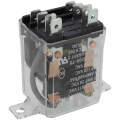


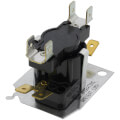
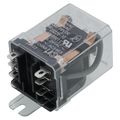

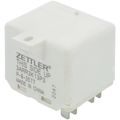
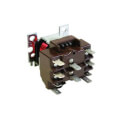

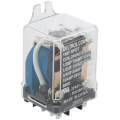
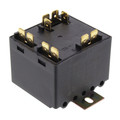
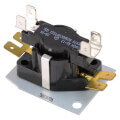

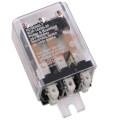
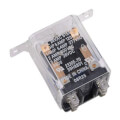
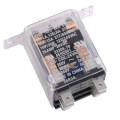
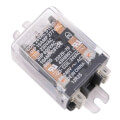
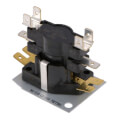
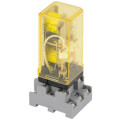

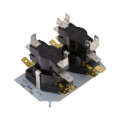
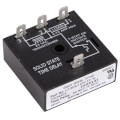

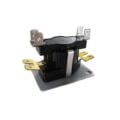
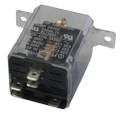
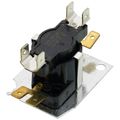
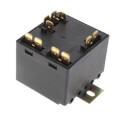
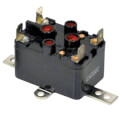

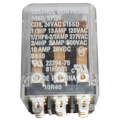
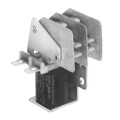
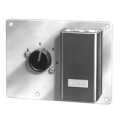
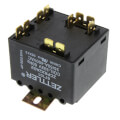
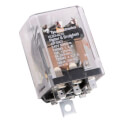
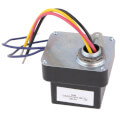
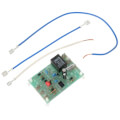

Relays are electromechanical or solid-state switching devices that let a low-voltage control signal, like a thermostat call, safely operate a higher-voltage load such as a blower motor, compressor, or ignition circuit. HVAC systems depend on relays to separate delicate control-board circuitry from the higher current draw of major components, protecting the board from damage while still letting it direct equipment operation. A failed relay is one of the more common reasons a furnace or air handler stops responding to a thermostat call even though the board itself tests fine.
Contractors keep a stock of common relay types on hand because replacement is usually faster and cheaper than tracing a wiring fault, and a bad relay can mimic symptoms of a failed control board or motor. Matching coil voltage, contact configuration, and physical mounting style to the original part keeps a replacement relay working correctly within the existing control circuit.
Subcategories
- SPDT Relays: Single-pole double-throw relays switch one circuit between two positions, making them a common choice for fan or defrost control circuits that need to route power to one of two paths depending on system mode. HVAC technicians select SPDT relays when a control sequence calls for switching between heating and cooling stages or between normal and defrost operation.
- DPDT Relays: Double-pole double-throw relays switch two separate circuits simultaneously from a single coil signal, which suits applications needing coordinated control of two loads, like a blower motor and an indicator light. Technicians reach for DPDT relays in control panels where space is limited but two circuits still need synchronized switching.
- Time Delay Relays: Time delay relays introduce a controlled pause between a control signal and the switching action, commonly used to stagger compressor start or protect equipment from rapid on and off cycling. Facilities running multiple pieces of equipment on a shared circuit rely on time delay relays to prevent simultaneous startup current spikes.
- Fan Relays: Fan relays switch power to a blower motor in response to a thermostat or control board signal, and a stuck or failed fan relay often shows up as a blower that will not shut off or will not start at all. Replacing a fan relay is a routine repair on residential and light commercial systems where the blower runs on its own dedicated circuit.
Buying Guide
Choosing the right relay for an HVAC repair starts with matching coil voltage to the existing control circuit, since a relay rated for the wrong voltage either fails to energize or burns out prematurely. Most residential and light commercial systems run 24-volt control circuits, but line-voltage relays are common in larger equipment, so confirming the original part's rating before ordering a replacement avoids a wasted trip.
Contact configuration comes next. A single-pole single-throw relay handles one circuit with a simple on-off switch, while double-pole and double-throw variants manage more complex switching needs, like routing power between two separate paths. Matching the original relay's contact arrangement keeps the replacement compatible with the existing wiring without rewiring the control circuit.
Physical mounting and terminal style matter just as much as electrical specifications. Some relays plug into a socket base for quick swaps, while others hard-wire directly into the control panel. Ordering a relay with the wrong footprint means either modifying the panel or making an extra trip for the correct part.
Amperage rating rounds out the decision. Relays rated below the load they switch fail quickly under normal operation, so contractors check the connected motor or component's full-load amperage against the relay's contact rating before finalizing a replacement, particularly on older equipment where original documentation may be missing.
Frequently Asked Questions
Can I replace a relay with one rated for a slightly higher voltage?
A relay's coil voltage needs to match the control circuit voltage, not exceed it, since a mismatched coil either fails to pull in or draws too much current. Checking the original part's voltage rating before ordering a replacement avoids this problem.
Why does my blower motor run constantly even after I turn off the thermostat?
A relay with welded or stuck contacts often keeps power flowing to the blower motor regardless of the thermostat signal. Replacing the stuck relay usually resolves the issue, though a technician should also check for a shorted control board output driving the relay coil continuously.
What's the difference between a plug-in relay and a hard-wired relay?
A plug-in relay seats into a socket base, allowing a quick swap without disconnecting individual wires, while a hard-wired relay connects directly to terminals in the control panel. Plug-in styles suit frequent-service equipment, while hard-wired relays are common in permanent panel installations.
How do I know if a relay has failed versus a wiring problem?
Testing for coil resistance and contact continuity with a multimeter isolates a failed relay from a wiring fault. A relay showing no continuity across closed contacts, or a coil reading open or shorted, points to the relay itself rather than the surrounding wiring.
Do time delay relays need periodic replacement even if they still work?
Time delay relays can drift in timing accuracy as they age, even while still switching correctly, so equipment relying on precise staggered starts may benefit from replacement on a maintenance schedule rather than waiting for outright failure.
