




Filters
SORT
Product Availability –
Size –
Material –
Review Score –
 --%3E %3Csvg version='1.1' id='Fill' xmlns='http://www.w3.org/2000/svg' xmlns:xlink='http://www.w3.org/1999/xlink' x='0px' y='0px' viewBox='0 0 100 100' enable-background='new 0 0 100 100' xml:space='preserve'%3E %3Cpath fill='%23F15C02' d='M79.44,0.95H20.56C9.78,0.95,0.95,9.78,0.95,20.56v58.87c0,10.79,8.82,19.61,19.61,19.61h58.87 c10.79,0,19.61-8.83,19.61-19.61V20.56C99.05,9.78,90.22,0.95,79.44,0.95z M65.38,58.24l9.38,29.58L49.69,69.78L24.5,87.82 l9.34-29.6L8.8,39.6l30.73-0.17c0,0,6.98-19.61,10-28.93c0.54,1.36,9.88,29.1,9.88,29.1H91.2L65.38,58.24z'/%3E %3C/svg%3E)
Price Range –
Rigid/IMC Type-C Conduit Bodies


 --%3E %3Csvg version='1.1' id='No-RB' xmlns='http://www.w3.org/2000/svg' xmlns:xlink='http://www.w3.org/1999/xlink' x='0px' y='0px' viewBox='0 0 100 100' enable-background='new 0 0 100 100' xml:space='preserve'%3E %3Cpath fill='%23CECECE' d='M79.44,0.95H20.56C9.78,0.95,0.95,9.78,0.95,20.56v58.87c0,10.79,8.82,19.61,19.61,19.61h58.87 c10.79,0,19.61-8.83,19.61-19.61V20.56C99.05,9.78,90.22,0.95,79.44,0.95z M65.38,58.24l9.38,29.58L49.69,69.78L24.5,87.82 l9.34-29.6L8.8,39.6l30.73-0.17c0,0,6.98-19.61,10-28.93c0.54,1.36,9.88,29.1,9.88,29.1H91.2L65.38,58.24z'/%3E %3C/svg%3E)




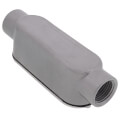


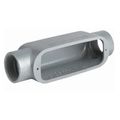


Rigid/IMC Type-C conduit bodies are straight-through access fittings that let installers pull and splice conductors in the middle of a conduit run. Southwire describes its C type bodies as offering the easiest access for pulling and splicing. The page lists threaded bodies in malleable iron, galvanized iron and aluminum, including a 3/4" Form 7 iron body listed at 6 AWG and a 1-1/2" Appleton Mogul body with cover and gasket. Smooth, rounded integral bushings in the hubs of the Southwire malleable iron body protect conductor insulation, and the Form 7 body uses NPT tapered hubs for the same purpose. The cover and watertight gasket on the Southwire aluminum body are built for weatherproof installations. Matching material, size and cover setup to the run protects the wire during pulls and keeps the job moving.
Subcategories
- Form 7 Iron Type C Conduit Bodies: Form 7 type C conduit bodies are iron bodies for rigid conduit runs that need an access point for pulling and splicing. Southwire's 3/4" version is listed at 6 AWG and has NPT tapered hubs that protect conductor insulation. Installers choose it for straight-through runs. The iron fabrication is described as resistant to corrosion and impact, with a zinc plated finish.
- Malleable Iron Threaded Type C Conduit Bodies: Malleable iron threaded type C bodies suit installers who want strong, impact resistant fittings on rigid conduit runs. Southwire's 3/4" malleable iron body is described as having high tensile strength and ductility. Smooth, rounded integral bushings in the hubs protect conductor insulation. The roomy interior gives extra space for wiring.
- Hot Dip Galvanized Type C Conduit Bodies: Hot dip galvanized type C bodies pair a galvanized finish with iron construction. Southwire's 3/4" rigid threaded version is listed in galvanized iron. Electricians use these bodies for pulling, splicing and maintenance access on interior or exterior projects. Southwire's description says its conduit bodies also provide taps for branch conduit runs.
- Aluminum Type C Conduit Bodies with Cover: Aluminum type C bodies use lightweight, copper free aluminum construction and come with a cover and gasket. Southwire's 1/2" threaded body is listed with a cover. Installers use it where weatherproof installations matter, since the cover and watertight gasket are designed for that purpose. Southwire cites excellent ground continuity and corrosion resistance.
- Mogul Type C Conduit Bodies: Appleton's 1-1/2" Mogul type C body is threaded malleable iron with a cover and gasket. Smooth, rounded integral bushings in each hub protect conductor insulation. Appleton describes built-in rollers that facilitate cable pulling on its NEC 6x8x Series Moguls in sizes 1-1/4" and larger. Covers have captive stainless steel screws.
Buying Guide
Start with conduit size. The hub size on the body has to match the trade size of the conduit in the run, and sizes on the page include 1/2", 3/4" and 1-1/2". Threaded hubs need a matching threaded conduit end, so confirm the connection style before anything else. Next, pick a material for the environment. Southwire describes its iron and malleable iron bodies as resistant to corrosion and impact, and its aluminum body as lightweight with excellent ground continuity and corrosion resistance. The hot dip galvanized body is described as suited to interior or exterior projects.
Then decide on cover and gasket. The Southwire aluminum body lists a cover and watertight gasket for weatherproof installations, and the Appleton Mogul body lists a cover and gasket as well. When comparing Rigid/IMC Type-C Conduit Bodies, check the product name for a cover and gasket before ordering.
Finally, consider the wire and the pull. The Form 7 body is listed at 6 AWG, so confirm the conductor size against the body listing. Long pulls benefit from features like the built-in rollers Appleton describes for Mogul bodies in sizes 1-1/4" and larger, and smooth, rounded bushings in the hubs protect insulation. Because a C type body has a straight-through configuration, it fits runs where conductors enter and exit in line.
Frequently Asked Questions
What is a Type C conduit body used for?
Rigid/IMC Type-C conduit bodies give access to conductors for pulling and splicing in a conduit run. Southwire describes the C type as a straight-through configuration that enables easy access. Southwire also says its conduit bodies permit access for maintenance.
Do Type C conduit bodies come with a cover?
Some do. The Southwire 1/2" aluminum body is listed with a cover and gasket, and the Appleton 1-1/2" Mogul body is listed with a cover and gasket. Check the product name on each Rigid/IMC Type-C conduit body listing before ordering.
Which material should I pick for a Type C conduit body?
Rigid/IMC Type-C conduit bodies on the page come in iron, malleable iron, galvanized iron and aluminum. Southwire describes malleable iron as resistant to corrosion and impact, and aluminum as lightweight with excellent ground continuity. Pick the material that fits the environment of the run.
What do the hubs on a Type C conduit body do for the wire?
The hubs on Rigid/IMC Type-C conduit bodies protect conductor insulation. Southwire's Form 7 body uses NPT tapered hubs, and its malleable iron body has smooth, rounded integral bushings in the hubs.
What wire size does a Type C conduit body handle?
Wire capacity depends on the specific body. Southwire's 3/4" Form 7 iron body is listed at 6 AWG. Check the specifications on each Rigid/IMC Type-C conduit body listing for its wire rating before ordering.
