




Filters
SORT
Product Availability –
Review Score –
 --%3E %3Csvg version='1.1' id='Fill' xmlns='http://www.w3.org/2000/svg' xmlns:xlink='http://www.w3.org/1999/xlink' x='0px' y='0px' viewBox='0 0 100 100' enable-background='new 0 0 100 100' xml:space='preserve'%3E %3Cpath fill='%23F15C02' d='M79.44,0.95H20.56C9.78,0.95,0.95,9.78,0.95,20.56v58.87c0,10.79,8.82,19.61,19.61,19.61h58.87 c10.79,0,19.61-8.83,19.61-19.61V20.56C99.05,9.78,90.22,0.95,79.44,0.95z M65.38,58.24l9.38,29.58L49.69,69.78L24.5,87.82 l9.34-29.6L8.8,39.6l30.73-0.17c0,0,6.98-19.61,10-28.93c0.54,1.36,9.88,29.1,9.88,29.1H91.2L65.38,58.24z'/%3E %3C/svg%3E)
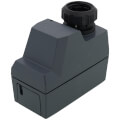
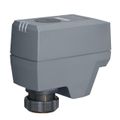
SSB Valve Actuators


 --%3E %3Csvg version='1.1' id='No-RB' xmlns='http://www.w3.org/2000/svg' xmlns:xlink='http://www.w3.org/1999/xlink' x='0px' y='0px' viewBox='0 0 100 100' enable-background='new 0 0 100 100' xml:space='preserve'%3E %3Cpath fill='%23CECECE' d='M79.44,0.95H20.56C9.78,0.95,0.95,9.78,0.95,20.56v58.87c0,10.79,8.82,19.61,19.61,19.61h58.87 c10.79,0,19.61-8.83,19.61-19.61V20.56C99.05,9.78,90.22,0.95,79.44,0.95z M65.38,58.24l9.38,29.58L49.69,69.78L24.5,87.82 l9.34-29.6L8.8,39.6l30.73-0.17c0,0,6.98-19.61,10-28.93c0.54,1.36,9.88,29.1,9.88,29.1H91.2L65.38,58.24z'/%3E %3C/svg%3E)

SSB Valve Actuators are Siemens electronic zone valve actuators built to pair with Powermite 599 MZ Series zone valves in hydronic heating and cooling systems. The line runs on a 24 Vac, Class 2 supply and accepts either a 0 to 10 Vdc proportional signal or a floating control signal, depending on the model, giving controls contractors flexibility when matching an actuator to an existing building automation system. Non-spring return models like the SSB61U hold position without a return spring, drawing power only to move the valve stem rather than to hold it in place. Nominal force runs at 45 lb (200N) across the core SSB line, enough to drive a 7/32-inch stroke against typical hydronic system pressures. UL listing for plenum installation and manual override with visual position indication round out the feature set. Because these actuators are matched to a specific valve body and stroke length, confirming the paired zone valve model before ordering keeps the job moving without a mismatched part on the truck.
Subcategories
- Non-Spring Return Actuators: Non-spring return actuators hold their last commanded position when power is removed, relying on the control signal rather than a spring to drive the valve stem in both directions. The SSB61U uses this design with a 0 to 10 Vdc control signal, making it a common fit for proportional zone control in radiant and fan coil systems. Losing power mid-cycle leaves the valve wherever it stopped rather than snapping fully open or closed. Technicians specify this type when a system calls for modulating control rather than simple on-off staging.
- Floating Control Actuators: Floating control actuators use a three-position signal, open, closed, and hold, rather than a proportional voltage to drive the valve stem incrementally. The SSB81U runs on this floating control signal at 24V, a common match for building automation systems that already output three-position control rather than 0 to 10 Vdc. Controls contractors often pair floating actuators with existing BAS panels to avoid swapping out a controller during a valve retrofit. Floating control suits zone valves where gradual position adjustment matters more than fast open-close cycling.
- Fail-in-Place Actuators: Fail-in-place actuators stay in their current position during a power loss instead of driving to a fully open or fully closed failsafe state. The SSB161.05U is a fail-in-place, non-spring return model that runs on 0 to 10 Vdc control, suited to systems where an uncontrolled full-open or full-closed state during an outage could cause water hammer or short-cycling. Facility maintenance teams often specify fail-in-place actuators for large multi-zone systems where a predictable failure state protects the rest of the loop. Manual override lets a technician reposition the valve by hand during service without waiting on control power.
- High-Force MT Series Actuators: MT Series actuators step up nominal force for larger valve bodies that need more torque to seat properly. The SSC61U delivers 65 lb (300N) of nominal force compared to 45 lb (200N) on the standard SSB line, while keeping the same non-spring return, 0 to 10 Vdc control format. Contractors sizing actuators for larger commercial zone valves need to match the actuator's force rating to the valve manufacturer's close-off pressure requirement. Swapping in an undersized actuator on a larger valve risks incomplete close-off and constant flow through a zone that should be shut.
Buying Guide
Selecting a zone valve actuator starts with the control signal already running to the valve location. A building automation system outputting a 0 to 10 Vdc proportional signal calls for a non-spring return actuator like the SSB61U, while a system built around three-position, open-closed-hold logic calls for a floating control actuator like the SSB81U. Mixing signal types forces a controller swap that adds cost and time to a straightforward valve replacement.
Failure behavior comes next. SSB Valve Actuators are available in standard non-spring return and fail-in-place versions, and the choice matters most on multi-zone systems where a power outage during a full-open or full-closed failsafe event could cause pressure spikes or short-cycling elsewhere in the loop. Fail-in-place models hold their last position instead, which protects the rest of a large hydronic system during a brief outage.
Force rating matters on larger valve bodies. Standard SSB actuators deliver 45 lb (200N) of nominal force, enough for typical 1/2-inch zone valves, but larger commercial valves may need the higher 65 lb (300N) rating found on MT Series actuators like the SSC61U. Undersizing the actuator's force relative to the valve's close-off pressure requirement leaves a zone that never fully shuts.
Finally, confirming stroke length and valve compatibility against the manufacturer's pairing chart before ordering avoids a mismatched actuator that physically won't couple to the valve body already installed.
Frequently Asked Questions
What's the difference between spring return and non-spring return SSB valve actuators?
Non-spring return SSB valve actuators, like the SSB61U, use the control signal to drive the valve stem in both directions and hold position without a mechanical spring. The design lets the actuator sit anywhere in its stroke range rather than snapping to a fixed failsafe position when power drops. Confirming which return type a system needs depends on whether the application requires a predictable open or closed state on power loss.
What control signal do SSB valve actuators use?
SSB valve actuators run on a 24 Vac, Class 2 supply and accept either a 0 to 10 Vdc proportional signal or a three-position floating control signal, depending on the specific model. The SSB61U and SSB161.05U use 0 to 10 Vdc control, while the SSB81U uses floating control at 24V. Matching the actuator's signal type to the building automation system already installed avoids a separate controller purchase.
How much force do SSB valve actuators produce?
Standard SSB valve actuators produce 45 lb (200N) of nominal force, enough to drive a 7/32-inch valve stem stroke against typical hydronic system pressures. Larger commercial applications sometimes call for the MT Series SSC61U instead, which delivers 65 lb (300N) of nominal force for bigger valve bodies. Checking the valve manufacturer's close-off pressure rating against the actuator's force output prevents a zone valve that never fully seats.
What happens to a fail-in-place SSB valve actuator during a power outage?
Fail-in-place SSB valve actuators, such as the SSB161.05U, hold their current position instead of driving to a full-open or full-closed state when power drops. Holding position protects large multi-zone hydronic systems from pressure spikes or short-cycling that a sudden failsafe move could trigger. Manual override remains available on these models for technicians who need to reposition the valve by hand during service.
Are SSB valve actuators rated for plenum installation?
SSB valve actuators carry UL listing for plenum installation, meaning they meet fire and smoke safety standards for mounting in air handling spaces without a separate enclosure. Manual override and visual position indication come standard across the line, letting technicians confirm actuator position without powering up the control system. Checking local mechanical code for plenum-rated equipment requirements is still worth doing before a commercial installation.
