




Filters
SORT
Product Availability –
Category –
Connection Size –
Connection Type –
Voltage –
Review Score –
 --%3E %3Csvg version='1.1' id='Fill' xmlns='http://www.w3.org/2000/svg' xmlns:xlink='http://www.w3.org/1999/xlink' x='0px' y='0px' viewBox='0 0 100 100' enable-background='new 0 0 100 100' xml:space='preserve'%3E %3Cpath fill='%23F15C02' d='M79.44,0.95H20.56C9.78,0.95,0.95,9.78,0.95,20.56v58.87c0,10.79,8.82,19.61,19.61,19.61h58.87 c10.79,0,19.61-8.83,19.61-19.61V20.56C99.05,9.78,90.22,0.95,79.44,0.95z M65.38,58.24l9.38,29.58L49.69,69.78L24.5,87.82 l9.34-29.6L8.8,39.6l30.73-0.17c0,0,6.98-19.61,10-28.93c0.54,1.36,9.88,29.1,9.88,29.1H91.2L65.38,58.24z'/%3E %3C/svg%3E)
 --%3E %3Csvg version='1.1' id='With-RB' xmlns='http://www.w3.org/2000/svg' xmlns:xlink='http://www.w3.org/1999/xlink' x='0px' y='0px' viewBox='0 0 100 100' enable-background='new 0 0 100 100' xml:space='preserve'%3E %3Cpath fill='%23FBC8B4' d='M79.44,0.95H20.56C9.78,0.95,0.95,9.78,0.95,20.56v58.87c0,10.79,8.82,19.61,19.61,19.61h58.87 c10.79,0,19.61-8.83,19.61-19.61V20.56C99.05,9.78,90.22,0.95,79.44,0.95z M65.38,58.24l9.38,29.58L49.69,69.78L24.5,87.82 l9.34-29.6L8.8,39.6l30.73-0.17c0,0,6.98-19.61,10-28.93c0.54,1.36,9.88,29.1,9.88,29.1H91.2L65.38,58.24z'/%3E %3C/svg%3E)
Price Range –
Refrigeration & Industrial Solenoid Valves


 --%3E %3Csvg version='1.1' id='No-RB' xmlns='http://www.w3.org/2000/svg' xmlns:xlink='http://www.w3.org/1999/xlink' x='0px' y='0px' viewBox='0 0 100 100' enable-background='new 0 0 100 100' xml:space='preserve'%3E %3Cpath fill='%23CECECE' d='M79.44,0.95H20.56C9.78,0.95,0.95,9.78,0.95,20.56v58.87c0,10.79,8.82,19.61,19.61,19.61h58.87 c10.79,0,19.61-8.83,19.61-19.61V20.56C99.05,9.78,90.22,0.95,79.44,0.95z M65.38,58.24l9.38,29.58L49.69,69.78L24.5,87.82 l9.34-29.6L8.8,39.6l30.73-0.17c0,0,6.98-19.61,10-28.93c0.54,1.36,9.88,29.1,9.88,29.1H91.2L65.38,58.24z'/%3E %3C/svg%3E)



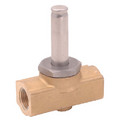
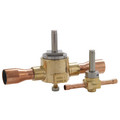


Refrigeration and industrial solenoid valves are electrically operated valves that open or close fluid or refrigerant flow using a coil-driven plunger, giving a control system fast, repeatable on and off switching without a manually operated valve. When the coil is energized, it lifts or lowers the plunger to open the flow path, and de-energizing the coil returns the plunger to its normal position, which is either closed or open depending on the valve's design. These valves show up throughout refrigeration racks, chillers, and industrial process lines wherever a thermostat, pressure switch, or controller needs to start or stop flow automatically. A solenoid valve is typically paired with a matching coil sold separately, since the same valve body can often accept different coil voltages depending on the control circuit it's wired into. Technicians troubleshoot no-flow or stuck-open complaints by checking coil resistance and confirming voltage at the coil before assuming the valve body itself has failed.
Subcategories
- Solenoid Valve Bodies: Valve bodies are the mechanical portion of the assembly, containing the plunger, seat, and ports that control flow once a coil is installed and energized. They're specified by port size, pressure rating, and whether they're normally open or normally closed in their de-energized state. A valve body is typically sold without a coil, so the correct coil voltage still needs to be selected separately to complete the assembly. Matching the body's material and seal compatibility to the refrigerant or fluid in the system is critical to avoid premature seal failure.
- Replacement Coils: Coils are the electromagnetic component that lifts the plunger inside a compatible valve body when energized. They're specified by voltage, frequency, and physical mounting style to match the valve body they're paired with. A coil is one of the more common failure points in a solenoid valve assembly, often showing symptoms like a valve that hums but doesn't open or one that draws no current at all. Replacing just the coil is usually far less expensive and disruptive than replacing the entire valve body when only the coil has failed.
- Normally Closed Valves: Normally closed valves stay shut when the coil is de-energized and open only when power is applied, making them the standard choice for most refrigeration and process applications where flow should stop by default if power is lost. This fail-safe behavior is important on refrigerant lines and other systems where uncontrolled flow during a power interruption could cause damage. Selecting a normally closed valve for a new application is the safer default unless the process specifically requires the opposite behavior.
- Normally Open Valves: Normally open valves stay open when de-energized and close only when the coil is powered, which suits applications where flow needs to continue by default during a power loss. These are less common than normally closed valves but are specified deliberately in processes where stopping flow, rather than allowing it, would create a hazard or damage equipment. Confirming which failure mode a given application actually requires before ordering avoids installing a valve that behaves opposite to what the system needs during an outage.
Buying Guide
Start with the fluid or refrigerant type moving through the valve, since seal and body materials need to be compatible with it to avoid premature failure. A valve rated for one refrigerant family isn't automatically suitable for another.
Confirm the required failure mode before selecting normally open or normally closed. Most refrigeration and process applications default to normally closed so flow stops automatically if power is interrupted, but some processes specifically need flow to continue during an outage.
Size the valve's port and orifice to the system's flow requirements and available pressure differential, since an undersized valve restricts flow more than intended and an oversized one can be harder to control precisely.
When selecting refrigeration and industrial solenoid valves as a replacement, match the coil voltage and mounting style to the control circuit already in place rather than assuming a universal fit, since coils vary by voltage, frequency, and physical connection type.
Finally, stock replacement coils separately from valve bodies for common models already in the field, since a coil failure is one of the more frequent service calls and swapping just the coil is faster and less costly than replacing the entire assembly.
Frequently Asked Questions
What's the difference between a normally open and normally closed solenoid valve?
A normally closed valve stays shut until the coil is energized, while a normally open valve stays open until the coil is energized. The choice depends on how the system should behave if power is lost.
Can a solenoid coil be replaced without replacing the valve body?
Yes, in most cases the coil and valve body are separate components, and a failed coil can be swapped out on its own as long as the replacement coil matches the required voltage and mounting style.
Why would a solenoid valve hum but not open?
A humming valve that doesn't open often points to a weak or partially failed coil, low supply voltage, or debris obstructing the plunger. Checking coil resistance and voltage at the coil helps narrow down the cause.
How is a solenoid valve sized for an application?
Sizing depends on the required flow rate, the available pressure differential across the valve, and the port size needed to avoid excessive restriction. Undersizing the valve limits flow more than the system needs.
Does the refrigerant type affect which solenoid valve to use?
Yes, seal and body materials need to be compatible with the specific refrigerant or fluid passing through the valve. Using a valve rated for a different fluid family can cause the seals to degrade prematurely.
