




Filters
SORT
Product Availability –
Size –
Connection Type –
Flow Capacity (Cv) –
Review Score –
 --%3E %3Csvg version='1.1' id='Fill' xmlns='http://www.w3.org/2000/svg' xmlns:xlink='http://www.w3.org/1999/xlink' x='0px' y='0px' viewBox='0 0 100 100' enable-background='new 0 0 100 100' xml:space='preserve'%3E %3Cpath fill='%23F15C02' d='M79.44,0.95H20.56C9.78,0.95,0.95,9.78,0.95,20.56v58.87c0,10.79,8.82,19.61,19.61,19.61h58.87 c10.79,0,19.61-8.83,19.61-19.61V20.56C99.05,9.78,90.22,0.95,79.44,0.95z M65.38,58.24l9.38,29.58L49.69,69.78L24.5,87.82 l9.34-29.6L8.8,39.6l30.73-0.17c0,0,6.98-19.61,10-28.93c0.54,1.36,9.88,29.1,9.88,29.1H91.2L65.38,58.24z'/%3E %3C/svg%3E)
Price Range –
Taco Balancing Valves


 --%3E %3Csvg version='1.1' id='No-RB' xmlns='http://www.w3.org/2000/svg' xmlns:xlink='http://www.w3.org/1999/xlink' x='0px' y='0px' viewBox='0 0 100 100' enable-background='new 0 0 100 100' xml:space='preserve'%3E %3Cpath fill='%23CECECE' d='M79.44,0.95H20.56C9.78,0.95,0.95,9.78,0.95,20.56v58.87c0,10.79,8.82,19.61,19.61,19.61h58.87 c10.79,0,19.61-8.83,19.61-19.61V20.56C99.05,9.78,90.22,0.95,79.44,0.95z M65.38,58.24l9.38,29.58L49.69,69.78L24.5,87.82 l9.34-29.6L8.8,39.6l30.73-0.17c0,0,6.98-19.61,10-28.93c0.54,1.36,9.88,29.1,9.88,29.1H91.2L65.38,58.24z'/%3E %3C/svg%3E)


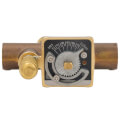

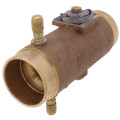




Taco balancing valves are manual flow-control devices installed in hydronic heating and cooling systems to regulate how much water flows through each branch or zone of piping. Mechanical contractors use them to correct flow imbalances that can leave some radiators, coils, or zones starved of hot or chilled water while others run with too much flow. The valve sits inline on the piping and includes a calibrated setting that lets a technician dial in a specific flow rate rather than just opening or closing the line. Balancing typically happens once during system commissioning, using a flow meter or differential pressure reading to set each valve to its target value, though a valve can be readjusted later if the system changes. Properly balanced piping keeps every zone in a hydronic system performing as designed instead of relying on trial and error to even out temperatures.
Subcategories
- Circuit Setter Balancing Valves: Circuit setter style balancing valves include a calibrated dial and pressure/temperature ports that let a technician measure flow directly at the valve using a meter. Contractors use these where precise, verifiable flow readings matter, such as commercial hydronic systems with multiple zones feeding off a common loop. The built-in ports remove the need for separate test fittings elsewhere in the piping. Recording each valve's setting during commissioning makes future service calls faster.
- Union-End Balancing Valves: Union-end balancing valves use union fittings on either side of the valve body, letting a technician remove the valve for service or replacement without cutting into the surrounding pipe. This style speeds up retrofit work on existing systems where the piping layout is already fixed. Techs favor union-end valves on tighter mechanical room installations where working space around the valve is limited. The union connections also simplify swapping a damaged valve during a service call.
- Threaded and Sweat Connection Valves: Threaded connection valves install into pipe using standard NPT threads, common on smaller residential and light commercial hydronic branches. Sweat, or solder, connection valves join directly to copper piping for a permanent joint, often preferred on new construction where the piping is being assembled from scratch. Choosing between the two depends mostly on the existing piping material and whether the installation is new work or a retrofit. Matching the connection type to the piping on hand avoids needing extra adapters.
Buying Guide
Selecting a balancing valve starts with confirming the pipe size and connection type needed for the installation, whether that's threaded, sweat, or union-end, since retrofitting the wrong connection style onto existing piping adds unnecessary labor. Flow capacity matters next: the valve needs to handle the maximum flow rate expected through that branch without creating excessive pressure drop, so undersizing a valve can choke flow even when it's set wide open. Contractors working on systems that require documented, verifiable balancing should look for models with built-in pressure and temperature test ports, since these let a technician confirm actual flow with a meter rather than relying on the dial setting alone. Systems without that requirement can often use a simpler valve without the extra ports, saving some cost on smaller jobs. Material compatibility with the system fluid matters too, particularly on systems using glycol or other additives, since not every valve body material handles those fluids equally well over time. Access for future adjustment should factor into placement during installation, since a balancing valve buried behind other piping or equipment becomes difficult to readjust later. Keeping a record of each valve's calibrated setting after initial commissioning saves significant time on any future service call or troubleshooting visit, since a technician can quickly confirm whether a valve has drifted from its original setting.
Frequently Asked Questions
What does a balancing valve actually do in a hydronic system?
A balancing valve regulates the flow rate through a specific branch or zone of piping, letting a technician correct imbalances where some areas of the system receive too much or too little water flow. This keeps radiators, coils, or zones performing evenly rather than relying on chance. The valve is set once during commissioning and generally left alone unless the system changes.
How is a Taco balancing valve set correctly?
Technicians typically use a flow meter or differential pressure reading at the valve's test ports, if equipped, to dial in the calibrated setting that achieves the target flow rate for that branch. Systems without test ports rely on other measurement methods to estimate the correct setting. Recording the final setting after commissioning helps with future service.
Can a balancing valve also act as a shutoff valve?
Many balancing valves can be closed fully to isolate a branch for service, in addition to their flow-regulating function. That said, some models are designed primarily for flow control and are not intended for repeated full closure. Checking the specific valve's rated use before relying on it as a shutoff avoids premature wear.
Why do some balancing valves include pressure and temperature ports?
Built-in ports let a technician connect a meter directly at the valve to measure actual flow, giving a verifiable reading instead of relying solely on the calibrated dial position. This matters most on commercial systems where documented balancing is part of the commissioning process. Residential systems sometimes use simpler valves without these ports.
How often do balancing valves need to be readjusted?
In most systems, a balancing valve is set once during commissioning and left alone unless the piping system changes, such as adding or removing a zone. Significant changes to the system's overall flow or pressure can shift the balance and call for readjustment. Periodic verification during routine maintenance can catch a setting that has drifted.
