



TeSys GS Disconnects


 --%3E %3Csvg version='1.1' id='No-RB' xmlns='http://www.w3.org/2000/svg' xmlns:xlink='http://www.w3.org/1999/xlink' x='0px' y='0px' viewBox='0 0 100 100' enable-background='new 0 0 100 100' xml:space='preserve'%3E %3Cpath fill='%23CECECE' d='M79.44,0.95H20.56C9.78,0.95,0.95,9.78,0.95,20.56v58.87c0,10.79,8.82,19.61,19.61,19.61h58.87 c10.79,0,19.61-8.83,19.61-19.61V20.56C99.05,9.78,90.22,0.95,79.44,0.95z M65.38,58.24l9.38,29.58L49.69,69.78L24.5,87.82 l9.34-29.6L8.8,39.6l30.73-0.17c0,0,6.98-19.61,10-28.93c0.54,1.36,9.88,29.1,9.88,29.1H91.2L65.38,58.24z'/%3E %3C/svg%3E)



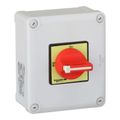


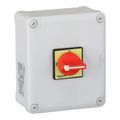


TeSys GS Disconnects are Schneider Electric fusible disconnect switches that pair an operating handle with fuse protection for three phase equipment circuits. Schneider Electric lists the GS1DU3 as a 600 V, 30 A, three pole switch for Type J fuse links, and the GS1DDU3 as a 600 V, 30 A, three pole switch for Type CC fuses. Schneider Electric lists short circuit performance as high as 100 kA for both models. Each has an external operating handle that is lockable with door interlock capability. For larger loads, the GS2TU3 is listed as a three pole, 800 A model. A disconnect sits between the power source and the load, so the amp rating, fuse type and handle style define what the switch can do on a given job. Matching those details to the equipment nameplate and local code avoids rework.
Subcategories
- Type J Fuse Models: Type J fuse models take Class J fuse links and serve electricians and HVAC installers who need a lockable fused disconnect at the equipment. The GS1DU3 is listed at 600 V, 30 A and three pole, and Schneider Electric lists it for Class J fuse links only. Its operating handle is lockable with door interlock capability. Short circuit performance is listed as high as 100 kA.
- Type CC Fuse Models: Type CC fuse models are the 30 A option for installers who standardize on Type CC fuses. The GS1DDU3 is listed at 600 V, 30 A and three pole. Schneider Electric lists short circuit performance as high as 100 kA for it. The external handle is lockable with door interlock capability.
- High-Amperage Models: High-amperage models serve larger loads on commercial and industrial equipment. The GS2TU3 is listed as a three pole, 800 A switch disconnector fuse in the TeSys GS line. Schneider Electric lists short circuit performance as high as 100 kA for it. Confirm fuse type and fault current with the project engineer before ordering.
Buying Guide
Start with the amp rating. Match the disconnect to the equipment nameplate and the fuse size the circuit calls for. Do not oversize the switch beyond what the circuit needs. Schneider Electric lists TeSys GS models from 30 A, such as the GS1DU3 and GS1DDU3, to 800 A, such as the GS2TU3.
Next, pick the fuse type. The GS1DU3 is listed for Type J fuse links only, and the GS1DDU3 is listed for Type CC fuses. Confirm which fuse class the project specifies before ordering, since the switch and fuse have to match.
Check voltage and short circuit capability. Both 30 A models are listed at 600 V, and Schneider Electric lists short circuit performance as high as 100 kA for the GS1DU3, GS1DDU3 and GS2TU3. Compare those figures with the system voltage and fault current at the equipment.
When shopping TeSys GS Disconnects, look at handle and interlock needs. The models named here have an external operating handle that is lockable with door interlock capability, which matters for lockout on service calls. Confirm the enclosure and mounting plan with the project drawings.
Finally, read the manufacturer datasheet for each model before ordering. Schneider Electric lists product datasheets, instruction sheets and CAD documentation for the GS2TU3. Dimensions, terminals and certifications belong on the pre-order checklist.
Frequently Asked Questions
What amp ratings do TeSys GS disconnects come in?
Schneider Electric lists TeSys GS disconnects including the GS1DU3 and GS1DDU3 at 30 A and the GS2TU3 at 800 A. Check the product page for the amp rating on each model before ordering.
Which fuse type does the TeSys GS GS1DU3 take?
The TeSys GS GS1DU3 is listed as a Type J fuse model and is designed for Class J fuse links only. The GS1DDU3 is the 30 A Type CC option in the TeSys GS line. Match the fuse class to the project spec.
What short circuit rating do TeSys GS disconnects have?
Schneider Electric lists short circuit performance as high as 100 kA for the GS1DU3, GS1DDU3 and GS2TU3 TeSys GS disconnects. Compare that figure with the fault current at the equipment.
Can TeSys GS disconnects be locked out?
TeSys GS disconnects such as the GS1DU3, GS1DDU3 and GS2TU3 have an external operating handle that Schneider Electric lists as lockable with door interlock capability. Confirm the lockout method against the site's procedures.
How many poles do TeSys GS disconnects have?
The TeSys GS models GS1DU3, GS1DDU3 and GS2TU3 are all listed as three pole. The 30 A models are listed at 600 V.
