




Filters
SORT
Product Availability –
Review Score –
 --%3E %3Csvg version='1.1' id='Fill' xmlns='http://www.w3.org/2000/svg' xmlns:xlink='http://www.w3.org/1999/xlink' x='0px' y='0px' viewBox='0 0 100 100' enable-background='new 0 0 100 100' xml:space='preserve'%3E %3Cpath fill='%23F15C02' d='M79.44,0.95H20.56C9.78,0.95,0.95,9.78,0.95,20.56v58.87c0,10.79,8.82,19.61,19.61,19.61h58.87 c10.79,0,19.61-8.83,19.61-19.61V20.56C99.05,9.78,90.22,0.95,79.44,0.95z M65.38,58.24l9.38,29.58L49.69,69.78L24.5,87.82 l9.34-29.6L8.8,39.6l30.73-0.17c0,0,6.98-19.61,10-28.93c0.54,1.36,9.88,29.1,9.88,29.1H91.2L65.38,58.24z'/%3E %3C/svg%3E)
 --%3E %3Csvg version='1.1' id='With-RB' xmlns='http://www.w3.org/2000/svg' xmlns:xlink='http://www.w3.org/1999/xlink' x='0px' y='0px' viewBox='0 0 100 100' enable-background='new 0 0 100 100' xml:space='preserve'%3E %3Cpath fill='%23FBC8B4' d='M79.44,0.95H20.56C9.78,0.95,0.95,9.78,0.95,20.56v58.87c0,10.79,8.82,19.61,19.61,19.61h58.87 c10.79,0,19.61-8.83,19.61-19.61V20.56C99.05,9.78,90.22,0.95,79.44,0.95z M65.38,58.24l9.38,29.58L49.69,69.78L24.5,87.82 l9.34-29.6L8.8,39.6l30.73-0.17c0,0,6.98-19.61,10-28.93c0.54,1.36,9.88,29.1,9.88,29.1H91.2L65.38,58.24z'/%3E %3C/svg%3E)
Price Range –
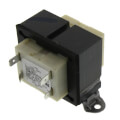
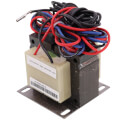
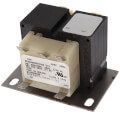
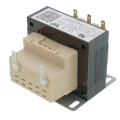
Trane Transformers




 --%3E %3Csvg version='1.1' id='No-RB' xmlns='http://www.w3.org/2000/svg' xmlns:xlink='http://www.w3.org/1999/xlink' x='0px' y='0px' viewBox='0 0 100 100' enable-background='new 0 0 100 100' xml:space='preserve'%3E %3Cpath fill='%23CECECE' d='M79.44,0.95H20.56C9.78,0.95,0.95,9.78,0.95,20.56v58.87c0,10.79,8.82,19.61,19.61,19.61h58.87 c10.79,0,19.61-8.83,19.61-19.61V20.56C99.05,9.78,90.22,0.95,79.44,0.95z M65.38,58.24l9.38,29.58L49.69,69.78L24.5,87.82 l9.34-29.6L8.8,39.6l30.73-0.17c0,0,6.98-19.61,10-28.93c0.54,1.36,9.88,29.1,9.88,29.1H91.2L65.38,58.24z'/%3E %3C/svg%3E)
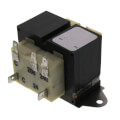

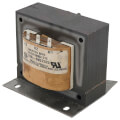

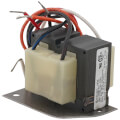
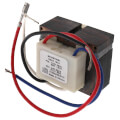

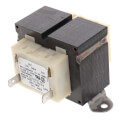
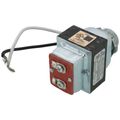

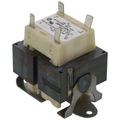
Trane transformers are components that step down incoming line voltage to the lower control voltage that powers thermostats, relays, gas valves, and other low-voltage controls inside a furnace, air handler, or rooftop unit. A failed transformer often shows up as a system with no power at the thermostat even though line voltage reaches the unit, since every low-voltage control circuit routes through it. Trane specifies UL listed Class 2 power transformers sized to provide adequate power to the unit's controller along with connected relays and valve actuators, so undersizing a replacement risks nuisance faults or intermittent operation. Some equipment, like Trane's larger Odyssey air handlers, ships with a transformer already installed, while other air handlers in the same lineup need a separate transformer kit added during installation. Techs stock replacement transformers because a burned-out unit is one of the more common electrical failures on a service call, and matching voltage and rating to the original keeps the repair straightforward.
Subcategories
- Furnace Replacement Transformers: Furnace transformers regulate incoming line voltage down to the control voltage that runs the furnace's low-voltage circuit, including the thermostat, gas valve, and ignition control. Furnace techs replace this component when a unit loses all low-voltage function even though line power still reaches the cabinet, since a failed transformer cuts power to every downstream control at once. Buzzing at the transformer or a loose transformer mounting bracket is a common early symptom before full failure. Matching the replacement to the furnace's original voltage input and output keeps the rest of the control circuit working as designed.
- Air Handler Transformer Kits: Air handler transformer kits add a transformer to units that don't ship with one built in. Trane's larger Odyssey air handlers include a factory-installed transformer, but other air handlers in the same lineup need a separate kit installed during setup to power thermostat and control wiring. Installers add the kit when the air handler pairs with equipment or accessories that draw additional low-voltage power beyond what a bare air handler circuit provides. Skipping the kit on a unit that requires one leaves the control circuit without power.
- Class 2 Control Transformers: Class 2 power transformers carry a UL listing that limits output voltage and current to levels considered safe for low-voltage wiring without conduit. Trane sizes these transformers to supply adequate power to a unit's controller along with every relay and valve actuator wired into the same low-voltage circuit. Adding accessories, like additional relays or a humidistat, to an existing system can push total load past what the installed transformer supports. Confirming total connected load against the transformer's rating before adding accessories prevents an overloaded transformer from failing prematurely.
Buying Guide
Diagnosing a transformer problem starts at the thermostat. No power at the thermostat display with normal line voltage reaching the equipment points to the transformer as the first thing to check, since the entire low-voltage circuit depends on it. Confirming primary voltage matches the unit's actual supply, whether that's 120V or 208/230V, comes before ordering a replacement, since Trane offers transformers built for different primary voltage inputs. Trane Transformers also vary by rating, and total connected load, meaning the controller plus every relay, valve actuator, and accessory wired into the same circuit, needs to stay under that rating or the transformer runs the risk of overheating and failing early. Adding accessories to an existing system, such as a humidistat, additional relay, or zoning control, is a common reason an otherwise healthy transformer starts failing, since the original transformer was sized for the equipment's original control load, not the added components. Mounting style matters for the physical swap: some transformers foot-mount to the cabinet while others plate-mount, and matching that detail avoids extra bracket work during the swap. Certain larger air handlers ship with a transformer already installed, while other models in the same lineup need a separate transformer kit, so confirming which category a specific air handler falls into before the job prevents an extra trip for a missing part.
Frequently Asked Questions
What are the signs of a failing furnace transformer?
No power at the thermostat despite normal line voltage reaching the furnace is the clearest sign of a failed transformer, since the entire low-voltage circuit runs through it. Buzzing noise coming from the transformer itself or a loose mounting bracket often shows up before a full failure. Intermittent operation that comes and goes with vibration or temperature can also point to a transformer on its way out.
Do all Trane air handlers come with a transformer installed?
Larger Odyssey air handlers ship with a transformer already built in, but other air handlers in the same lineup need a separate transformer kit added during installation. Checking the specific model's documentation before the job confirms which category it falls into. Installing an air handler that needs a kit without adding one leaves the low-voltage control circuit without power.
Why does a new transformer keep failing after adding a humidistat or extra relay?
Every relay, valve actuator, and accessory wired into the low-voltage circuit draws power from the same transformer, and the original transformer was sized for the equipment's original control load. Adding a humidistat, extra relay, or zoning control after the fact can push total load past the transformer's rating. Checking total connected load against the transformer's rating before adding accessories catches this before the new transformer fails too.
What's the difference between a foot-mount and plate-mount transformer?
Foot-mount transformers bolt to a flat surface using mounting feet on the transformer body, while plate-mount transformers attach through a separate mounting plate. Matching the mounting style to the original transformer avoids extra bracket fabrication during a swap. Both styles perform the same electrical function, so the choice comes down to the physical mounting space inside the cabinet.
What does a Class 2 rating on a transformer mean?
Class 2 is a UL listing that limits the transformer's output voltage and current to levels considered safe for low-voltage wiring without the conduit protection required on line-voltage circuits. Trane specifies Class 2 transformers sized to power the unit's controller along with every connected relay and valve actuator. Confirming a replacement carries the same Class 2 listing keeps the installation code compliant.
