




'/%3E%3C/svg%3E)
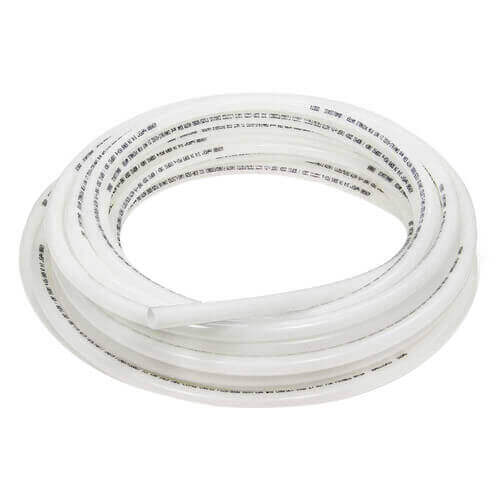
2-1/2" hePEX - (100 ft. coil)
 --%3E %3Csvg version='1.1' id='Fill' xmlns='http://www.w3.org/2000/svg' xmlns:xlink='http://www.w3.org/1999/xlink' x='0px' y='0px' viewBox='0 0 100 100' enable-background='new 0 0 100 100' xml:space='preserve'%3E %3Cpath fill='%23F15C02' d='M79.44,0.95H20.56C9.78,0.95,0.95,9.78,0.95,20.56v58.87c0,10.79,8.82,19.61,19.61,19.61h58.87 c10.79,0,19.61-8.83,19.61-19.61V20.56C99.05,9.78,90.22,0.95,79.44,0.95z M65.38,58.24l9.38,29.58L49.69,69.78L24.5,87.82 l9.34-29.6L8.8,39.6l30.73-0.17c0,0,6.98-19.61,10-28.93c0.54,1.36,9.88,29.1,9.88,29.1H91.2L65.38,58.24z'/%3E %3C/svg%3E)
' fill='%23F15C02' d='M49 0C21.938 0 0 21.938 0 49s21.938 49 49 49 49-21.938 49-49S76.062 0 49 0m0 82.709a7.54 7.54 0 1 1 0-15.08 7.54 7.54 0 0 1 0 15.08m7.54-28.412a7.541 7.541 0 0 1-15.08 0V22.831a7.54 7.54 0 0 1 15.08 0v31.466z'/%3E%3C/svg%3E)
MANUALS (6)
Product Highlights


Description
Uponor (Wirsbo) hePEX is compatible with both Uponor’s (Wirsbo) ProPEX fitting connections and QS-style fittings.
Uponor (Wirsbo) hePEX is manufactured to ASTM F876 and F877, and is designed for closed-loop hydronic heating applications. Uponor (Wirsbo) hePEX tubing is rated and listed by the Hydrostatic Stress Board of PPI at: 200 degrees F at 80 psi, 180 degrees F at 100 psi and 73.4 degrees F at 160 psi.
Note 1: 5/16" hePEX tubing is used for the Uponor (Wirsbo) Quik Trak system.
Note: Uponor (Wirsbo) hePEX tubing, traditionally used in radiant heating applications, became certified to NSF/ANSI Standard 61 for potable water in December 2012. Please read the Approvals document located in the Manuals tab for more information.
What are the Uponor PEX Standards?
Uponor PEX and associated fittings are manufactured to the following standards:
- ASTM F876 "Standard Specification for Cross-linked Polyethylene (PEX) Tubing"
- ASTM F877 "Standard Specification for Cross-linked Polyethylene (PEX) Plastic Hot and Cold Water Distribution Systems"
- ASTM F1960 "Standard Specifications for Cold Expansion Fittings with PEX Reinforcing Rings for use with Cross-linked Polyethylene (PEX) Tubing"
- ASTM F2080 "Standard Specifications for Cold Expansion Fittings with Metal Compression Sleeves for Cross-linked Polyethylene (PEX) Tubing"
- CSA B137.5 Thermoplastic Pressure Piping Compendium
- CSA
- ICC
- ITS
- PPI
- UL
- NSF-rfh
- NSF/ANSI Standard 61 for potable water
- IMC
- UMC
- IRC
- NBC of Canada
In the United States:
- Tested in accordance with ASTM E119/UL 263
- G573 - Two-hour Hambro floor/ceiling assembly
- K913 - Two-hour concrete floor/ceiling assembly
- L557 - One-hour wood frame floor/ceiling assembly
- U372 - One-hour wood frame wall assembly
- V444 - One-hour steel stud wall assembly
- Tested in accordance with CAN/ULC S101
- G573 - Two-hour Hambro floor/ceiling assembly
- UW/WA 60-01 - One-hour steel stud wall assembly
- UW/WA 60-02 - One-hour wood frame wall assembly
- WC/FCA 60-01 - One-hour wood frame floor/ceiling assembly
- WC/FCA 120-01 - Two-hour concrete floor/ceiling assembly
- WC/FCA 120-02 - Two-hour concrete floor/ceiling assembly
Specs
| Length (Feet): | 100' |
|---|---|
| Fitting System Compatibility: | Clamp PEX Compression PEX Press Push Fit Expansion PEX Crimp |
| Size: | 2-1/2" |
| Shape: | Coil |
| Tubing Type: | Oxygen Barrier |
| Material: | PEX |
| Color: | White |
| Warranty: | 25 Year |
| Application: | Heating |
| Max Pressure (PSI): | 160 |
| Grade: | PEX-a |
| Standards Met: | NSF DIN4726 |
| Max Temp (F): | 200°F |
| Type: | Tubing |


Questions?

Product Reviews
Most Liked Positive Review
Great to work with
Most Liked Negative Review
 --%3E %3Csvg version='1.1' id='With-RB' xmlns='http://www.w3.org/2000/svg' xmlns:xlink='http://www.w3.org/1999/xlink' x='0px' y='0px' viewBox='0 0 100 100' enable-background='new 0 0 100 100' xml:space='preserve'%3E %3Cpath fill='%23FBC8B4' d='M79.44,0.95H20.56C9.78,0.95,0.95,9.78,0.95,20.56v58.87c0,10.79,8.82,19.61,19.61,19.61h58.87 c10.79,0,19.61-8.83,19.61-19.61V20.56C99.05,9.78,90.22,0.95,79.44,0.95z M65.38,58.24l9.38,29.58L49.69,69.78L24.5,87.82 l9.34-29.6L8.8,39.6l30.73-0.17c0,0,6.98-19.61,10-28.93c0.54,1.36,9.88,29.1,9.88,29.1H91.2L65.38,58.24z'/%3E %3C/svg%3E)
I had no other choice
Always top quality tubing

Excellent place
Uponor HePe ... Great Priduct!
I would buy the item again
I would buy again
I would by Uponor HePEX before any other brand.
I have bought this item multiple times and would buy again
I have bought this item multiple times and would buy again
I would buy this product again
Yes
Product Q&A
57 QuestionsQ: I need to replace my water supply from main meter to house. What pex tubing would I use to put under ground as a supply line?
Asked by Carolyn 13 years ago
Add your answer
Small house (1 full bath) need 1/2 Aqapex tubing, average house need 3/4 Aquapex tubing, modern two levels house with 3 + bathrooms need 1" Aquapex tubing, modern house with 3,4,5 bath plus sprinkler system need 1 1/4" Aquapex tubing. Hepex can not be used for potable, only for closed boiler systems. If Your house need longer then 100' line You can use larger tubing size. You can use black polyethylene tubing with 160 PSI pressure rating to save money. Thanks
From a web search: "Pex is okay for direct burial, but most people sleeve it in some CPVC for ease of maintenance if the need ever arises. If not sleeved, it needs to be buried in soft dirt or sand, no rocks in direct contact/etc. Where are you located? 36" is fine in parts of the US, but in the north the frost line in many areas is 48" and so water lines are typically buried about 6' down. You could very well be in an area with 36", just not sure" My personal preference is 160 psi polyethelene black pipe, which is rated for direct burial. Pete Henderson
Q: can i use standard viega pex press fittings on wirsbo hepex
Asked by tom 14 years ago
Add your answer
Verified Reply- PexSupply StaffYes, you can.
There's nothing stopping you from physically doing so, but if it were me I wouldn't. I would bet that using anything but propex fittings would invalidate your warranty. Also, I don't know if the outer diameter of the two are the same - since the fittings for HePex go inside the Pex, the O.D. could very well be different from that of the Viega Pex. I would personally stick with one vendor for both the fittings and Pex.
I have and have had no trouble with them
Q: What is UV exposure time frame for this product?
Asked by toolie 14 years ago
Add your answer
Verified Reply- PexSupply StaffPEX starts to break down after 30-60 days of exposure to sunlight, but we would recommend keeping exposure as minimal as possible.
It seems 30 days is the stated maximum exposure to UV before the Uponor warrantee is invalidated. Check out the following link - it is basically the same question asked on the Uponor website - answered by a "PEX expert". https://www.uponorpro.com/Extranet%20Home/ProTalk/Forum/ShowPost.aspx?PostID=238 Obviously, less exposure is better and none is best, but figure on some exposure during delivery, etc. Don't leave it outisde uncovered for any length of time. Chris
Roughly 30 days...after this time it tends to begin the breakdown process
This product is not designed for UV exposure. Protect from exposure to sunlight! Sent from my iPhone
a few weeks, but not long term Sent from my iPad
Q: Is this product recommended for use with a wood burning stove?
Asked by Stacy 14 years ago
Add your answer
It is hard to answer that question. How will you use it? The tube just moves hot water. How hot is the water? Industry Ratings, Standards, Listings and Codes met by ASTM Large Dimension Wirsbo hePEX™ plus Tubing Hydrostatic Temperature and Pressure Ratings: PPI TR4 200ºF/93.3ºC at 80 psi 180ºF/82.2ºC at 100 psi Source http://www.uponor.ca/~/media/Files/Technical%20Documents/Commercial%20Related%20Docs/ASTMLDhePEX_LS_H082_3%2008US.aspx?sc_lang=en Good luck, Scott
Stacy, You must figure out a way to regulate the temperature of the heat if you are going to use this tubing in conjunction with a wood burning stove. The tubing has a max heat rating which means it will melt if the water gets up to a specific temperature. Look at the product data sheets for the HePex.
I have a wood-burning stove (ThermoControl wood boiler) and I have installed a radiant system with some Wirsbo hePEX for pats of it. it really does not matter the brand of heating PEX you use as long as it is rated for hot water. That being said I don't think it is recommended for connection directly to the wood boiler. I would say that because the metal parts of a wood stove or boiler can get hotter than the temp of the water (which is regulated by the aquastat.) Also, there are several key devices which must be mounted on the pipes coming in and out of the boiler... low water cut-offs, air-vents (big, heavy ones), valves, not to mention pumps with flanges (heavy) - obviously you could anchor the heaviest ones to a wall but that is a lot of anchoring to do. When PEX gets hot it gets pretty soft and will not support weight. I have black steel pipe running in and out of the boiler to the pumps, vents, several valves, and right up to a hand-made manifold where the temp has been lowered by a mixing valve - then I run larger diameter PEX to the remote Rifeng manifolds. The remote manifolds then have several runs of 1/2" PEX going under the floors. Does that answer your question?
No Sent from my iPhone
Q: pouring a concrete garage floor that will be 6 inch's thick and area of 720 sq ft.It can be one or two zones, what size hePEX would be should i use?
Asked by matt 14 years ago
Add your answer
Verified Reply- PexSupply StaffWe would recommend 1/2" PEX.
1/2 pex is fine do not exceed 225' loops Sent from my iPhone
I would use 1/2 inch. only one zone, no tubing runs longer than 250 FT. Keep loops around same length. Insulate under slab. Probably four loops at about 200 ft should do it Eric EZ Does IT!~
1/2" is a good a choice. The length should be no longer than 300 feet per loop. You may want to have 2 300 footers to do the job right. You will need a circulator pump for each. I would say set the tubing in about 3 inches, so nails or screws do not hit it later. You must do an air pressure test first before you pour any concrete, I would fill it with air, let it sit overnight to ensure it can handle sustained pressure. Things you need to make sure of when doing the radiant in a slab: You should have a minimum of 2 inches of blue foam insulation, 4 is better. Do not use Poly Iso or pink foam, those will compress and deteriorate over time. There are some great underpayments for pushing the heat back up as opposed to down, grace and insultarp are two I know of. It is also advisable to get a spreading sweep that will ensure all tubing comes out of the ground evenly spaced and straight, makes for a neater installation and finish.
Whoa! These questions are alarming, and it might be best to hire a professional to engineer the thickness of the slab, the amount of insulation under your slab and in your building, the size of your tubing, and lastly, your BTU requirements for your boiler. It would be a disaster if you went through all the installation work and found that your system doesn't perform. To answer, yes one zone; but multiple loops would be required depending on the size of pex being used. Sent from my iPhone
The concern is going to be the amount of pex piping you lay. The thicker the pex tubing the less you need to lay. This is due to the higher volume of water that thicker pex carries with it. Conversely, the thinner the pex tubing the more tubing you'll have to lay more pex. I'd do some serious research on this one. Contractor forums, you tube. I'd also put more in then you think, as it is difficult to change once you lay concrete over it.
One zone, at least two loops. The rule of thumb is 1 foot of pex per sq ft. A garage that should be fine with two loops of 300' on a single zone.
By size, do you mean tube length or diameter? Diameter is not so important. 1/2" is a convenient diameter for longer loops - 300 ft. For length, determine the spacing you want. Tighter spacing (~6-8") will give more even heat, but it'll use more pipe. Wider spacing (~12") will save pipe but you'll have noticeable cold spots if you walk in socks. If you're using the garage as a garage, you'll never notice the cold spots because you'll wear shoes all the time. If you're converting the garage to something else, then a tighter spacing might be better. For a 12" spacing, you'll need 720 ft of pipe. Split this into 2 or 3 loops to keep loop length low. Everything will be one zone. I don't see why you'd ever want two zones for a garage because you won't want to have independent controls for different parts of the garage. Remember to buy underslab insulation as well to make the heating efficient. Finally, have a look at the forums at heatinghelp.com. The pros on there were very helpful when I was planning my DIY job. Jana
My basement was about 700 sq feet, it took about 800 feet of pex with 4 inches of cement; each pex tube was spaced 12 inches apart. They only recommend that you use a max of 300 feet of pex per zone. I notice that I have warm and cold spots on the floor. I would recommend using ½ pex, and space them a little closer together since your floor is thicker. Maybe 8-10 inches apart, its just plastic tubing and not expensive. You would need at least 3 zones, but may want to consider making it 4 zones. Adding the extra zone will allow for faster heating of the cement… because it takes forever. Also you will need to size your circulator pump based on the total length of pex you’re using. I’m currently using a Taco cartridge circulator and it doesn’t have enough head pressure to flow the water through the pipes. This may not be the answer you want to hear, but the last thing you want to do is pour cement and not have enough pex to heat your garage.
You have to layout the # of zones limited by the length of tubing for a given tube diameter. Joe
Q: Staff answered a question on 9/12/11 stating that "Using PEX in solar systems is not recommended." Could you explain why? Thanks.
Asked by Bob 15 years ago
Add your answer
Possibly an additive in system could affect pex tubing Sent from my iPhone
sun light damages pex
If not correctly installed, the temps in a solar hot water system will easily exceed the max temps of pex. Pretty simple.
PEX should normally not be used in solar hot water systems, as the temperature and pressure in these systems can and will exceed specifications of PEX tubing. This is especially true in a closed loop system (using a heat exchanger). Solar thermal systems can and will reach stagnation if the tank is fully heated - the pump stops and the temperature of the fluid inside the collectors can get very high (>50 psi) and the temperature can exceed 325 F. This is beyond limits of PEX tubing. In unpressurized systems where stagnation is not possible, PEX can be used. Sunnovations is the only supplier of a certified solar hot water system using PEX tubing.
You should not use this product for solar installations. It has no resistance to UV light, and will actually breakdown if exposed to direct UV for too long. It is only suitable and recommended for radiant heating applications.
Q: What fittings do I use with the 5/16 tube? I cant seem to find anything on your website?
Asked by 15 years ago
Add your answer
Verified Reply- PexSupply StaffFittings for 5/16" are limited, as the size is almost exclusively used with Uponor's QuikTrak panels. A4020313 fittings can be used with the Uponor TruFLOW manifolds. A repair coupling, part A4010313, is also available.
Q: I live in an apartment.My refrigerator is opposite my sink so I needed at least 30ft to go up and over the doorway and down to connect to the fridge. I bought 1/4 inch tubing from Home Depot to install, A little over one year later the tubing leaked at a bend point, Can I or should I replace it with the 5/16 tube.
Asked by howardk 15 years ago
Add your answer
Verified Reply- PexSupply StaffWe would not recommend using this tubing. It is oxygen barrier PEX designed for use in heating systems. It does not meet the code approvals for plumbing systems. Additionally, the 5/16" size is designed for use with Uponor's QuikTrak radiant heating panels. Finding fittings in that size would be next to impossible.
Q: An air handler in my attic was connected with Wirsbo 3/4 pex 1n 2005, but I'm not sure it is the correct type. How do I identify the pex to determine if it has oxygen barrier? I don't see any markings on it.
Asked by Joe 15 years ago
Add your answer
Verified Reply- PexSupply StaffThere should be some sort of text on the tubing itself with these indications. If it says "barrier," "EVOH," "oxy," or something to that effect, then it has an oxygen barrier. If the tubing says nothing, there would be no way to tell (as the oxygen barrier is invisible to the naked eye).
Q: I am adding two baseboard radiators to my existing 3/4" copper single loop system. This will be in the same loop. Is hePEX plus the best pex to use for this and can I use sharkbite fittings and copper crimp rings with this product? Or should I use an aluminum oxygen barrier product?
Asked by mike 15 years ago
Add your answer
Verified Reply- PexSupply StaffYou will need to use PEX with an oxygen barrier. PEX-AL-PEX could work. It would stay more rigid if it's hanging anywhere, but only works with compression or press fittings. hePEX works with SharkBite and crimp/clamp fittings (in addition to ProPEX).
You can use a sharkbite fitting for this product.