




Filters
SORT
Product Availability –
Product Type –
Size –
Material –
Used With –
Review Score –
 --%3E %3Csvg version='1.1' id='Fill' xmlns='http://www.w3.org/2000/svg' xmlns:xlink='http://www.w3.org/1999/xlink' x='0px' y='0px' viewBox='0 0 100 100' enable-background='new 0 0 100 100' xml:space='preserve'%3E %3Cpath fill='%23F15C02' d='M79.44,0.95H20.56C9.78,0.95,0.95,9.78,0.95,20.56v58.87c0,10.79,8.82,19.61,19.61,19.61h58.87 c10.79,0,19.61-8.83,19.61-19.61V20.56C99.05,9.78,90.22,0.95,79.44,0.95z M65.38,58.24l9.38,29.58L49.69,69.78L24.5,87.82 l9.34-29.6L8.8,39.6l30.73-0.17c0,0,6.98-19.61,10-28.93c0.54,1.36,9.88,29.1,9.88,29.1H91.2L65.38,58.24z'/%3E %3C/svg%3E)
 --%3E %3Csvg version='1.1' id='With-RB' xmlns='http://www.w3.org/2000/svg' xmlns:xlink='http://www.w3.org/1999/xlink' x='0px' y='0px' viewBox='0 0 100 100' enable-background='new 0 0 100 100' xml:space='preserve'%3E %3Cpath fill='%23FBC8B4' d='M79.44,0.95H20.56C9.78,0.95,0.95,9.78,0.95,20.56v58.87c0,10.79,8.82,19.61,19.61,19.61h58.87 c10.79,0,19.61-8.83,19.61-19.61V20.56C99.05,9.78,90.22,0.95,79.44,0.95z M65.38,58.24l9.38,29.58L49.69,69.78L24.5,87.82 l9.34-29.6L8.8,39.6l30.73-0.17c0,0,6.98-19.61,10-28.93c0.54,1.36,9.88,29.1,9.88,29.1H91.2L65.38,58.24z'/%3E %3C/svg%3E)
Price Range –
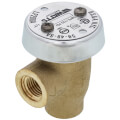
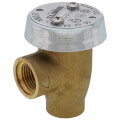
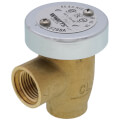
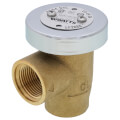
Watts 288A Anti-Siphon Vacuum Breakers


 --%3E %3Csvg version='1.1' id='No-RB' xmlns='http://www.w3.org/2000/svg' xmlns:xlink='http://www.w3.org/1999/xlink' x='0px' y='0px' viewBox='0 0 100 100' enable-background='new 0 0 100 100' xml:space='preserve'%3E %3Cpath fill='%23CECECE' d='M79.44,0.95H20.56C9.78,0.95,0.95,9.78,0.95,20.56v58.87c0,10.79,8.82,19.61,19.61,19.61h58.87 c10.79,0,19.61-8.83,19.61-19.61V20.56C99.05,9.78,90.22,0.95,79.44,0.95z M65.38,58.24l9.38,29.58L49.69,69.78L24.5,87.82 l9.34-29.6L8.8,39.6l30.73-0.17c0,0,6.98-19.61,10-28.93c0.54,1.36,9.88,29.1,9.88,29.1H91.2L65.38,58.24z'/%3E %3C/svg%3E)
 --%3E %3Csvg version='1.1' id='Half' xmlns='http://www.w3.org/2000/svg' xmlns:xlink='http://www.w3.org/1999/xlink' x='0px' y='0px' viewBox='0 0 100 100' enable-background='new 0 0 100 100' xml:space='preserve'%3E %3Cg%3E %3Cpath fill='%23F15C02' d='M30.05,70.23l3.79-12.01L8.8,39.6l30.73-0.17c0,0,6.98-19.61,10-28.93c0.54,1.36,9.88,29.1,9.88,29.1h1.58 L93.71,7.18c-3.58-3.82-8.66-6.23-14.28-6.23H20.56C9.78,0.95,0.95,9.78,0.95,20.56v58.87c0,5.41,2.22,10.32,5.79,13.88 L30.05,70.23z'/%3E %3C/g%3E %3Cpath fill='%23FBC8B4' d='M93.71,7.18L60.98,39.6H91.2L65.38,58.24l9.38,29.58L49.69,69.78L24.5,87.82l5.55-17.59L6.75,93.32 c3.55,3.54,8.44,5.73,13.82,5.73h58.87c10.79,0,19.61-8.83,19.61-19.61V20.56C99.05,15.4,97.01,10.69,93.71,7.18z'/%3E %3C/svg%3E)
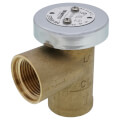
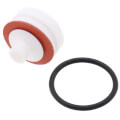
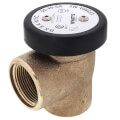
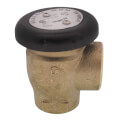
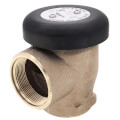
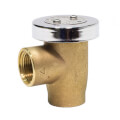
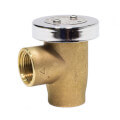
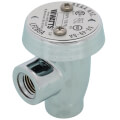
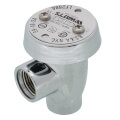
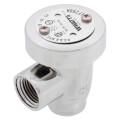
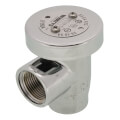
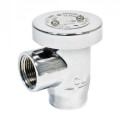


Watts 288A Anti-Siphon Vacuum Breakers are backflow prevention devices that stop contaminated water from being siphoned back into a potable water supply line when pressure drops or reverses. The 288A design mounts on hose bibs, sillcocks, and similar outdoor or utility fixtures where a hose could otherwise sit submerged in standing water, creating a backflow risk if system pressure falls. When water flow stops, an internal poppet in the device opens to admit air and break any siphoning action, which keeps water in an attached hose from being drawn backward into the building's plumbing. Plumbers install these devices on new hose bib connections and add them during retrofits in jurisdictions where local plumbing code requires anti-siphon protection on any threaded outdoor connection point.
Subcategories
- Standard Anti-Siphon Vacuum Breakers: Standard units thread directly onto a hose bib or sillcock outlet and provide basic anti-siphon protection for typical residential and light commercial outdoor faucets. These are the most commonly specified version for a straightforward hose connection point. Installation generally requires no special tools beyond a wrench to hand-tighten the fitting onto the existing spout threads.
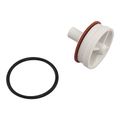
- Repair and Rebuild Kits: Repair kits include the internal poppet, spring, and seal components that wear out from repeated freeze-thaw cycling or mineral buildup over years of outdoor exposure. Replacing these internal parts restores proper anti-siphon function without removing the entire device from the fixture. This is typically the lower-cost fix when a unit is leaking or failing to seal but the outer housing is still intact.
- Freeze-Resistant Variants: Freeze-resistant variants are built to better tolerate the repeated expansion and contraction that comes with seasonal outdoor exposure in cold climates. Standard units left in place through hard freezes are more prone to cracking or losing their seal over time. Contractors working in northern climates often default to these variants for any exposed outdoor installation.
Buying Guide
Selecting a Watts 288A Anti-Siphon Vacuum Breaker starts with confirming the thread size on the existing hose bib or sillcock spout, since the device needs to match the fixture's outlet threading to seal properly. Most residential applications use a standard garden hose thread connection, but utility and commercial fixtures can vary.
Local plumbing code often dictates where anti-siphon devices are required, and many jurisdictions mandate them on any hose bib connection as a baseline backflow prevention measure. Checking the applicable code before a rough-in or retrofit avoids a failed inspection later, particularly on new construction where every exterior connection point gets reviewed.
Climate exposure matters for long-term reliability. A device left connected and exposed through winter freeze cycles in a cold climate benefits from a freeze-resistant design, while units in milder climates or ones that get disconnected and stored during winter can use a standard configuration without added cost.
Technicians servicing existing installations should also keep repair kits on hand, since a failed or leaking anti-siphon device is frequently a worn internal poppet or seal rather than a cracked housing. Rebuilding the internal components is usually faster and less expensive than replacing the entire fitting.
Frequently Asked Questions
What does an anti-siphon vacuum breaker actually prevent?
It prevents contaminated water, such as water sitting in a garden hose or connected to a chemical sprayer, from being siphoned backward into the potable water supply when system pressure drops or reverses. The device admits air to break the siphon effect whenever water flow through the fixture stops.
Is a Watts 288A required by code on every outdoor hose bib?
Requirements vary by jurisdiction, but many local plumbing codes require anti-siphon protection on any threaded outdoor connection point where a hose could be attached. Checking the applicable code before installation or a retrofit is the best way to confirm the requirement for a specific project.
Why is my anti-siphon vacuum breaker leaking or dripping?
A leaking device is often the result of a worn internal poppet or seal rather than a failure of the outer housing, particularly after repeated freeze-thaw cycling or years of outdoor exposure. A repair kit that replaces the internal components typically resolves the leak without needing to replace the entire fitting.
Can these vacuum breakers be left on outdoor faucets year-round in cold climates?
Standard units left connected through hard freezes are more prone to cracking, so contractors working in colder climates often specify a freeze-resistant variant or recommend removing the device seasonally. Checking manufacturer guidance for the specific model helps determine whether year-round outdoor exposure is appropriate.
Do these devices need any regular maintenance once installed?
They require little routine maintenance beyond periodic visual checks for leaks or cracking, since the internal poppet mechanism is designed to operate automatically. If a unit does start leaking or fails to seal, a rebuild kit typically restores function without full replacement.
