




Watts Valves
Watts valves cover backflow prevention, pressure control, and check valve products used across residential, commercial, and irrigation plumbing systems. The lineup spans everything from vacuum breakers protecting a hose bibb to reduced pressure zone assemblies protecting an entire potable water supply from contamination.
Plumbers and inspectors specify Watts valves because the product line covers the full range of backflow prevention devices required by most local plumbing codes, from simple dual checks to testable assemblies. Matching the correct valve type to the hazard level of a given connection point keeps an installation code compliant and ready for inspection.


Subcategories
- Backflow Prevention Test Kits: Test kits give licensed testers the gauges and fittings needed to verify a backflow assembly is functioning correctly during required annual inspections. They connect to the test cocks on reduced pressure zone and double check assemblies to measure pressure differentials. Keeping a calibrated kit on hand is necessary for any contractor performing certified backflow testing.
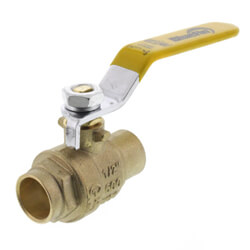
- Ball Valves: Ball valves provide full-flow shutoff with a quarter turn handle, making them a common isolation valve throughout plumbing and mechanical systems. Contractors use them ahead of fixtures, equipment, and backflow assemblies where a reliable, low-maintenance shutoff point is needed. Their simple design makes them easy to operate even after long periods without use.
- Boiler Drains: Boiler drains are hose bibb style valves installed on boilers and hydronic systems to allow draining and filling during service. Technicians use them when flushing a system, adding inhibitor, or performing seasonal maintenance. Their compact threaded connection fits directly into standard boiler and piping ports.
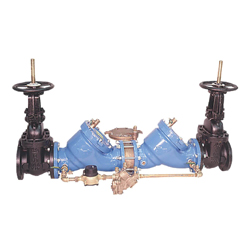
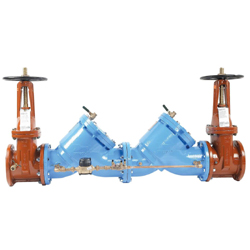
- Double Check Detector Assemblies: Double check detector assemblies combine a standard double check valve with a bypass meter that detects unauthorized water use, commonly required on fire protection systems. They protect the potable water supply from backflow while flagging any water drawn through the fire line outside of an actual fire event. Fire protection contractors specify them where local code requires detection alongside backflow prevention.
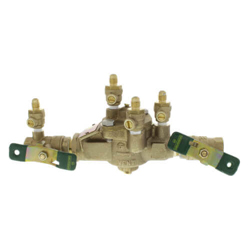
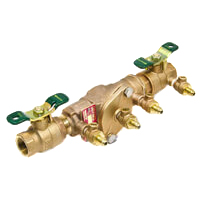
- Double Check Valve Assemblies: Double check valve assemblies use two independently acting check valves to prevent backflow into the potable water supply, typically for low to moderate hazard connections. They are common on irrigation systems and commercial fire lines where code allows this level of protection. Testable versions include shutoff valves and test cocks for annual inspection.
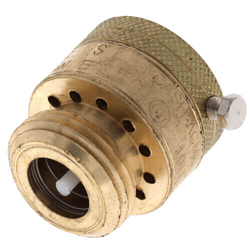
- Dual Checks: Dual check valves offer basic backflow protection for low hazard residential connections such as hose bibbs and irrigation systems. They are typically non-testable, simpler devices compared to full double check assemblies. Many jurisdictions require at minimum a dual check on residential water services to prevent contamination from garden hoses and similar connections.
Buying Guide
Matching the valve to the hazard level of the connection point is the starting point for any backflow prevention purchase. Low hazard connections like hose bibbs typically call for a dual check or vacuum breaker, while high hazard connections such as chemical feed systems or fire lines with additives require a reduced pressure zone assembly.
Local plumbing code and the water authority serving a property often dictate the exact device required at a given connection, so confirming code requirements before ordering avoids installing a device that will fail inspection. Many jurisdictions publish a list of approved backflow devices by hazard classification.
Testable versus non-testable devices matters for ongoing compliance. Reduced pressure zone assemblies and double check assemblies include test cocks and shutoff valves that allow certified testers to verify function annually, while simpler dual checks and vacuum breakers are generally not designed for field testing.
Ball valves used for isolation around backflow assemblies should match the pipe size and pressure rating of the system they serve. Undersized isolation valves can restrict flow and cause pressure drop complaints, especially on larger commercial installations.
Fire protection systems often require a double check detector assembly rather than a standard double check valve, since the detector component identifies unauthorized water draws on the fire line. Confirming this requirement with the local fire marshal or water authority before ordering prevents a failed inspection.
Frequently Asked Questions
What is the difference between a dual check and a double check valve assembly?
A dual check is a simpler, typically non-testable device meant for low hazard residential connections, while a double check valve assembly includes shutoff valves and test cocks for annual testing and is used on higher hazard commercial or irrigation connections.
When is a reduced pressure zone assembly required?
A reduced pressure zone assembly is generally required at high hazard connections where contamination of the potable water supply would pose a serious health risk, such as chemical feed systems. Local code and the water authority determine the exact threshold.
What is a double check detector assembly used for?
A double check detector assembly is installed on fire protection systems to prevent backflow into the potable water supply while also detecting any unauthorized water use drawn through the fire line. It is commonly required by local fire code on larger commercial buildings.
Do backflow prevention devices need to be tested regularly?
Testable assemblies such as reduced pressure zone and double check valve assemblies typically require annual testing by a certified tester to confirm they are functioning correctly. Simpler devices like dual checks are usually not designed for field testing.
What is a boiler drain valve used for?
A boiler drain is a small hose bibb style valve installed on a boiler or hydronic system to allow technicians to drain or fill the system during maintenance. It provides a threaded connection point for a hose during flushing or inhibitor addition.
Resources
Subcategories
- Backflow Prevention Test Kits: Test kits give licensed testers the gauges and fittings needed to verify a backflow assembly is functioning correctly during required annual inspections. They connect to the test cocks on reduced pressure zone and double check assemblies to measure pressure differentials. Keeping a calibrated kit on hand is necessary for any contractor performing certified backflow testing.
- Ball Valves: Ball valves provide full-flow shutoff with a quarter turn handle, making them a common isolation valve throughout plumbing and mechanical systems. Contractors use them ahead of fixtures, equipment, and backflow assemblies where a reliable, low-maintenance shutoff point is needed. Their simple design makes them easy to operate even after long periods without use.
- Boiler Drains: Boiler drains are hose bibb style valves installed on boilers and hydronic systems to allow draining and filling during service. Technicians use them when flushing a system, adding inhibitor, or performing seasonal maintenance. Their compact threaded connection fits directly into standard boiler and piping ports.
- Double Check Detector Assemblies: Double check detector assemblies combine a standard double check valve with a bypass meter that detects unauthorized water use, commonly required on fire protection systems. They protect the potable water supply from backflow while flagging any water drawn through the fire line outside of an actual fire event. Fire protection contractors specify them where local code requires detection alongside backflow prevention.
- Double Check Valve Assemblies: Double check valve assemblies use two independently acting check valves to prevent backflow into the potable water supply, typically for low to moderate hazard connections. They are common on irrigation systems and commercial fire lines where code allows this level of protection. Testable versions include shutoff valves and test cocks for annual inspection.
- Dual Checks: Dual check valves offer basic backflow protection for low hazard residential connections such as hose bibbs and irrigation systems. They are typically non-testable, simpler devices compared to full double check assemblies. Many jurisdictions require at minimum a dual check on residential water services to prevent contamination from garden hoses and similar connections.
Buying Guide
Matching the valve to the hazard level of the connection point is the starting point for any backflow prevention purchase. Low hazard connections like hose bibbs typically call for a dual check or vacuum breaker, while high hazard connections such as chemical feed systems or fire lines with additives require a reduced pressure zone assembly.
Local plumbing code and the water authority serving a property often dictate the exact device required at a given connection, so confirming code requirements before ordering avoids installing a device that will fail inspection. Many jurisdictions publish a list of approved backflow devices by hazard classification.
Testable versus non-testable devices matters for ongoing compliance. Reduced pressure zone assemblies and double check assemblies include test cocks and shutoff valves that allow certified testers to verify function annually, while simpler dual checks and vacuum breakers are generally not designed for field testing.
Ball valves used for isolation around backflow assemblies should match the pipe size and pressure rating of the system they serve. Undersized isolation valves can restrict flow and cause pressure drop complaints, especially on larger commercial installations.
Fire protection systems often require a double check detector assembly rather than a standard double check valve, since the detector component identifies unauthorized water draws on the fire line. Confirming this requirement with the local fire marshal or water authority before ordering prevents a failed inspection.
Frequently Asked Questions
What is the difference between a dual check and a double check valve assembly?
A dual check is a simpler, typically non-testable device meant for low hazard residential connections, while a double check valve assembly includes shutoff valves and test cocks for annual testing and is used on higher hazard commercial or irrigation connections.
When is a reduced pressure zone assembly required?
A reduced pressure zone assembly is generally required at high hazard connections where contamination of the potable water supply would pose a serious health risk, such as chemical feed systems. Local code and the water authority determine the exact threshold.
What is a double check detector assembly used for?
A double check detector assembly is installed on fire protection systems to prevent backflow into the potable water supply while also detecting any unauthorized water use drawn through the fire line. It is commonly required by local fire code on larger commercial buildings.
Do backflow prevention devices need to be tested regularly?
Testable assemblies such as reduced pressure zone and double check valve assemblies typically require annual testing by a certified tester to confirm they are functioning correctly. Simpler devices like dual checks are usually not designed for field testing.
What is a boiler drain valve used for?
A boiler drain is a small hose bibb style valve installed on a boiler or hydronic system to allow technicians to drain or fill the system during maintenance. It provides a threaded connection point for a hose during flushing or inhibitor addition.