



Z-Flex Venting
Z-Flex venting covers flexible venting systems used to exhaust combustion gases from gas and oil-fired appliances, including chimney liners for relining existing masonry chimneys and flexible connectors sized separately for gas and oil applications.
Gas and oil venting materials are not interchangeable, since each fuel type produces different combustion byproducts that require specific liner and connector materials rated for that application. Stainless steel rigid liner systems suit chimneys serving oil or solid-fuel appliances where flexibility is not as important as long-term corrosion resistance.




Subcategories
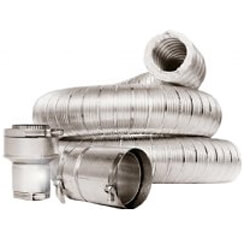
- Chimney Liners: Chimney sweeps and heating contractors use these to reline masonry chimneys serving wood, pellet, oil, gas, or propane appliances. The stainless steel liners run from 3 to 10 inches in diameter and carry a cULus listing to the 2100 degree F creosote burnout test, with fusion-welded seams backed by a lifetime warranty.
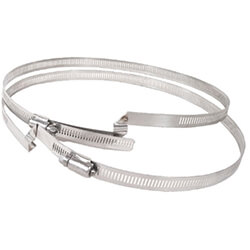
- Clamps: Installers use clamps to join liner sections, connectors, and pipe fittings into a secure, code-compliant run. They keep fusion-welded liner segments and connector joints from separating under vibration or the thermal expansion that comes with repeated heating cycles.
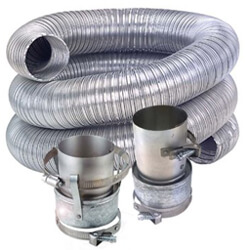
- Flexible Vent Connectors - Gas: Furnace, boiler, and water heater installers use these to link a gas-fired appliance's flue outlet to a chimney or vent stack, taking up the offset and clearance issues that come with retrofitting equipment into an existing mechanical room.
- Flexible Vent Connectors - Oil: Oil heat technicians use these to connect an oil-fired furnace or boiler to a masonry chimney, built to hold up to the higher flue gas temperatures that come with oil combustion compared to gas appliances.
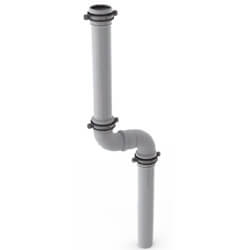
- Special Gas Vent Pipe & Fittings: Crews venting Category I through IV gas appliances use these pipe sections and fittings when a job calls for rigid gas vent components rather than a flexible connector, particularly in tight mechanical rooms or longer straight runs.
- Stainless Steel Rigid Liner System: Contractors relining chimneys serving oil or solid-fuel appliances use the rigid liner system on straight vertical runs, where a solid stainless section holds up better over time than a flexible liner.
Buying Guide
Fuel type is the first decision point. Wood, pellet, and oil appliances produce more corrosive byproducts than natural gas or propane, so a chimney reline serving a solid-fuel or oil appliance calls for a full stainless steel liner rather than a lighter-duty aluminum option.
Liner diameter needs to match the appliance's flue outlet and BTU input, not just the existing chimney flue size. An oversized liner slows draft and can lead to condensation problems, while an undersized liner restricts airflow and can back draft combustion gases into the living space.
Masonry chimneys being relined for gas or oil appliances typically need an insulation blanket wrapped around the liner to meet code and improve draft performance, particularly on exterior chimneys exposed to outdoor temperatures. Local code and the appliance manufacturer's venting instructions determine whether insulation is required or simply recommended.
Connector length and the number of clamps or joints affect both installation time and long-term reliability. Shorter, more direct connector runs with fewer joints hold up better than long runs with multiple offsets, so mapping the path from appliance to chimney before ordering parts avoids buying more clamps and connector sections than the job needs.
Listing and code compliance close out the decision. Parts carrying a cULus listing for the specific fuel type and appliance category give the installation a paper trail for inspection, and checking with the local authority having jurisdiction before finalizing a liner diameter or connector type avoids a failed inspection after the work is done.
Frequently Asked Questions
What size chimney liner is needed for a wood-burning insert?
Liner diameter should match the wood insert manufacturer's specified flue collar size rather than the existing masonry flue dimension. Z-Flex stainless steel liners are available from 3 to 10 inches in diameter, covering most residential insert and stove installations.
What's the difference between a flexible liner and the rigid liner system?
Flexible liners bend through chimney offsets and are easier to fish through an existing masonry flue, while the rigid liner system uses solid stainless sections best suited to straight vertical runs. Rigid sections hold up well over time on chimneys with no bends to navigate.
When does a chimney liner need an insulation blanket?
Many gas and oil chimney relines call for an insulation blanket around the liner to meet code and keep flue gases warm enough to maintain proper draft, especially on exterior chimneys. Local code and the appliance's installation manual determine whether it's required for a given job.
Can the same flexible connector be used for both gas and oil appliances?
No. Gas and oil connectors are rated differently because oil combustion produces higher flue gas temperatures, so an oil-rated connector is needed for an oil furnace or boiler even if a gas connector is already on hand for a similar-looking job.
How long is the warranty on Z-Flex stainless steel chimney liners?
Z-Flex stainless steel liners carry a lifetime warranty, backed by fusion-welded seams and a cULus listing to the 2100 degree F creosote burnout test.
Resources
Subcategories
- Chimney Liners: Chimney sweeps and heating contractors use these to reline masonry chimneys serving wood, pellet, oil, gas, or propane appliances. The stainless steel liners run from 3 to 10 inches in diameter and carry a cULus listing to the 2100 degree F creosote burnout test, with fusion-welded seams backed by a lifetime warranty.
- Clamps: Installers use clamps to join liner sections, connectors, and pipe fittings into a secure, code-compliant run. They keep fusion-welded liner segments and connector joints from separating under vibration or the thermal expansion that comes with repeated heating cycles.
- Flexible Vent Connectors - Gas: Furnace, boiler, and water heater installers use these to link a gas-fired appliance's flue outlet to a chimney or vent stack, taking up the offset and clearance issues that come with retrofitting equipment into an existing mechanical room.
- Flexible Vent Connectors - Oil: Oil heat technicians use these to connect an oil-fired furnace or boiler to a masonry chimney, built to hold up to the higher flue gas temperatures that come with oil combustion compared to gas appliances.
- Special Gas Vent Pipe & Fittings: Crews venting Category I through IV gas appliances use these pipe sections and fittings when a job calls for rigid gas vent components rather than a flexible connector, particularly in tight mechanical rooms or longer straight runs.
- Stainless Steel Rigid Liner System: Contractors relining chimneys serving oil or solid-fuel appliances use the rigid liner system on straight vertical runs, where a solid stainless section holds up better over time than a flexible liner.
Buying Guide
Fuel type is the first decision point. Wood, pellet, and oil appliances produce more corrosive byproducts than natural gas or propane, so a chimney reline serving a solid-fuel or oil appliance calls for a full stainless steel liner rather than a lighter-duty aluminum option.
Liner diameter needs to match the appliance's flue outlet and BTU input, not just the existing chimney flue size. An oversized liner slows draft and can lead to condensation problems, while an undersized liner restricts airflow and can back draft combustion gases into the living space.
Masonry chimneys being relined for gas or oil appliances typically need an insulation blanket wrapped around the liner to meet code and improve draft performance, particularly on exterior chimneys exposed to outdoor temperatures. Local code and the appliance manufacturer's venting instructions determine whether insulation is required or simply recommended.
Connector length and the number of clamps or joints affect both installation time and long-term reliability. Shorter, more direct connector runs with fewer joints hold up better than long runs with multiple offsets, so mapping the path from appliance to chimney before ordering parts avoids buying more clamps and connector sections than the job needs.
Listing and code compliance close out the decision. Parts carrying a cULus listing for the specific fuel type and appliance category give the installation a paper trail for inspection, and checking with the local authority having jurisdiction before finalizing a liner diameter or connector type avoids a failed inspection after the work is done.
Frequently Asked Questions
What size chimney liner is needed for a wood-burning insert?
Liner diameter should match the wood insert manufacturer's specified flue collar size rather than the existing masonry flue dimension. Z-Flex stainless steel liners are available from 3 to 10 inches in diameter, covering most residential insert and stove installations.
What's the difference between a flexible liner and the rigid liner system?
Flexible liners bend through chimney offsets and are easier to fish through an existing masonry flue, while the rigid liner system uses solid stainless sections best suited to straight vertical runs. Rigid sections hold up well over time on chimneys with no bends to navigate.
When does a chimney liner need an insulation blanket?
Many gas and oil chimney relines call for an insulation blanket around the liner to meet code and keep flue gases warm enough to maintain proper draft, especially on exterior chimneys. Local code and the appliance's installation manual determine whether it's required for a given job.
Can the same flexible connector be used for both gas and oil appliances?
No. Gas and oil connectors are rated differently because oil combustion produces higher flue gas temperatures, so an oil-rated connector is needed for an oil furnace or boiler even if a gas connector is already on hand for a similar-looking job.
How long is the warranty on Z-Flex stainless steel chimney liners?
Z-Flex stainless steel liners carry a lifetime warranty, backed by fusion-welded seams and a cULus listing to the 2100 degree F creosote burnout test.