




Filters
SORT
Product Availability –
Voltage –
Position –
Review Score –
 --%3E %3Csvg version='1.1' id='Fill' xmlns='http://www.w3.org/2000/svg' xmlns:xlink='http://www.w3.org/1999/xlink' x='0px' y='0px' viewBox='0 0 100 100' enable-background='new 0 0 100 100' xml:space='preserve'%3E %3Cpath fill='%23F15C02' d='M79.44,0.95H20.56C9.78,0.95,0.95,9.78,0.95,20.56v58.87c0,10.79,8.82,19.61,19.61,19.61h58.87 c10.79,0,19.61-8.83,19.61-19.61V20.56C99.05,9.78,90.22,0.95,79.44,0.95z M65.38,58.24l9.38,29.58L49.69,69.78L24.5,87.82 l9.34-29.6L8.8,39.6l30.73-0.17c0,0,6.98-19.61,10-28.93c0.54,1.36,9.88,29.1,9.88,29.1H91.2L65.38,58.24z'/%3E %3C/svg%3E)
 --%3E %3Csvg version='1.1' id='With-RB' xmlns='http://www.w3.org/2000/svg' xmlns:xlink='http://www.w3.org/1999/xlink' x='0px' y='0px' viewBox='0 0 100 100' enable-background='new 0 0 100 100' xml:space='preserve'%3E %3Cpath fill='%23FBC8B4' d='M79.44,0.95H20.56C9.78,0.95,0.95,9.78,0.95,20.56v58.87c0,10.79,8.82,19.61,19.61,19.61h58.87 c10.79,0,19.61-8.83,19.61-19.61V20.56C99.05,9.78,90.22,0.95,79.44,0.95z M65.38,58.24l9.38,29.58L49.69,69.78L24.5,87.82 l9.34-29.6L8.8,39.6l30.73-0.17c0,0,6.98-19.61,10-28.93c0.54,1.36,9.88,29.1,9.88,29.1H91.2L65.38,58.24z'/%3E %3C/svg%3E)
Price Range –
Zone Valve Actuators

 --%3E %3Csvg version='1.1' id='Half' xmlns='http://www.w3.org/2000/svg' xmlns:xlink='http://www.w3.org/1999/xlink' x='0px' y='0px' viewBox='0 0 100 100' enable-background='new 0 0 100 100' xml:space='preserve'%3E %3Cg%3E %3Cpath fill='%23F15C02' d='M30.05,70.23l3.79-12.01L8.8,39.6l30.73-0.17c0,0,6.98-19.61,10-28.93c0.54,1.36,9.88,29.1,9.88,29.1h1.58 L93.71,7.18c-3.58-3.82-8.66-6.23-14.28-6.23H20.56C9.78,0.95,0.95,9.78,0.95,20.56v58.87c0,5.41,2.22,10.32,5.79,13.88 L30.05,70.23z'/%3E %3C/g%3E %3Cpath fill='%23FBC8B4' d='M93.71,7.18L60.98,39.6H91.2L65.38,58.24l9.38,29.58L49.69,69.78L24.5,87.82l5.55-17.59L6.75,93.32 c3.55,3.54,8.44,5.73,13.82,5.73h58.87c10.79,0,19.61-8.83,19.61-19.61V20.56C99.05,15.4,97.01,10.69,93.71,7.18z'/%3E %3C/svg%3E)
 --%3E %3Csvg version='1.1' id='No-RB' xmlns='http://www.w3.org/2000/svg' xmlns:xlink='http://www.w3.org/1999/xlink' x='0px' y='0px' viewBox='0 0 100 100' enable-background='new 0 0 100 100' xml:space='preserve'%3E %3Cpath fill='%23CECECE' d='M79.44,0.95H20.56C9.78,0.95,0.95,9.78,0.95,20.56v58.87c0,10.79,8.82,19.61,19.61,19.61h58.87 c10.79,0,19.61-8.83,19.61-19.61V20.56C99.05,9.78,90.22,0.95,79.44,0.95z M65.38,58.24l9.38,29.58L49.69,69.78L24.5,87.82 l9.34-29.6L8.8,39.6l30.73-0.17c0,0,6.98-19.61,10-28.93c0.54,1.36,9.88,29.1,9.88,29.1H91.2L65.38,58.24z'/%3E %3C/svg%3E)
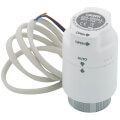


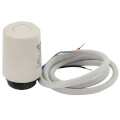
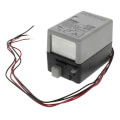
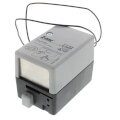
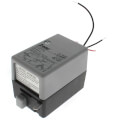
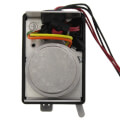
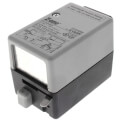
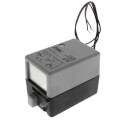
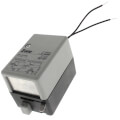
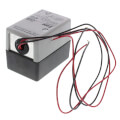
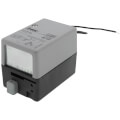

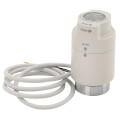
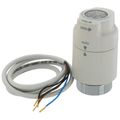
Zone Valve Actuators are the motorized or thermo-electric heads that open and close a zone valve body in response to a thermostat call, controlling water flow to an individual heating or cooling zone in a hydronic system. Actuators commonly run on 24 Vac, though some lines also support 110 or 220 Vac for direct line-voltage control without a separate transformer.
Configurations split between 2-way valves, which simply open and shut flow to a single zone, and 3-way valves, which divert or mix flow between two ports for applications like heat source protection or priority zoning. Matching the actuator's voltage, valve type, and pipe size to the existing valve body keeps a zone from running constantly or failing to call for heat at all. Getting that pairing right the first time saves a callback and keeps a multi-zone hydronic system balanced across every loop it serves.
Subcategories
- Thermo-Electric Actuators: Thermo-electric actuators use a wax or heat-motor element that expands when energized, pushing a pin against the valve stem to open or close flow. The heat-motor design makes them common on Caleffi and Honeywell zone valve lines built for residential and light commercial hydronic zoning. Response is slower than a synchronous motor, typically taking a few minutes to fully stroke, which suits baseboard and radiant zones that don't need instant switching. Many run on 24 Vac and mount directly to a matching valve body without extra linkage.
- Motorized (Synchronous Motor) Actuators: Motorized actuators use a small synchronous motor to drive the valve stem open or closed, giving a firmer, more positive seal than a thermo-electric head. Zurn's 4-wire actuator is one example built for individual zone control on manifold-style heating systems. Many motorized actuators add an end switch that signals a circulator or boiler to fire once the valve reaches full open position, coordinating equipment staging across a multi-zone system.
- Modulating Actuators: Modulating actuators accept a variable control signal, commonly 0 to 10 Vdc, rather than a simple open or closed command, letting the valve throttle flow to match partial heating or cooling loads. Siemens offers modulating zone valve actuators rated for 24V operation with Cv ratings that determine flow capacity at a given valve position. Fan coil units, VAV boxes, and other applications where zone demand varies continuously rather than cycling on and off benefit most from this modulating control.
- End-Switch Actuators: End-switch actuators add an auxiliary electrical contact that changes state once the valve reaches its fully open or fully closed position, providing a signal back to a circulator relay or boiler control panel. Caleffi's normally closed actuators with auxiliary switch and 18 inch lead wire are built for straight-through valve bodies in multi-zone panels. Wiring the end switch into a zone control panel lets a circulator or boiler fire only after a valve confirms it's actually open, avoiding dead-heading a pump against a closed zone.
Buying Guide
Start by identifying the existing valve body's connection type and manufacturer, since most actuators are matched to a specific valve body rather than sold as a universal fit. Caleffi, Honeywell, Taco, and White Rodgers each use their own stem and mounting pattern, so an actuator from one brand typically won't thread onto another brand's valve body without an adapter. Next, confirm the control voltage available at the zone panel. Most residential systems run 24 Vac, but some commercial and line-voltage setups call for 110 or 220 Vac actuators instead.
Valve configuration matters just as much as voltage. Two-way valves handle simple on-off zoning, while three-way valves divert or mix flow and suit applications like boiler protection loops or priority domestic hot water zoning. Pipe size and connection type, whether sweat, NPT, or press, need to match the existing valve body exactly since Zone Valve Actuators aren't sized independently of the body they drive.
Response speed is another factor. Thermo-electric actuators cost less and work fine for baseboard and radiant zones with no urgency, while motorized actuators with a faster stroke suit systems needing quick zone changeover. An end switch adds coordination with a circulator or boiler but only pays off if the control panel is wired to use that signal. Confirming all of these details against the existing panel before ordering prevents a mismatch on delivery.
Frequently Asked Questions
What voltage does a typical zone valve actuator run on?
Most residential zone valve actuators run on 24 Vac, matching the low-voltage transformer output already used by most hydronic zone panels. Some lines also offer 110 or 220 Vac versions for line-voltage control without adding a transformer. Checking the zone panel's output voltage before ordering an actuator prevents a mismatch that keeps the valve from firing.
What's the difference between a 2-way and a 3-way zone valve actuator?
A 2-way actuator simply opens and closes flow to a single zone, working like an on-off switch for that loop. A 3-way actuator diverts or mixes flow between two ports, a configuration used for boiler protection loops or priority zoning where two flow paths need coordination. Valve body type determines which actuator style fits, so the two aren't interchangeable.
How fast does a zone valve actuator open or close?
Thermo-electric actuators use a heat-motor element that takes a few minutes to fully stroke, which works fine for baseboard and radiant zones without urgent switching needs. Motorized actuators with a synchronous motor stroke faster and suit systems needing quicker zone changeover. Response time rarely affects comfort in a properly zoned system since setpoint changes happen gradually anyway.
What does an end switch do on a zone valve actuator?
An end switch is an auxiliary contact that changes state once the actuator reaches fully open or fully closed, sending a signal to a circulator relay or boiler control panel. Wiring that signal into the panel lets equipment fire only after a valve confirms it's open, avoiding a pump running against a closed zone. Not every control panel is wired to use an end switch signal, so confirming panel compatibility matters before choosing an actuator with one.
Do zone valve actuators need to match the valve body brand?
Actuators are generally matched to a specific valve body's stem and mounting pattern, so Caleffi, Honeywell, Taco, and White Rodgers actuators typically aren't interchangeable across brands without an adapter. Confirming the existing valve body's brand and model before ordering a replacement actuator avoids a fitment problem. Universal adapters exist for some combinations but add another point of failure to the assembly.
