




Basin Wrenches


 --%3E %3Csvg version='1.1' id='No-RB' xmlns='http://www.w3.org/2000/svg' xmlns:xlink='http://www.w3.org/1999/xlink' x='0px' y='0px' viewBox='0 0 100 100' enable-background='new 0 0 100 100' xml:space='preserve'%3E %3Cpath fill='%23CECECE' d='M79.44,0.95H20.56C9.78,0.95,0.95,9.78,0.95,20.56v58.87c0,10.79,8.82,19.61,19.61,19.61h58.87 c10.79,0,19.61-8.83,19.61-19.61V20.56C99.05,9.78,90.22,0.95,79.44,0.95z M65.38,58.24l9.38,29.58L49.69,69.78L24.5,87.82 l9.34-29.6L8.8,39.6l30.73-0.17c0,0,6.98-19.61,10-28.93c0.54,1.36,9.88,29.1,9.88,29.1H91.2L65.38,58.24z'/%3E %3C/svg%3E)

 --%3E %3Csvg version='1.1' id='Fill' xmlns='http://www.w3.org/2000/svg' xmlns:xlink='http://www.w3.org/1999/xlink' x='0px' y='0px' viewBox='0 0 100 100' enable-background='new 0 0 100 100' xml:space='preserve'%3E %3Cpath fill='%23F15C02' d='M79.44,0.95H20.56C9.78,0.95,0.95,9.78,0.95,20.56v58.87c0,10.79,8.82,19.61,19.61,19.61h58.87 c10.79,0,19.61-8.83,19.61-19.61V20.56C99.05,9.78,90.22,0.95,79.44,0.95z M65.38,58.24l9.38,29.58L49.69,69.78L24.5,87.82 l9.34-29.6L8.8,39.6l30.73-0.17c0,0,6.98-19.61,10-28.93c0.54,1.36,9.88,29.1,9.88,29.1H91.2L65.38,58.24z'/%3E %3C/svg%3E)

 --%3E %3Csvg version='1.1' id='Half' xmlns='http://www.w3.org/2000/svg' xmlns:xlink='http://www.w3.org/1999/xlink' x='0px' y='0px' viewBox='0 0 100 100' enable-background='new 0 0 100 100' xml:space='preserve'%3E %3Cg%3E %3Cpath fill='%23F15C02' d='M30.05,70.23l3.79-12.01L8.8,39.6l30.73-0.17c0,0,6.98-19.61,10-28.93c0.54,1.36,9.88,29.1,9.88,29.1h1.58 L93.71,7.18c-3.58-3.82-8.66-6.23-14.28-6.23H20.56C9.78,0.95,0.95,9.78,0.95,20.56v58.87c0,5.41,2.22,10.32,5.79,13.88 L30.05,70.23z'/%3E %3C/g%3E %3Cpath fill='%23FBC8B4' d='M93.71,7.18L60.98,39.6H91.2L65.38,58.24l9.38,29.58L49.69,69.78L24.5,87.82l5.55-17.59L6.75,93.32 c3.55,3.54,8.44,5.73,13.82,5.73h58.87c10.79,0,19.61-8.83,19.61-19.61V20.56C99.05,15.4,97.01,10.69,93.71,7.18z'/%3E %3C/svg%3E)
 --%3E %3Csvg version='1.1' id='With-RB' xmlns='http://www.w3.org/2000/svg' xmlns:xlink='http://www.w3.org/1999/xlink' x='0px' y='0px' viewBox='0 0 100 100' enable-background='new 0 0 100 100' xml:space='preserve'%3E %3Cpath fill='%23FBC8B4' d='M79.44,0.95H20.56C9.78,0.95,0.95,9.78,0.95,20.56v58.87c0,10.79,8.82,19.61,19.61,19.61h58.87 c10.79,0,19.61-8.83,19.61-19.61V20.56C99.05,9.78,90.22,0.95,79.44,0.95z M65.38,58.24l9.38,29.58L49.69,69.78L24.5,87.82 l9.34-29.6L8.8,39.6l30.73-0.17c0,0,6.98-19.61,10-28.93c0.54,1.36,9.88,29.1,9.88,29.1H91.2L65.38,58.24z'/%3E %3C/svg%3E)
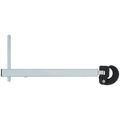
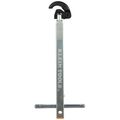
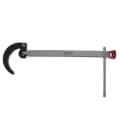
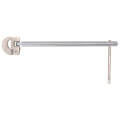

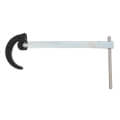
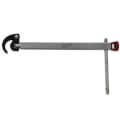
Basin Wrenches are specialty plumbing tools built to reach the mounting nuts behind a sink or lavatory faucet, a spot standard wrenches and pliers can't access. A pivoting or spring-loaded jaw head grips the nut while a long handle extends through the cabinet opening, letting the tool work in the narrow gap between the basin and the cabinet back wall. Telescoping models, like Klein Tools' 68232, extend from 10 to 17 inches and open to a jaw capacity of 1-1/4 inch, covering the range of faucet and supply line nuts found under most residential sinks. Fixed-length wrenches skip the telescoping adjustment for a simpler, lower-cost option in cabinets with consistent clearance. Choosing the right length and jaw range before a service call saves a return trip when the cabinet turns out tighter or the nut larger than expected.
Subcategories
- Telescoping Basin Wrenches: Telescoping basin wrenches extend and retract to fit different cabinet depths, with Klein Tools' 68232 model reaching from 10 to 17 inches and opening to a jaw capacity of 1-1/4 inch. A spring-action jaw clamps onto the nut and holds position without a second hand holding it in place. The handle base on the 68232 accepts 3/8 inch socket wrenches and standard screwdrivers for added leverage on a stubborn nut. Telescoping models suit techs who service a mix of cabinet depths and don't want to carry multiple fixed-length wrenches.
- Fixed-Length Basin Wrenches: Fixed-length basin wrenches keep a set handle length rather than adjusting, which trims cost and moving parts compared to a telescoping model. A fixed length works well for techs who mostly service cabinets of similar depth and don't need the adjustment range built into telescoping models. The tradeoff comes on jobs with unusually deep or shallow cabinets, where a fixed length might not reach or ends up too long to maneuver in a tight space. Jaw heads on fixed models still pivot to grip nuts at different angles.
- Multi-Function Faucet Wrenches: Multi-function faucet wrenches combine basin wrench functionality with additional jaw configurations for supply line nuts, faucet shanks, and other under-sink fasteners in a single tool. Klein Tools' 68098 packs multiple wrench functions into one handle, cutting down on the number of tools carried into a job. Service techs doing faucet installs and repairs where more than one nut size or shape needs attention on the same call get the most use from a multi-function tool like this one. The tradeoff is a bulkier head compared to a dedicated basin wrench.
Buying Guide
Picking a basin wrench starts with cabinet depth, since that determines how much reach the tool needs. Shallow vanities and open cabinets often work fine with a shorter fixed-length wrench, while deep cabinets or pedestal sinks with limited access usually call for a telescoping model that extends further without switching tools mid-job.
Jaw capacity matters just as much as length. Most basin wrenches open to accommodate nuts up to 1-1/4 inch, which covers the majority of faucet and supply line hardware on residential fixtures. Jobs involving oversized or unusual fittings should get a quick nut measurement before the tech shows up with the wrong jaw range.
Spring-action jaws speed up one-handed work in tight spots, letting the tool stay clamped on the nut while the other hand handles a flashlight or holds the faucet in place. A jaw that pivots or swivels adds the ability to approach the nut at an angle when a wall or drain pipe blocks a straight shot.
Basin Wrenches built as multi-function tools add faucet shank and supply line jaw configurations to the same handle, useful for techs doing full faucet installs rather than a single nut removal. Added versatility comes at the cost of a bulkier head, which can be harder to fit into the tightest cabinets.
Handle base features round out the comparison. A basin wrench with a socket-compatible base end adds leverage on a nut that won't break loose by hand, cutting down on time spent fighting corrosion under an older sink.
Frequently Asked Questions
What length basin wrench works for a standard bathroom vanity?
Cabinet depth determines the wrench length needed more than the sink type itself. A telescoping model, like Klein Tools' 68232, adjusts from 10 to 17 inches, covering shallow and deep cabinets with one tool instead of guessing on a fixed length. Measuring the distance from the cabinet opening to the supply nuts before buying avoids returning for a longer wrench.
What jaw capacity do I need on a basin wrench?
A jaw capacity of 1-1/4 inch covers most residential faucet and supply line nuts, which is the capacity built into common telescoping models like the Klein Tools 68232. Larger or specialty fittings occasionally need a bigger jaw range, so checking the nut size on unusual fixtures before the job prevents a wasted trip. Standard basin wrenches handle the vast majority of under-sink hardware without a jaw upgrade.
Can one basin wrench handle both faucet nuts and supply line nuts?
Multi-function basin wrenches, like Klein Tools' 68098 faucet wrench multi tool, combine several jaw configurations into one handle to cover faucet shanks and supply line nuts in a single tool. Dedicated basin wrenches focus on one nut style and keep the head slimmer for tight cabinets. Techs doing full faucet installs often prefer the multi-function option to cut down on tools carried into the job.
Why does a basin wrench have a spring-loaded jaw?
A spring-loaded jaw clamps onto the nut and holds position without needing a second hand to keep it in place, which matters when working one-handed in a cramped cabinet. The spring-action design lets a tech hold a flashlight or position the faucet with the free hand while the wrench stays locked on the nut. Not every basin wrench uses spring-action jaws, so checking that feature before buying matters for tight, awkward jobs.
What's the benefit of a socket-compatible handle base on a basin wrench?
A handle base built to accept a 3/8 inch socket wrench or standard screwdriver adds leverage when a corroded nut won't break loose by hand. Klein Tools' 68232 includes this feature, turning the basin wrench into a breaker bar without switching tools. It's most useful on older installations where mineral buildup or rust has locked the nut in place.
