



Filters
SORT
Product Availability –
Size –
Connection Type –
Body Pattern –
Review Score –
 --%3E %3Csvg version='1.1' id='Fill' xmlns='http://www.w3.org/2000/svg' xmlns:xlink='http://www.w3.org/1999/xlink' x='0px' y='0px' viewBox='0 0 100 100' enable-background='new 0 0 100 100' xml:space='preserve'%3E %3Cpath fill='%23F15C02' d='M79.44,0.95H20.56C9.78,0.95,0.95,9.78,0.95,20.56v58.87c0,10.79,8.82,19.61,19.61,19.61h58.87 c10.79,0,19.61-8.83,19.61-19.61V20.56C99.05,9.78,90.22,0.95,79.44,0.95z M65.38,58.24l9.38,29.58L49.69,69.78L24.5,87.82 l9.34-29.6L8.8,39.6l30.73-0.17c0,0,6.98-19.61,10-28.93c0.54,1.36,9.88,29.1,9.88,29.1H91.2L65.38,58.24z'/%3E %3C/svg%3E)
Price Range –
Bell & Gossett Flow Control Valves



 --%3E %3Csvg version='1.1' id='No-RB' xmlns='http://www.w3.org/2000/svg' xmlns:xlink='http://www.w3.org/1999/xlink' x='0px' y='0px' viewBox='0 0 100 100' enable-background='new 0 0 100 100' xml:space='preserve'%3E %3Cpath fill='%23CECECE' d='M79.44,0.95H20.56C9.78,0.95,0.95,9.78,0.95,20.56v58.87c0,10.79,8.82,19.61,19.61,19.61h58.87 c10.79,0,19.61-8.83,19.61-19.61V20.56C99.05,9.78,90.22,0.95,79.44,0.95z M65.38,58.24l9.38,29.58L49.69,69.78L24.5,87.82 l9.34-29.6L8.8,39.6l30.73-0.17c0,0,6.98-19.61,10-28.93c0.54,1.36,9.88,29.1,9.88,29.1H91.2L65.38,58.24z'/%3E %3C/svg%3E)
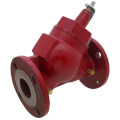
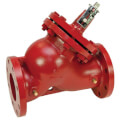
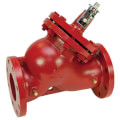
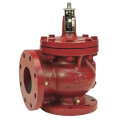
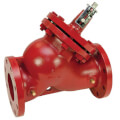
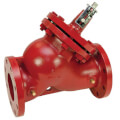
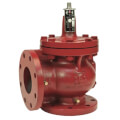
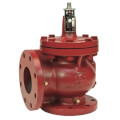
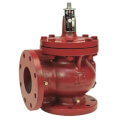
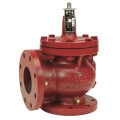
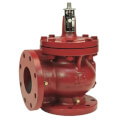
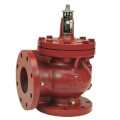
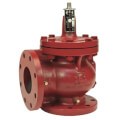


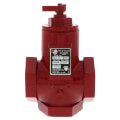
Bell & Gossett flow control valves regulate and direct water flow in hydronic heating and cooling systems, preventing gravity circulation through an idle zone while a circulator pump is actively running elsewhere in the system. In a multi-zone hydronic setup, without a flow control valve on each zone, hot water can migrate by gravity into a zone that is supposed to be off, causing uneven heating and wasted energy even when that zone's thermostat is satisfied. These valves are typically installed on the supply side of each zone circuit and open only when that zone's circulator is running, closing again once the pump shuts off. Sizing the valve to match the pipe diameter and expected flow rate of the specific zone keeps the system balanced across all connected zones.
Subcategories
- Spring-Loaded Check-Style Flow Valves: Spring-loaded flow control valves use an internal spring mechanism to hold the valve closed until pump pressure from an active zone circulator overcomes the spring tension and opens the flow path. This design prevents gravity circulation into an idle zone without requiring any separate control signal, since the valve responds directly to system pressure. These are the most common flow control valve style in residential multi-zone hydronic systems. Selecting the correct spring rating for the system's pump pressure keeps the valve opening reliably under normal operation.
- In-Line Flow Control Valves: In-line flow control valves install directly into a straight run of pipe rather than at a branch fitting, making them a common choice where space or piping layout does not accommodate a valve at a zone takeoff point. These valves perform the same basic function of blocking gravity flow to an idle zone, just in a different physical configuration suited to the piping run. Confirming pipe diameter compatibility before ordering is especially important with this style, since fitting mismatches are harder to correct after installation in a straight run. Contractors often choose this style during system layout planning rather than as a retrofit.
- Flow Control Valves with Isolation Function: Some flow control valves combine automatic flow regulation with a manual isolation function, allowing a technician to fully shut off a zone for service without needing a separate isolation valve elsewhere in the circuit. This combination reduces the number of individual valves needed in a zone's piping layout while still providing manual shutoff capability for maintenance. These valves are a common choice in system designs aiming to minimize the total valve count. Confirming both the automatic and manual functions are rated for the system's operating pressure avoids a mismatch during installation.
Buying Guide
Sizing the flow control valve to match the specific zone's pipe diameter and expected flow rate is the first consideration, since an undersized valve restricts flow more than intended even when open, while an oversized valve may not seal reliably against gravity circulation when its zone is idle. Matching valve size to the actual zone circuit, rather than defaulting to whatever size is on hand, keeps the system properly balanced.
Confirming the valve's spring rating aligns with the zone circulator's pump pressure matters for spring-loaded designs specifically, since a spring rated too high may prevent the valve from opening fully under normal pump operation, while one rated too low may allow some gravity flow through even when meant to stay closed. This detail is often overlooked when a valve is selected on pipe size alone.
Physical installation constraints should guide the choice between a standard branch-mounted valve and an in-line style, particularly in retrofit work where existing piping layout limits where a valve can physically go. In-line valves solve this in situations where a takeoff-mounted valve does not fit the available space, though pipe diameter compatibility still needs to be confirmed for either style.
Whether the installation benefits from a combined flow control and isolation valve depends on how the broader zone circuit is laid out. Systems already including separate isolation valves at each zone may not need this combination, while designs aiming to minimize total valve count in a tight mechanical room often find the combined function worth the added cost.
Frequently Asked Questions
Why does a multi-zone hydronic system need a flow control valve on each zone?
Without a flow control valve, hot water can migrate by gravity into an idle zone even when that zone's circulator pump is off and its thermostat is satisfied, causing uneven heating and wasted energy. The flow control valve blocks this gravity circulation, opening only when that specific zone's pump is actively running. This keeps each zone properly isolated from the others in the system.
How does a spring-loaded flow control valve work?
A spring-loaded flow control valve uses an internal spring to hold the valve closed by default, and only opens once the pressure generated by that zone's active circulator pump overcomes the spring tension. This means the valve responds automatically to whether the zone's pump is running, without needing a separate electrical control signal. Matching the spring rating to the pump's actual pressure output keeps this function reliable.
When is an in-line flow control valve preferred over a branch-mounted style?
In-line valves are generally chosen when the piping layout or available space does not accommodate a valve mounted at a zone takeoff point, since the in-line style installs directly into a straight pipe run instead. Both styles perform the same basic function of blocking gravity flow to an idle zone. The choice usually comes down to physical installation constraints rather than a performance difference.
Can a flow control valve also serve as an isolation valve?
Some flow control valves combine automatic flow regulation with a manual isolation function, letting a technician shut off a zone completely for service without a separate isolation valve. This reduces the total number of valves needed in a zone circuit. Not all flow control valves include this feature, so confirming it is present before ordering matters if that function is needed.
What happens if a flow control valve is undersized for its zone?
An undersized valve restricts flow through that zone more than intended even while fully open, which can reduce heating performance in that specific area of the system. Sizing the valve to match the zone's actual pipe diameter and expected flow rate, rather than using whatever size happens to be on hand, avoids this kind of performance shortfall.
