



'/%3E%3C/svg%3E)
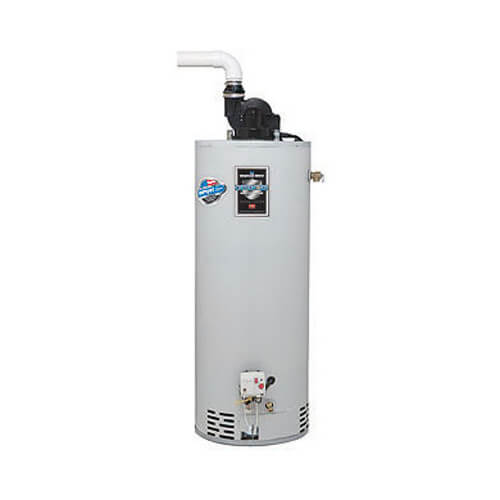
40 Gallon - 40,000 BTU Defender Safety System TTW1 Power Vent Energy Saver Residential Water Heater (Nat Gas)
 --%3E %3Csvg version='1.1' id='Fill' xmlns='http://www.w3.org/2000/svg' xmlns:xlink='http://www.w3.org/1999/xlink' x='0px' y='0px' viewBox='0 0 100 100' enable-background='new 0 0 100 100' xml:space='preserve'%3E %3Cpath fill='%23F15C02' d='M79.44,0.95H20.56C9.78,0.95,0.95,9.78,0.95,20.56v58.87c0,10.79,8.82,19.61,19.61,19.61h58.87 c10.79,0,19.61-8.83,19.61-19.61V20.56C99.05,9.78,90.22,0.95,79.44,0.95z M65.38,58.24l9.38,29.58L49.69,69.78L24.5,87.82 l9.34-29.6L8.8,39.6l30.73-0.17c0,0,6.98-19.61,10-28.93c0.54,1.36,9.88,29.1,9.88,29.1H91.2L65.38,58.24z'/%3E %3C/svg%3E)
 --%3E %3Csvg version='1.1' id='Half' xmlns='http://www.w3.org/2000/svg' xmlns:xlink='http://www.w3.org/1999/xlink' x='0px' y='0px' viewBox='0 0 100 100' enable-background='new 0 0 100 100' xml:space='preserve'%3E %3Cg%3E %3Cpath fill='%23F15C02' d='M30.05,70.23l3.79-12.01L8.8,39.6l30.73-0.17c0,0,6.98-19.61,10-28.93c0.54,1.36,9.88,29.1,9.88,29.1h1.58 L93.71,7.18c-3.58-3.82-8.66-6.23-14.28-6.23H20.56C9.78,0.95,0.95,9.78,0.95,20.56v58.87c0,5.41,2.22,10.32,5.79,13.88 L30.05,70.23z'/%3E %3C/g%3E %3Cpath fill='%23FBC8B4' d='M93.71,7.18L60.98,39.6H91.2L65.38,58.24l9.38,29.58L49.69,69.78L24.5,87.82l5.55-17.59L6.75,93.32 c3.55,3.54,8.44,5.73,13.82,5.73h58.87c10.79,0,19.61-8.83,19.61-19.61V20.56C99.05,15.4,97.01,10.69,93.71,7.18z'/%3E %3C/svg%3E)
' fill='%23F15C02' d='M49 0C21.938 0 0 21.938 0 49s21.938 49 49 49 49-21.938 49-49S76.062 0 49 0m0 82.709a7.54 7.54 0 1 1 0-15.08 7.54 7.54 0 0 1 0 15.08m7.54-28.412a7.541 7.541 0 0 1-15.08 0V22.831a7.54 7.54 0 0 1 15.08 0v31.466z'/%3E%3C/svg%3E)
MANUALS (8)
'/%3E%3C/svg%3E)

Product Highlights


Description
The TTW1® model is power vented for positive exhaust. It offers greater installation flexibility with the ability to vent through a wall or roof, with either 2 or 3 PVC, ABS or CPVC pipe.
Features:
- ENERGY STAR® Qualified - These models qualify for the January 1st, 2009 minimum ENERGY STAR® EF requirement, as well as most utility rebate programs.
- Advanced ScreenLok® Technology Flame Arrestor Design - Flame arrestor is designed to prevent ignition of flammable vapor outside of the water heater.
- Flammable Vapor Sensor - Electronic sensor prevents burner operation if flammable vapors are detected. The sensor will also prevent operation if there is ongoing flammable vapor burn inside the combustion chamber.
- Maintenance Free - No regular cleaning of air inlet openings or flame arrestor is required under normal conditions.
- Sight Window - Offers a view into the combustion chamber to observe the operation of the pilot and burner.
- Factory installed Hydrojet® Total Performance System - Cold water inlet sediment reducing device helps prevent sediment build up in tank. This increases first hour delivery, while minimizing temperature build up at top of tank.
- Vitraglas® Lining - Bradford White tanks are lined with an exclusively engineered enamel formula that provides superior tank protection from the highly corrosive effects of hot water. This formula (Vitraglas®) is fused to the steel surface by firing at a temperature of over 1600° F.
- Power Vented Water Heater - Designed for installations where atmospheric units cannot be used. Exhaust gases are vented under positive pressure directly out of the building through the roof or the wall.
- Powerful Blower Motor - Our significantly quiet design has greater resistance to outside winds and the power to vent in many difficult venting situations.
- Honeywell Self Diagnostic Electronic Gas Control - Intelligent gas control with
spark to pilot ignition system eliminates the constant burning pilot. This results in
savings of pilot gas during stand by periods (120 V.A.C.).
- Enhanced Performance - Proprietary algorithms provide enhanced First Hour Delivery ratings and tighter temperature differentials.
- Advanced Temperature Control System - Microprocessor constantly monitors and controls burner operation to maintain accurate and consistent water temperature levels.
- Intelligent Diagnostics - An exclusive green LED light prompts the installer during start-up and provides ten different diagnostic codes to assist in troubleshooting.
- Pilot On Indication - Flashing green LED provides positive indication that pilot is on.
- Horizontal and Vertical Venting - With 2" or 3" PVC, ABS or CPVC (Maximum equivalent vent length on reverse side).
- 1" Non-CFC Foam Insulation - Covers the sides and top, reducing the amount of heat loss. This results in less energy consumption, improved operation efficiencies and jacket rigidity.
- Water Connections - 3/4" NPT factory installed true dielectric fittings.
- Factory installed Heat Traps - Design incorporates a flexible disk that reduces heat loss in piping and eliminates the potential for noise generation.
- Protective Magnesium Rod.
- Pedestal Base.
- T&P Relief Valve - Included.
- Brass Drain Valve - Durable tamper proof design.
Specs
| Intended Household: | 2-3 Person |
|---|---|
| Fuel Type: | Natural Gas |
| Warranty: | 6 Year Limited Tank/ 6 Year Limited on Component Parts |
| Capacity (Gallons): | 40 |
| Application: | Plumbing |
| BTU Input: | 40000 |
| Water Connection: | 3/4" |
| 1st Hour Delivery (Gallons): | 72 |
| Gas Connection: | 1/2" |
| Vent Type: | Power Vent |
| Vent Size: | 2" |
| Height (Inches): | 56.5" |
| Recovery Efficiency: | 80% |
| Diameter (Inches): | 20" |
| Depth (Inches): | 24-7/8" |
| Weight (lbs): | 135 lbs |
| Energy Factor: | 0.63 |
| Energy Star Rated: | No |

Questions?
Compare Similar Products
You May Also Need
31 Replacement Parts

Need help finding a replacement part?
Product Reviews
Most Liked Positive Review
So far so good
Most Liked Negative Review
 --%3E %3Csvg version='1.1' id='With-RB' xmlns='http://www.w3.org/2000/svg' xmlns:xlink='http://www.w3.org/1999/xlink' x='0px' y='0px' viewBox='0 0 100 100' enable-background='new 0 0 100 100' xml:space='preserve'%3E %3Cpath fill='%23FBC8B4' d='M79.44,0.95H20.56C9.78,0.95,0.95,9.78,0.95,20.56v58.87c0,10.79,8.82,19.61,19.61,19.61h58.87 c10.79,0,19.61-8.83,19.61-19.61V20.56C99.05,9.78,90.22,0.95,79.44,0.95z M65.38,58.24l9.38,29.58L49.69,69.78L24.5,87.82 l9.34-29.6L8.8,39.6l30.73-0.17c0,0,6.98-19.61,10-28.93c0.54,1.36,9.88,29.1,9.88,29.1H91.2L65.38,58.24z'/%3E %3C/svg%3E)
flooded basement after only there years
No Problem

flooded basement after only there years
Great quality
Great Product!
A quality product basted on history
I would use this company again.
Simple startup
high expectations
Good heater, good supplier
So far so good
Product Q&A
10 QuestionsQ: Have a Bradford White model number m1tw40s6fsx currently hooked up to propane, we are converting to natural gas and trying to find out if our tank will convert.
Asked by R Burke 11 years ago
Add your answer
Verified Reply- SupplyHouse StaffYes this unit can be converted to Natural Gas. The part number for the conversion kit is 265-46493-02 for this model.
Q: what is the purpose for the power vent?
Asked by Brad 12 years ago
Add your answer
The power vent cools the exhaust from the hot water heater's burner by mixing it with room air. This allows the exhaust vent to be made from PVC rather than metal and the fact that the flow is forced by the blower allows substantial horizontal runs. A regular vent requires a metal exhaust vent pipe, either all the way to the outside or (codes permitting) to an existing ceramic / brick flue or chimney. Because the regular vent depends on the fact that hot gases rise to exhaust the combustion products, it cannot have substantial horizontal runs. The down sides of the power vent are that it won't work during a power failure (but, then neither will most gas HWH with electronic ignition systems) and the extra air it removes from the area containing the HWH. The later is a problem only in very hot or cold climates where the HWH is inside the heated / air conditioned area. Note that the air loss occurs only when the burner is on which is not a large percentage of the time.
Q: With power venting, what is the maximum length the vent pipe can be?
Asked by Bill 13 years ago
Add your answer
The maximum vent length depends on a number of factors that include whether you use 2" or 3" vent pipe, the number of 90 degree elbows in the line, whether the line runs vertically or horizontally, and the altitude at which the unit is installed. Altitude is a factor above 2500 ft elevation. The installation manual is available at http://www.bradfordwhite.com/sites/default/files/product_literature/238-45637-00L.pdf See pages 19 - 24. With 2" pipe, the maximum run is 50 ft with no elbows (the only way to do this is a vertical run with an open termination, sheltered from the weather). For 3" pipe, it is 100 feet. Subtract 5 ft for each elbow. In a mixed run, the sum of the 2" length, 5 times the 2" elbow count, half the the 3" length and 2.5 times the 3" elbow count should not exceed 50 feet. Vertical runs and horizontal runs that exit near the ground may require multiple elbows to obtain adequate ground or roof clearance and space for snow accumulation in some climates. See the manual for details.
Length depends upon pipe diameter and numbr of bends. Try looking it up in the owner's manual for the unit. I am pleased with my unit.
Q: When installing this water heater in a garage does it need to be raised 18 inches above the floor.
Asked by T 13 years ago
Add your answer
Yes to avoid sucking fumes into the heater.
I do not have a definitive answer to this question, however, I suspect that this is an issue that depends on local building codes rather than having a single answer. A simple google query on the topic "raise gas hot water heater above garage floor" brought a number of pages similar to http://www.checkthishouse.com/5712/garage-gas-hot-water-heater-raised-above-the-floor-fvir-safety.html The basic rationale is that many gas hot water heaters are a possible source of vapor ignition. Vapor producing flammables are commonly found in garages. Think gasoline, paint thinner, propane tanks for gas grills, etc. Spills, leaks, or transfers (filling the mower in the garage) will create vapors. Most, but not all of the vapors are heavier than air so raising the HW Heater allows the vapors to leak out under or around the garage door before rising to the height of the gas burner / ignition. This assumes that the driveway or other vapor paths flow downhill from the garage. and that the garage door does not make an airtight seal. If this is not the case, it is possible that a vapor pool could build up to reach even a raised heater. The result is that placing a gas (or even electric as thermostat contacts may spark) hot water heater in a garage or a closed space attached to a garage at garage level is generally undesirable, but, if it is unavoidable, raising the HW heater helps to reduce risk.
Q: what is the differance between the ttw1 and ttw2 40 gal heater.i have a ttw2 lp gas but must be replaced after 19 years.
Asked by tony 14 years ago
Add your answer
Verified Reply- PexSupply StaffThe difference between the two are the 1 and 2 inches of insulation on the tank and the BTU input of 38000 (TTW1) vs 60000 (TTW2).
Q: Hello: My hot water heater model is M1TW40L6LN10. If I commot get the same mdel what model should I replace it with.
Asked by Reid 15 years ago
Add your answer
Verified Reply- PexSupply StaffWe do not have specifications on this heater, but it appears to be a 40 gallon, direct vent model.
Q: Is there any differance between a M1TW40S6BN1 AND A MITW40S6FBN
Asked by Drew 15 years ago
Add your answer
Verified Reply- PexSupply StaffThere is no functional difference. The BN-1 was an interim model previous to the Flammable vapor integration. The FBN models have been used since the change.
Q: how to re-light the pilot?
Asked by Mike 15 years ago
Add your answer
Verified Reply- PexSupply StaffPlease view page 34 of the manual: http://s3.pexsupply.com/manuals/1270752206645/28915_PROD_FILE.pdf
Q: Can this be converted to propane?
Asked by Mike 16 years ago
Add your answer
Verified Reply- PexSupply StaffThis unit is not designed to be converted from natural gas to propane. If you are interested in propane, you need to purchase the propane version. (SKU: M-1-TW-40S6FSX)
Q: Your Specs - Height: 56 1/2" Is that the tank only? What is the total height from floor to the top of the power vent?
Asked by Robert 16 years ago
Add your answer
Verified Reply- PexSupply StaffPlease look at page 2 of the product specifications manual for the different height measurements: http://s3.pexsupply.com/manuals/1270752162815/28913_PROD_FILE.pdf