



CTS Stub Outs

 --%3E %3Csvg version='1.1' id='No-RB' xmlns='http://www.w3.org/2000/svg' xmlns:xlink='http://www.w3.org/1999/xlink' x='0px' y='0px' viewBox='0 0 100 100' enable-background='new 0 0 100 100' xml:space='preserve'%3E %3Cpath fill='%23CECECE' d='M79.44,0.95H20.56C9.78,0.95,0.95,9.78,0.95,20.56v58.87c0,10.79,8.82,19.61,19.61,19.61h58.87 c10.79,0,19.61-8.83,19.61-19.61V20.56C99.05,9.78,90.22,0.95,79.44,0.95z M65.38,58.24l9.38,29.58L49.69,69.78L24.5,87.82 l9.34-29.6L8.8,39.6l30.73-0.17c0,0,6.98-19.61,10-28.93c0.54,1.36,9.88,29.1,9.88,29.1H91.2L65.38,58.24z'/%3E %3C/svg%3E)

 --%3E %3Csvg version='1.1' id='Fill' xmlns='http://www.w3.org/2000/svg' xmlns:xlink='http://www.w3.org/1999/xlink' x='0px' y='0px' viewBox='0 0 100 100' enable-background='new 0 0 100 100' xml:space='preserve'%3E %3Cpath fill='%23F15C02' d='M79.44,0.95H20.56C9.78,0.95,0.95,9.78,0.95,20.56v58.87c0,10.79,8.82,19.61,19.61,19.61h58.87 c10.79,0,19.61-8.83,19.61-19.61V20.56C99.05,9.78,90.22,0.95,79.44,0.95z M65.38,58.24l9.38,29.58L49.69,69.78L24.5,87.82 l9.34-29.6L8.8,39.6l30.73-0.17c0,0,6.98-19.61,10-28.93c0.54,1.36,9.88,29.1,9.88,29.1H91.2L65.38,58.24z'/%3E %3C/svg%3E)
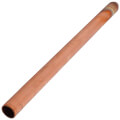
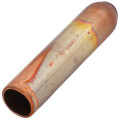
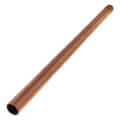
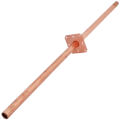

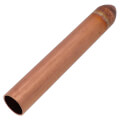
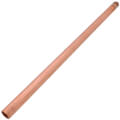
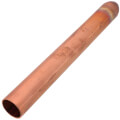
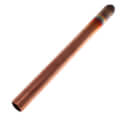
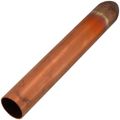
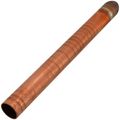
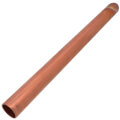

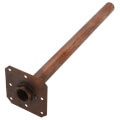

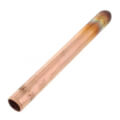
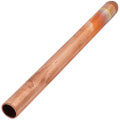
CTS Stub Outs are copper pipe sections sized to Copper Tube Size that plumbers solder or press into a water line, then leave capped and anchored at a fixture location until the trim-out stage. The Sioux Chief 623-L06 illustrates a typical spec: a 3/4 inch CTS copper stub out bullet with a closed end, 6 inches long, built from Type L copper. Stub outs come in a range of lengths, commonly from 3 inches to 24 inches, so installers can match the depth of a wall cavity or the reach needed past a finished surface. Because the end is closed and spun shut at the factory, there's no need to cap and solder a fitting on site, which saves a joint that could leak later. Plumbers secure the stub out to framing with a clamp or bracket so it stays rigid and properly positioned until a fixture supply line connects to it during trim-out.
Subcategories
- Copper Stub Out Bullets: Copper stub out bullets are closed-end, factory-capped pipe sections that plumbers solder into a branch line and leave in a wall or floor until trim-out. The Sioux Chief 623-L06 is a 3/4 inch CTS Type L copper bullet with a spin-closed end, 6 inches long. Lengths commonly run from 3 inches to 24 inches, which lets installers match the stub out to the wall thickness or rough-in depth on the job. Because the end is already closed, there's no separate cap fitting or extra solder joint needed on site.
- Stub Out Clamps: Stub out clamps anchor the copper or PEX stub to framing so it stays rigid and properly aligned for the fixture connection added later. The Sioux Chief 525-02 is a 1/2 inch CTS SimpleStrap stub out clamp, with a glueable version, the 525-02G, available for jobs that call for a solvent-welded connection instead of a nailed or screwed clamp. Both styles hold the stub out plumb and at the correct depth through rough-in inspection and trim-out.
- Stub Out Clamp Supports: Clamp supports combine a mounting bracket with the stub out function, giving the pipe a single fastened point instead of a separate clamp and brace. The Holdrite 731 is a 1/2 inch CTS ProGuard stub-out clamp support built for this purpose. Plumbers screw the support directly to a stud or blocking, which keeps the stub out from shifting during drywall, tile, or cabinet installation around the fixture location.
- Pre-Assembled PEX Stub-Out Kits: Pre-assembled kits combine a mounting bracket and a turn-out support into one part for PEX rough-in work instead of requiring separate pieces. The Holdrite SB3-7341 kit pairs an SB3 bracket with a #734 turn-out support in a single package. Framers and plumbers install the bracket early in rough-in, then run PEX tubing through the turn-out support to the fixture location once walls are closed in.
Buying Guide
Picking the right stub out starts with matching the CTS size to the fixture supply line already specified on the job, typically 1/2 inch for lavatories and toilets or 3/4 inch for larger fixtures and branch mains. Length comes next. CTS Stub Outs are available in lengths from 3 inches to 24 inches, and measuring the wall cavity or the distance the stub needs to project past a finished surface before ordering avoids trimming a piece or running one short. Material and joint type matter for the rough-in method already in use on the job. A closed-end copper bullet like the Sioux Chief 623-L06 solders directly into a branch line with no separate cap needed, which saves a joint on a line that will be buried in a wall. Mounting hardware is the next decision. A basic SimpleStrap clamp holds the stub to framing for straightforward copper rough-in, while a clamp support like the Holdrite 731 combines the bracket and the stub-out function into one fastened point, which simplifies installation when the fixture location sees a lot of foot traffic or vibration during construction. For PEX rough-in, a pre-assembled kit that pairs a mounting bracket with a turn-out support removes a step compared to sourcing the bracket and support separately. Confirming local code requirements for stub-out height and projection before rough-in inspection avoids a callback to move a fixture connection after walls are closed.
Frequently Asked Questions
What size CTS stub out fits a standard lavatory or toilet supply?
A 1/2 inch CTS stub out covers most lavatory and toilet supply connections, while 3/4 inch CTS sizing serves larger fixtures or branch mains. The Sioux Chief 622-L03 is a 1/2 inch CTS copper stub out bullet built for this common application.
What length stub out works for a given wall thickness?
Stub outs come in lengths from 3 inches to 24 inches, so matching the length to the wall cavity depth or the projection needed past a finished surface determines the right size. Measuring the rough-in location before ordering avoids trimming a stub out or falling short on reach.
Why does a copper stub out bullet have a closed end?
The closed, spin-shut end on a copper stub out bullet like the Sioux Chief 623-L06 means no separate cap fitting or extra solder joint is needed before the stub is buried in a wall. Plumbers simply solder the open end into the branch line and leave the closed end in place until trim-out.
What's the difference between a stub out clamp and a clamp support?
A stub out clamp, such as the Sioux Chief 525-02 SimpleStrap, secures the pipe to framing on its own, while a clamp support like the Holdrite 731 combines the mounting bracket and the stub-out function into a single fastened point. Both keep the stub rigid and correctly positioned through rough-in inspection and trim-out.
Are pre-assembled stub-out kits available for PEX rough-in?
The Holdrite SB3-7341 kit pairs an SB3 mounting bracket with a #734 turn-out support in one package, built specifically for PEX rough-in work. Framers install the bracket early in construction, then plumbers run PEX tubing through the turn-out support to the fixture location during trim-out.
